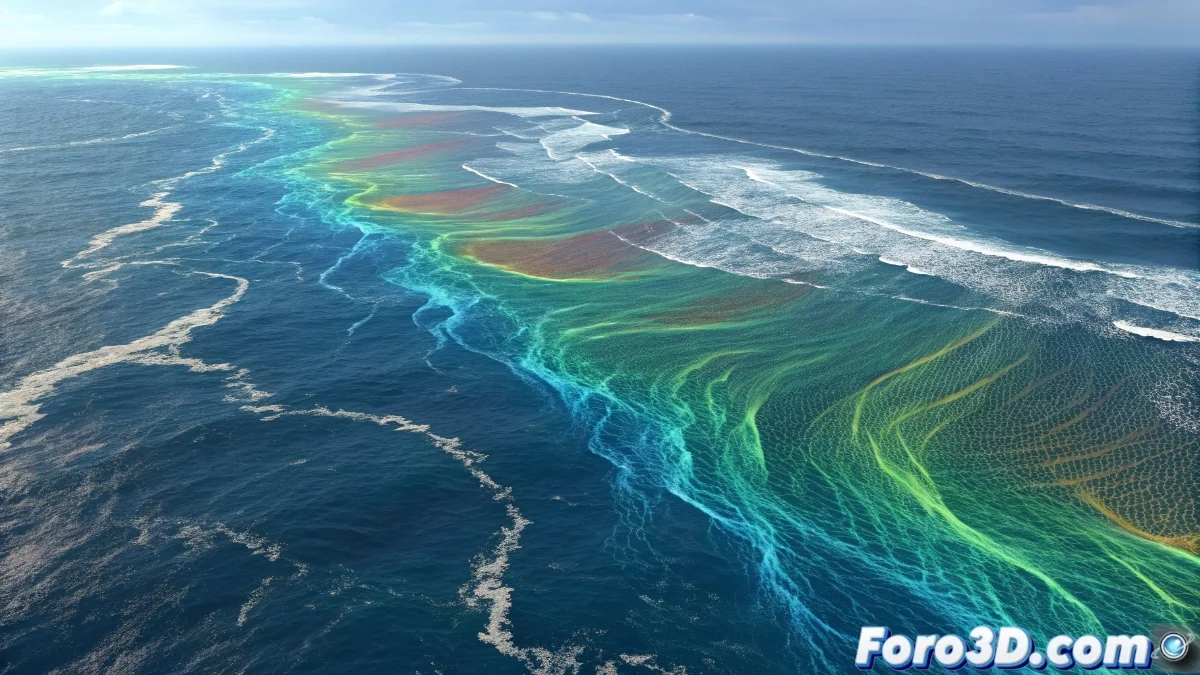
Differentiable Extension of the VEROS Oceanic Model with JAX for Automatic Gradient Computation
The scientific community has presented a differentiable extension of the VEROS oceanic model that incorporates the automatic differentiation framework using JAX in its dynamic core. This evolution enables automatic and efficient derivative computation, representing a revolutionary advancement in the simulation of complex oceanic systems 🌊.
Practical Applications in Oceanic Optimization
The implementation of differentiable programming opens new possibilities in oceanographic research. Thanks to the ability to compute gradients accurately, two key areas are optimized: correction of initial ocean states and automatic calibration of physical parameters. This eliminates manual approximations that used to generate systematic errors in results 🔍.
Main applications:- Correction of initial states using gradient-based optimization techniques, improving the accuracy of oceanic simulations
- Automatic calibration of unknown physical parameters directly from model observations
- Elimination of manual procedures that introduced biases in modeling results
Differentiable programming emerges as an elegant solution that enables end-to-end learning and automatic parameter adjustment, representing a paradigm shift in the optimization of climate models.
Impact on Earth System Modeling
This development is framed within the broader context of Earth system models, where the challenge of manual parameter adjustment has historically persisted. Despite computational advances over the past decades, the calibration of these complex models still largely depended on manual procedures that generated persistent errors 📈.
Key advantages in terrestrial modeling:- Implementation of end-to-end learning for automatic parameter adjustment
- Significant reduction of systematic errors in climate and oceanic models
- Comprehensive optimization capability encompassing multiple Earth system variables
The Future of Autonomous Oceanic Modeling
It seems that oceanic models are reaching a new level of autonomy, where they can "swim on their own" without the need for constant manual intervention in every parameter. This evolution toward more independent and precise systems suggests that they could soon offer more reliable predictions than many conventional weather forecasts ☔.