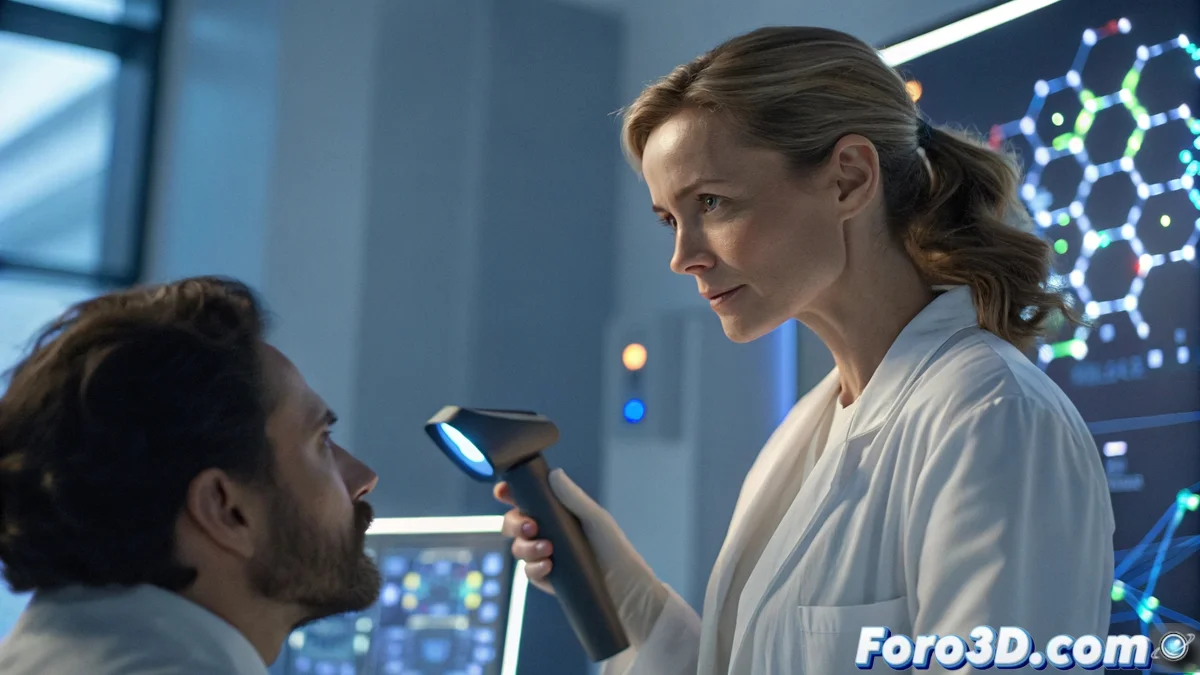
Diagnosing Diseases with Breath: The New Medical Frontier
Medicine seeks innovative ways to identify serious health problems early and without bothering the patient. A promising avenue consists of examining the air we exhale. This contains a unique chemical fingerprint of volatile organic compounds that can change when the body is not functioning correctly. 🫁
The Chemical Fingerprint of Disease
When a person develops a pathology such as Alzheimer's or a tumor, their metabolism changes. This change modifies the production and concentration of certain molecules that are released in the breath. Scientists are working to map specific chemical signatures that serve as early warnings for each ailment, transforming a natural act into a powerful diagnostic tool.
Key Components of the Method:- Volatile Biomarkers: Specific molecules in the breath whose presence or level indicates a pathological state.
- Capture Devices: Instruments where the patient exhales to collect a controlled air sample.
- Analysis Technology: Equipment like mass spectrometers that break down the sample to identify its chemical components.
This approach could make our breath warn us of a health problem before our own body shows clear symptoms.
The Union of Sensors and Artificial Intelligence
To interpret the complex breath data, chemical nanosensors are combined with machine learning algorithms. These systems compare a patient's chemical profile with vast databases containing patterns from healthy and sick people. The goal is clear: accurately distinguish healthy breath from one that reveals a disease in its early stages.
Potential Advantages of Breath Diagnosis:- It is a quick and painless procedure that avoids needles or biopsies.
- It allows repeating the test frequently to monitor progress.
- It facilitates screening large groups of population at high risk.
A Promising Future with Challenges to Overcome
Although the potential is enormous, this technology still must demonstrate its reliability in daily clinical practice. The main challenges include standardizing how to collect and process samples, and validating results in large and diverse studies. Only then can its accuracy be confirmed to truly transform how we detect and confront complex diseases. 🔬