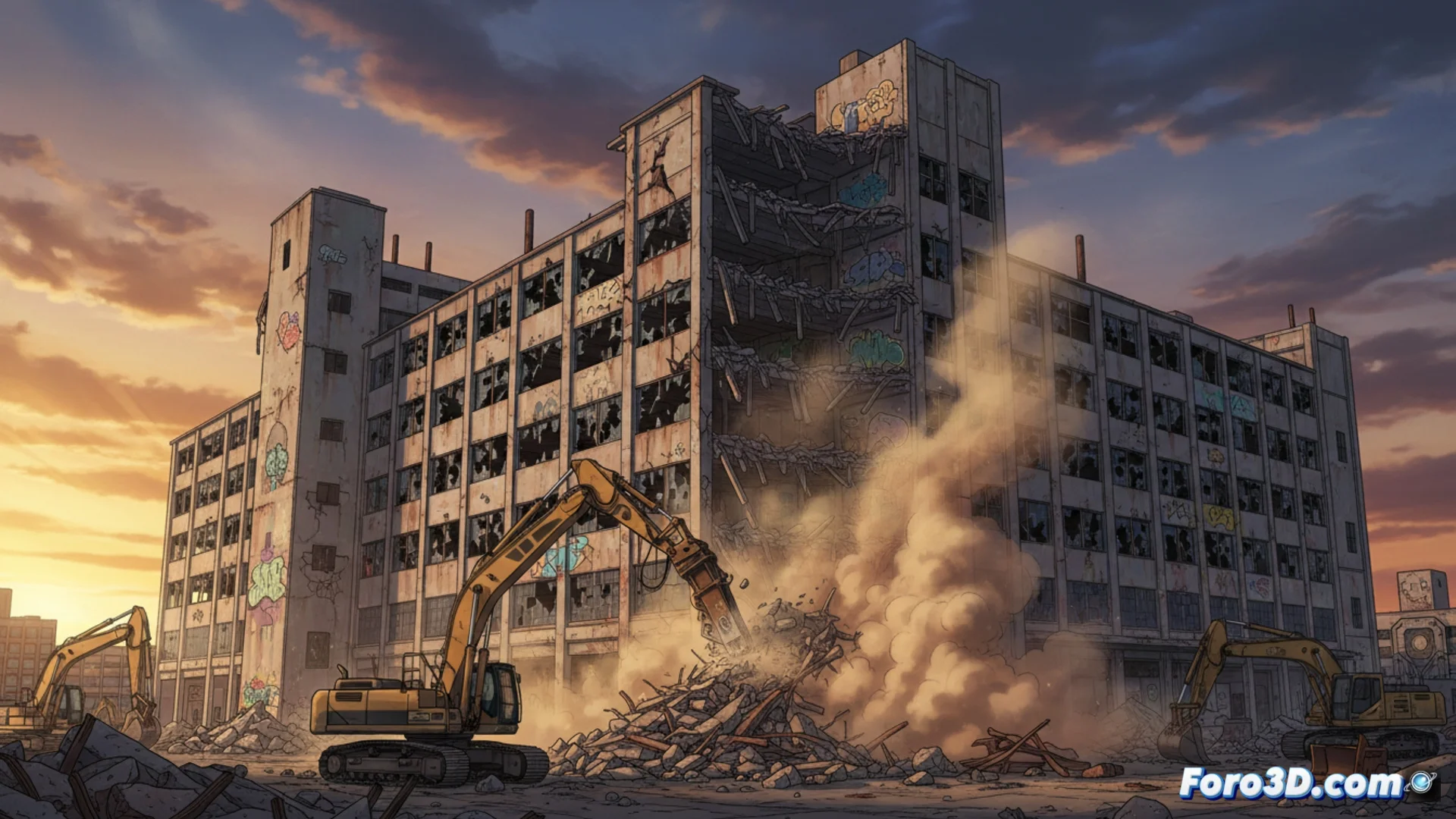
Detroit's Packard Automotive Plant is Being Demolished After Decades of Abandonment
The concrete and steel skeleton of the enormous Packard plant in Detroit, Michigan, is finally starting to come down. This symbol of a glorious industrial era and its subsequent decline now faces its definitive end with the noise of excavators, after years of silence broken only by urban explorers. 🏭
From Engineering Icon to Urban Ruin
The factory opened in 1903 and came to define the standard for modern automotive plants. Architect Albert Kahn designed its structures with large windows and reinforced concrete, creating a complex that spanned more than 40 hectares. Its closure in 1958 marked the beginning of economic difficulties for the region. For decades, its emptiness attracted those who documented its slow transformation into a monument to decay.
Key Features of the Plant:- Pioneering Architecture: Albert Kahn's design that revolutionized how factories were built.
- Colossal Scale: Area exceeding 40 hectares, with capacity for thousands of employees.
- Cultural Attraction: Served as a setting for photo shoots, video game backgrounds, and street art.
The place that inspired album covers and post-apocalyptic worlds now only generates demolition plans and bills.
The Complex Process Toward Its Disappearance
Detroit authorities have begun the controlled demolition of most of the remaining structures. Removing a site of such dimensions involves a long job, estimated to last years, and significant investment. The goal is clear: eradicate a hotspot of vandalism and prepare the land for a new use that helps the city look forward.
Reasons and Consequences of the Demolition:- Public Safety: Eliminates a dangerous and unsafe building that attracted risky activities.
- Land Renewal: Clears a huge space for potential future development projects.
- Symbolic Closure: Turns a very visible page in industrial history, though with mixed feelings among residents.
A Chapter Closing in Detroit
The demolition of the Packard plant is not just an engineering operation; it is an act with considerable historical weight. As the machines advance, some lament losing a physical testimony of the city's past splendor and fall. Detroit thus attempts to heal one of its most evident wounds, transforming a symbol of abandonment into the possibility of a new beginning. 🔨