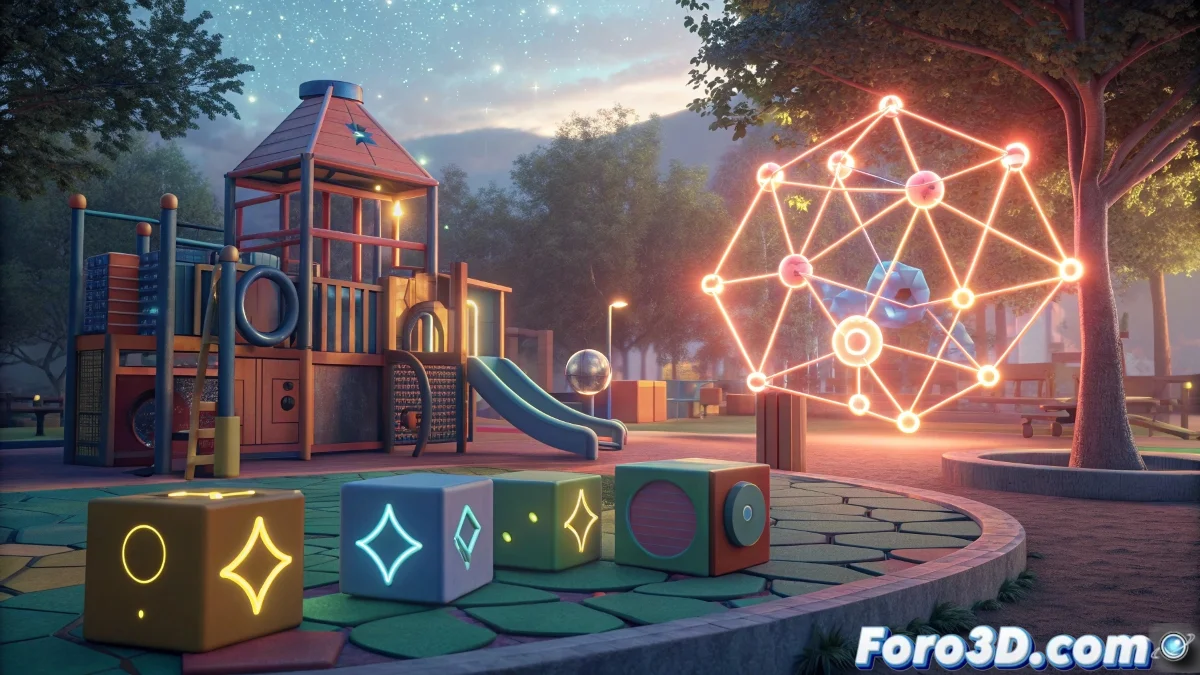
Designing in a 3D Playground: Low-Code Add-on Development for Engineers in Blender
Blender is becoming the ideal playground for engineers looking to develop custom tools without diving into complex programming. The low-code add-on ecosystem allows for creating specific solutions for engineering problems using visual interfaces and accessible automations. 🛠️
The Low-Code Paradigm in 3D Development
The low-code approach in Blender represents a natural evolution in tool development for engineers. Through Geometry Nodes, drivers, and animation systems, professionals can rapidly prototype solutions without writing extensive code, accelerating the technical workflow and facilitating the iteration of complex ideas.
Key Components of Low-Code Development:- Geometry Nodes for visual and procedural logic
- Simplified Python for specific automations
- Custom properties and drivers for parameter control
- Panel development with bpy for user interfaces
"Blender is democratizing 3D tool development, allowing engineers to focus on solving problems instead of writing complex code"
Use Cases for Engineering and Technical Design
The applications of low-code development in engineering environments are notably diverse. From structural analysis tools to technical data visualization systems, custom add-ons allow engineers to adapt Blender to their specific workflows, creating highly specialized and efficient work environments.
Practical Applications in Engineering:- Parametric generators for mechanical components
- Tools for simulation data analysis and visualization
- Custom interfaces for digital manufacturing processes
- Automation systems for repetitive modeling tasks
The Future of Accessible Development in 3D
This evolution towards low-code not only makes development more accessible but also fosters interdisciplinary collaboration. Engineers, designers, and artists can work together in the same 3D playground, sharing tools and methodologies that previously required separate specialized knowledge. The result is a more integrated and productive ecosystem for all 3D professionals. 🚀