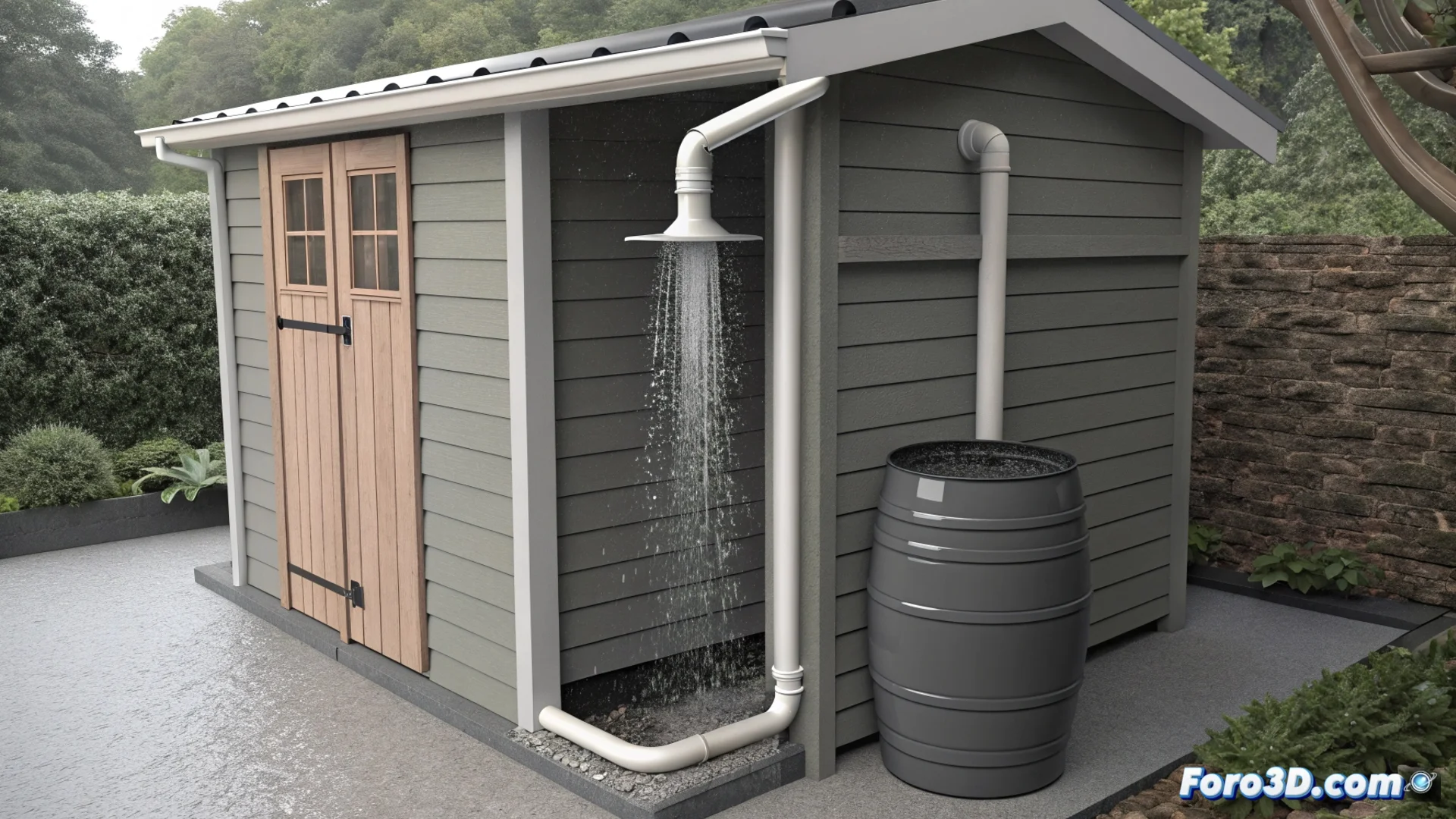
Design and 3D Print a Rainwater Filter
Creating a filtration system for rainwater with a 3D printer is an efficient solution to make the most of this natural resource. The process involves designing custom parts that capture, direct, and purify the water before storing it. 🚰
Key Components of the System
The assembly begins with an inlet funnel that collects water from the downspouts. This element directs the flow to a prefilter, whose function is to retain coarse matter like leaves. Then, the water flows through printed connectors to a main filter, which you can fill with gravel, sand, or activated carbon. By manufacturing your own parts, you can adjust their dimensions to fit perfectly into your barrels and ensure a hermetic seal.
Advantages of printing your own parts:- Total customization: Adapt the size and shape to your specific containers.
- Optimized sealing: Design flanges or threads to effectively prevent leaks.
- Easy maintenance: A modular design allows cleaning or replacing each section with ease.
3D printing allows creating exact adapters for your particular installation, something difficult to achieve with standard components.
Materials and Design for Your Environment
It is essential to consider the local climate when planning. In areas with heavy precipitation and vegetation, you need a larger diameter funnel and a finer prefilter grid. For dry climates with dust, prioritize a hermetic seal in the joints. Select a weather-resistant filament like PETG or ASA, which tolerates UV radiation and thermal changes without deforming.
Steps to integrate the system:- Create adapters: Design bases that fit the mouth of your barrel or connectors for hoses of different diameters.
- Include a lid: For the inlet funnel, prevents insects or more debris from entering.
- Post-process parts: Sand the contact surfaces to achieve better sealing and more efficient flow.
Proper Use of Filtered Water
It is crucial to remember that, although the system filters well, this water is suitable only for garden irrigation or other non-potable uses. Do not use it to fill children's pools or for consumption, as the filter does not remove all microbiological or chemical contaminants. The result is a valuable resource for your plants, but not for people or pets. 🌱