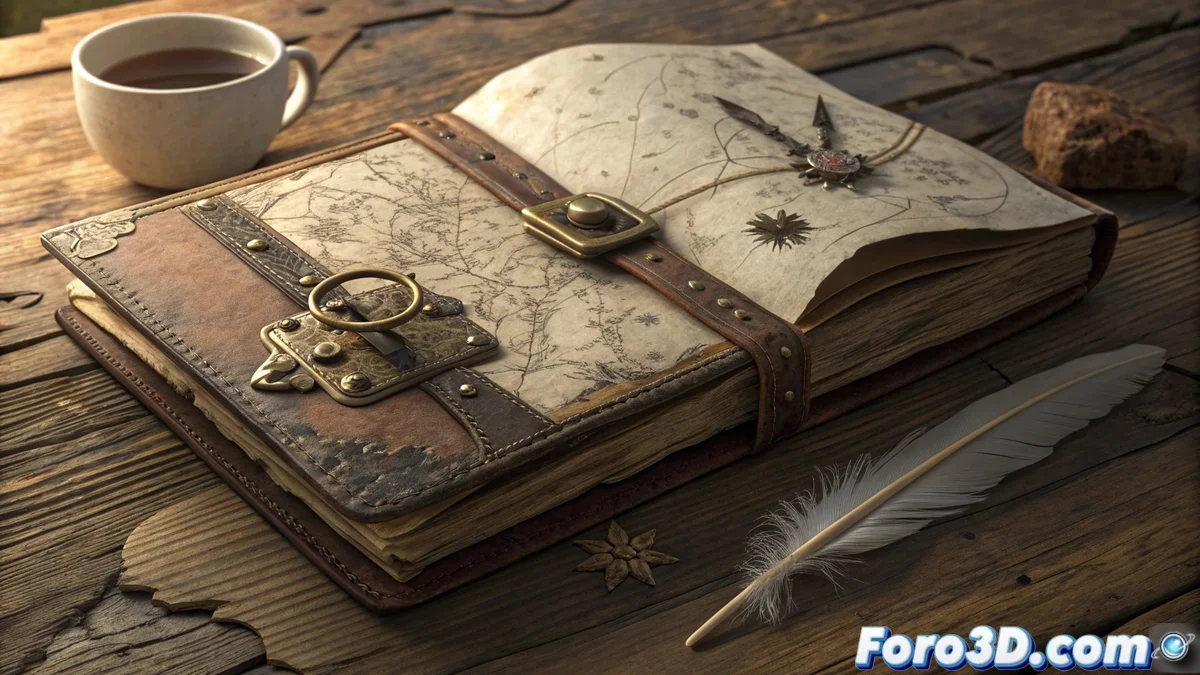
Designing a Character Through Their Most Prized Possession
This method inverts the traditional creative workflow. Instead of starting with physical appearance, the process begins by conceiving and detailing an artifact that the character possesses. Every mark, modification, and aesthetic choice on the object narrates a fragment of the biography and exposes a trait of its bearer, who remains invisible. The artifact becomes an eloquent witness. 🎭
The Object That Narrates Silently
A narrative object functions as an archive of its owner's life. A sword hilt worn in a specific pattern reveals decades of practice with an identical grip. The pages of a notebook that shift from impeccable handwriting to chaotic scribbles trace a psychological descent. A cracked pendant, repaired with a golden thread, speaks of someone who decorates their scars. Every material detail is an encoded biographical datum.
Examples of narrative objects:- A weapon with specific combat notches, indicating fighting style and experience.
- A uniquely modified work tool, showing ingenuity and necessity.
- A jewel with a nearly erased inscription, suggesting the passage of time and attachment.
A designer shared that, after detailing their protagonist's backpack, they knew how their voice sounded and what their fears were, without having drawn their face.
Steps to Implement the Technique
To apply this method, follow a structured path that allows you to extract the character's essence from the material.
Practical Step-by-Step Guide:- Select the key artifact: Choose an object intimately linked to the character's identity or central conflict.
- Define its physical state: Determine if it is new, worn, broken, repaired, or altered. This state narrates its usage history.
- Analyze the implications: Interpret what each condition says about the owner's past, present, and priorities.
- Add personal modifications: Incorporate carvings, engravings, additions, or substitutions made by the character. These show how they interact with and adapt their tools.
- Define the visual style: The object's aesthetic language (baroque, minimalist, utilitarian) reflects culture, economic status, and personal tastes.
- Extract the character's traits: Synthesize all the object's information to infer the psychology, habits, and history of its owner.
From the Concrete to the Abstract
This technique forces the creator to think in layers of meaning. An object is not just an accessory; it is a map. Its wear pattern indicates habits. Its repairs show resources and attitude toward damage. Its style reveals origin and aspirations. In the end, designing the object is designing the character. The process culminates in a deep understanding of a being that has never been seen, built from the materiality of their most prized possession. ✨