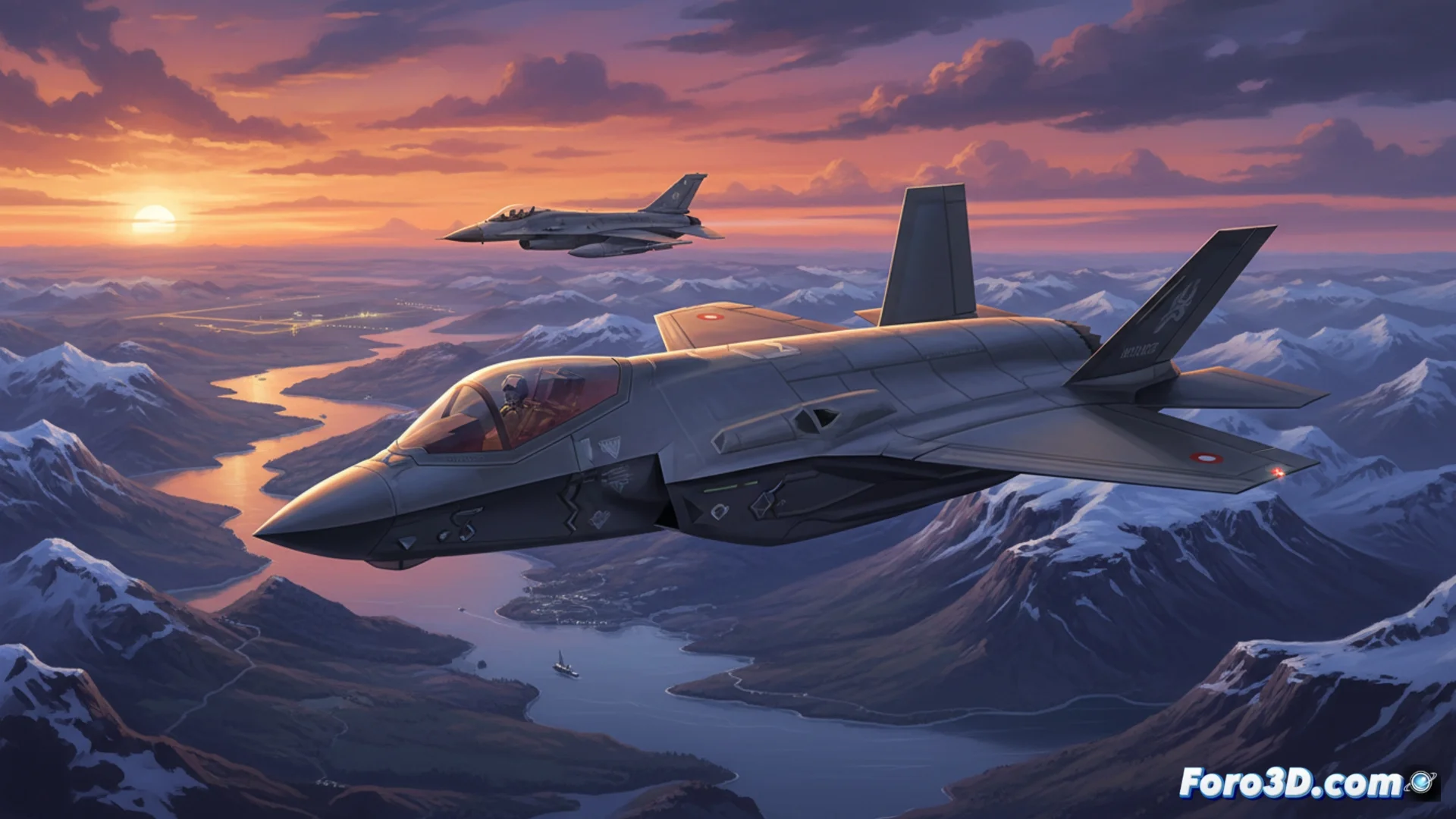
Denmark Begins Withdrawing Its F-16 Aircraft to Modernize Its Fleet
The Danish Air Force is taking its first steps to retire its F-16 Fighting Falcon aircraft, which have been flying for many years. This move is key within a broader strategy aimed at completely updating how the country defends its airspace. The era of the veteran fighter is coming to an end to make way for a new generation with advanced capabilities. ✈️
The F-35A Becomes the New Pillar of Defense
The model chosen to replace the F-16 is the F-35A Lightning II, a fifth-generation fighter aircraft. Denmark is purchasing these units to maintain an air force capable of operating seamlessly with its NATO partners. The F-35 uniquely integrates sensors and has stealth features that far surpass those of its predecessor, allowing Danish pilots to identify threats and act in complex scenarios more effectively.
Key Changes Brought by the F-35:- Sensor Fusion: Combines data from multiple systems to create a complete battle picture.
- Low Observability: Its design drastically reduces its signature on enemy radars.
- Interoperability: Built to operate networked with allied forces.
While some will miss the characteristic sound of the F-16's engine, the silence that the F-35 generates on radar screens is the new nightmare for adversarial defenses.
A Planned and Progressive Transition Process
Retiring the F-16 aircraft will not happen overnight. It will be carried out in stages to ensure that Denmark's airspace protection is not compromised. Pilots and maintenance personnel are already receiving training to operate and support the new F-35 fleet. This renewal represents a substantial long-term investment, positioning Denmark on the same level as other European nations that have also selected this weapons system.
Aspects of the Transition Phase:- Defined Timeline: Retirement will occur in stages, without gaps in defense capability.
- Team Training: Intensive training to adapt to F-35 technology.
- Long-Term Investment: An expensive project that will modernize the air force for the coming decades.
Closing a Chapter in Military Aviation History
This change marks the end of a significant era for combat aviation in Denmark. The F-16 has been a reliable asset, but the demands of modern warfare require more sophisticated and connected platforms. The adoption of the F-35A Lightning II not only enhances the individual power of the air force but also strengthens ties of cooperation and collective defense within the Atlantic Alliance. The future of Danish air defense is already in the air, and it is stealthy.