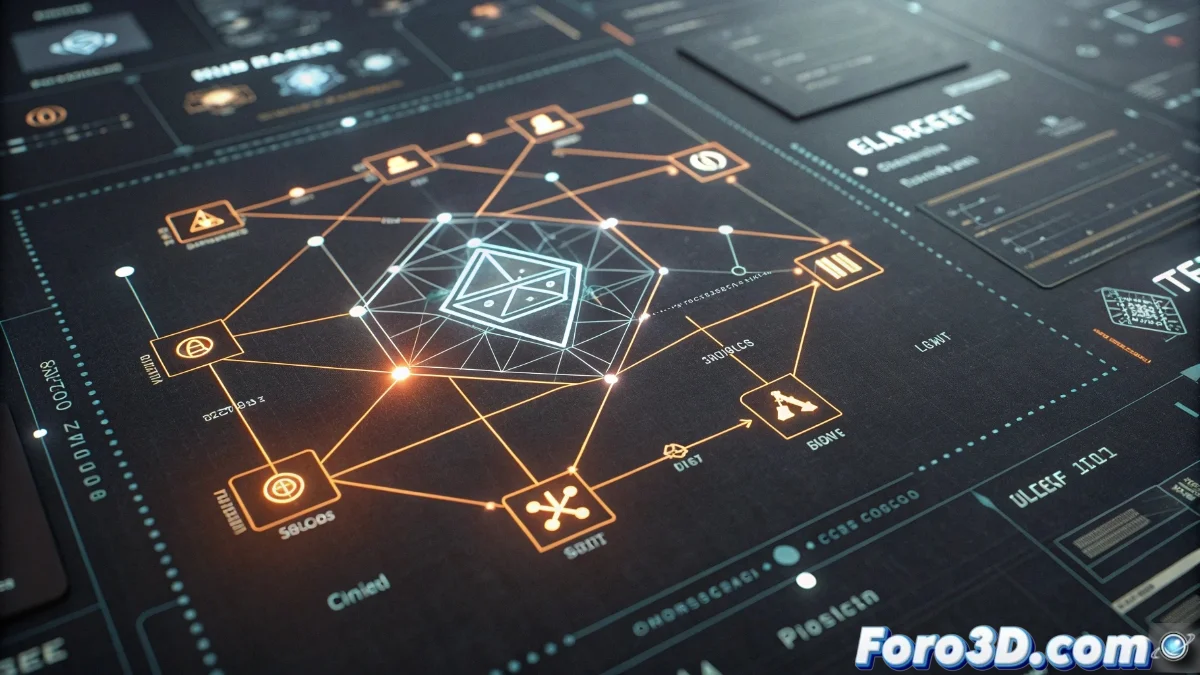
Deconstructing Graphic Design through Structural Graphs
Behind every visual composition lies an invisible architecture that organizes elements coherently. By conceptualizing graphic design as a system of nodes and connections, we can discover structural patterns that define its visual essence. This computational approach transforms creative intuition into analyzable data. 🎨
Revealing Visual Anatomy through DS-Span
The DS-Span technique acts as a specialized explorer that navigates these visual graphs to identify recurrent substructures. These represent compositional motifs that repeat across different designs, from icon configurations to established typographic hierarchies. The method captures not only individual elements but the meaningful relationships that connect them.
Pattern Identification Capabilities:- Automatic detection of repeated spatial configurations in multiple compositions
- Extraction of consistent typographic hierarchies that define visual identity
- Identification of alignment patterns that structure the layout
The ability to quantify what was previously purely intuitive marks a turning point in design theory and practice.
Practical Applications in the Design Ecosystem
This structural methodology finds application in multiple scenarios in the design world. From the historical analysis of artistic movements to the reverse engineering of contemporary visual trends, the approach provides an objective foundation for understanding stylistic evolution. In large-scale design systems, it ensures visual coherence through the identification and application of fundamental subgraphs.
Implementation Fields:- Historical style analysis through structural decomposition
- Reverse engineering of visual trends in real time
- Coherence assurance in corporate identity systems
The Creative Paradox of Visual Quantification
There is a fascinating irony in this process: to decompose human creativity into structured data, we must first teach machines to recognize the art in the connections. This approach represents a bridge between the designer's intuition and computational analysis, enabling the replication, evolution, or fusion of graphic styles with structural precision. The end result is a structural database that captures the very essence of visual identity. 🤖