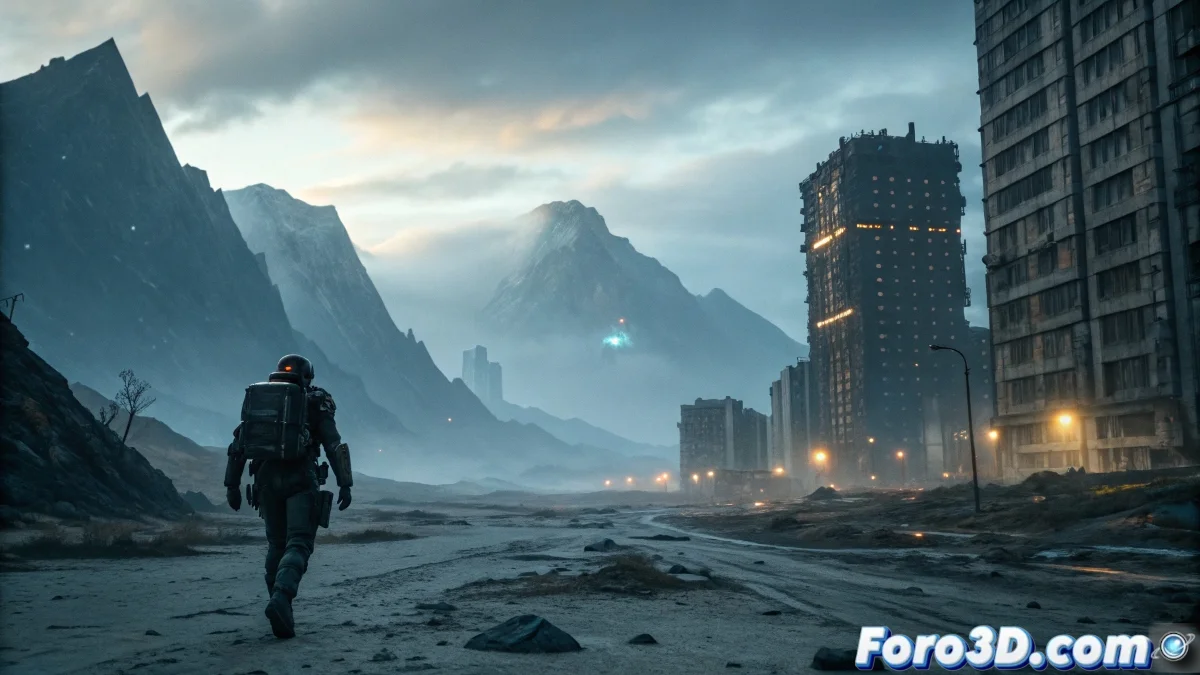
Death Stranding 2: On the Beach - A Masterpiece of Narrative and Visual Design
Hideo Kojima returns with a sequel that not only reaffirms his unique auteur style but also refines the original proposal to offer a more introspective, cinematic, and visually stunning experience. Death Stranding 2: On the Beach doesn't try to reinvent its formula, but to expand it: the result is a work that functions both as a video game and as a piece of conceptual design for its world, narrative, and characters. And no, you don't need to be a video game expert to appreciate this work! 🎮
Visual and Functional World Design
From its first steps in the Australian mountains, the game dazzles with meticulous art direction. Every natural environment seems designed with an obsessive attention to detail, where the Decima engine reaches new technical heights. But beyond photorealism, what's important is how the space is used: the terrain, weather, and music all contribute to creating moments of deep contemplation.
For 3D environment designers, this game is an excellent study on how to combine aesthetics, gameplay, and atmosphere to generate immersion without the need for constant action.
Characters with Visual and Emotional Identity
The cast, which mixes new characters with familiar faces, shows a clear evolution in terms of design and expressiveness. The visual characterization of figures like Fragile, Rainy, or Dollman (a doll with the soul of a filmmaker) offers an interesting study on how to endow identity through form, animation, and narrative context. Norman Reedus delivers his best performance to date, reinforcing the importance of good actor direction and motion capture in contemporary video games.
Non-linear Narrative and Interaction Design
The narrative structure of Death Stranding 2 dares to break conventions. It's not a game that runs: it's one that walks, sometimes even stops. The story simmers slowly, and it's in that rhythm where it finds its strength. Through delivering packages and connecting points in a broken world, the player not only advances physically, but also emotionally.
This approach can inspire narrative designers looking to tell stories through mechanics, not just dialogue. Here, every delivery is a metaphor about isolation, reconstruction, and connection.
Sound Design and Music to Awaken Our Emotions
The soundtrack, led by Woodkid this time, and the strategic use of licensed music reinforce the game's key moments. The camera pulls back, the song comes in, the landscape opens up. It's a resource of cinematic direction applied to video games, something any composer or sound designer should study closely.
Brave design in times of safe formulas. Death Stranding 2: On the Beach is an example of how video game design can be art, message, and mechanics all in one. It doesn't aim to please everyone, but that very fact makes it more valuable. It's a reminder that sometimes it's better to deepen than to diversify. So get ready to dive into this unique experience! 🌊
With this exciting sequel, Hideo Kojima brings us a masterpiece of narrative and visual design. And remember, if something doesn't go as expected, you can always blame the narrative! 😉