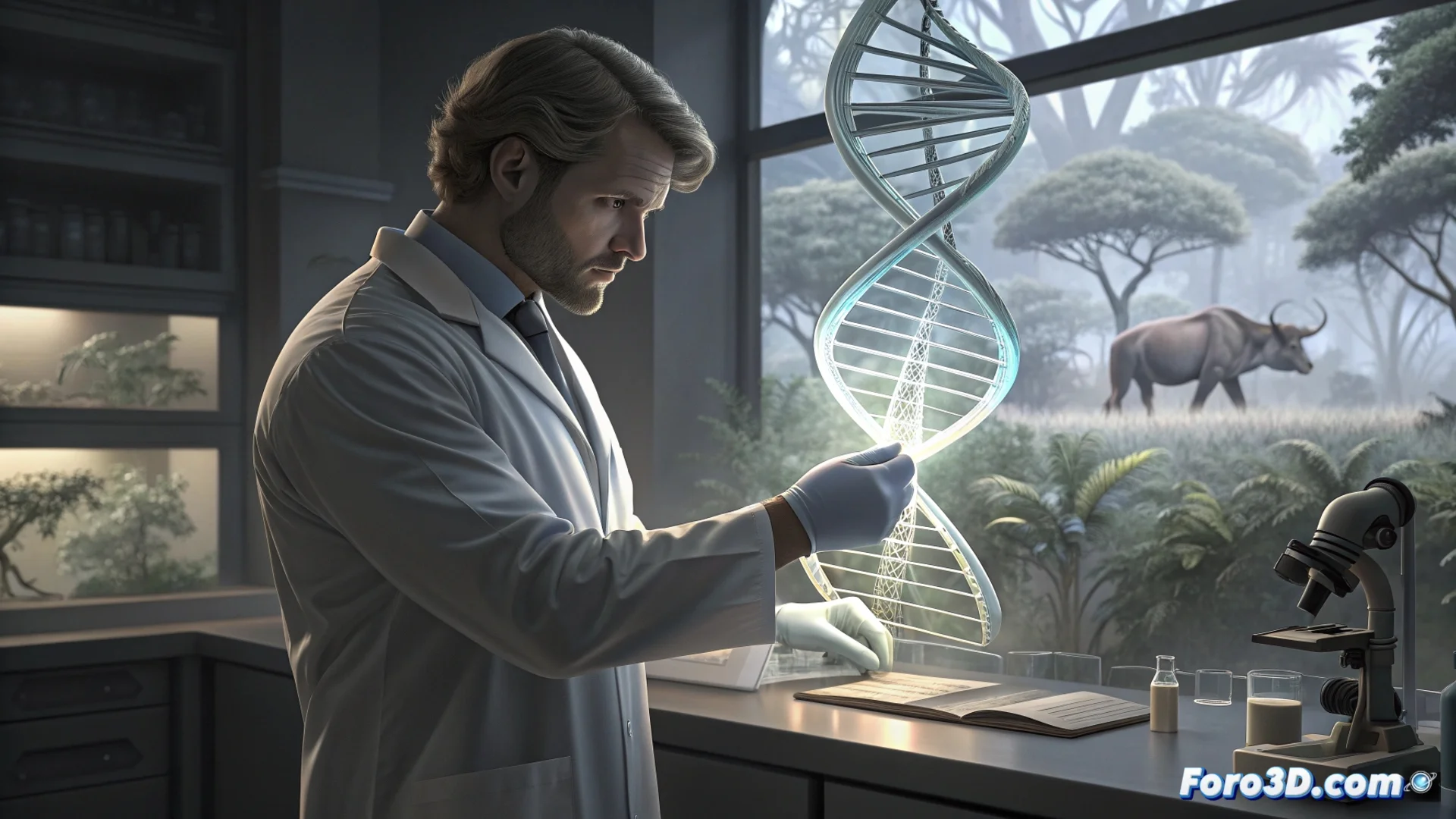
De-extinction Faces Growing Skepticism in 2026
The year 2026 marks a turning point for the idea of resurrecting extinct species. Despite advances in genetics and synthetic biology, a significant part of the scientific community is now more forcefully questioning the viability and purpose of these projects. The debate centers on the enormous gap between public enthusiasm and the harsh technical reality. 🧬
The Gap Between the Dream and Biological Reality
The main obstacle is not just assembling a genome from ancient fragments. The real challenge, often omitted by headlines, is recreating the complete ecosystem where that species lived, including its social interactions and learned behavior. An organism is much more than its DNA sequence. Numerous initiatives announced with great media repercussion have slowed their progress or stalled upon encountering biological barriers and profound ethical dilemmas.
The Practical Limits of Reviving the Past:- Reconstructing a functional genome from degraded DNA remains an extremely complex process with gaps.
- It is impossible to exactly replicate the original habitat, climatic conditions, and food web that sustained the species.
- There is no method to transmit cultural and survival knowledge that animals learn from their progenitors and herd.
The best way to honor the species we lost is to prevent others from disappearing. Technology must first serve those who are still here.
Refocusing the Priority: Conserve Before Resurrecting
This constructive skepticism does not seek to paralyze science, but to direct it toward more achievable and urgent goals. The request from many researchers is clear: use the genetic tools developed for de-extinction to protect current biodiversity. This represents a paradigm shift, from pursuing chimeras of the past to applying that knowledge to save species on the brink of disappearance.
Practical Applications of De-extinction Technology:- Strengthen genetically weak populations of endangered species, increasing their diversity and resilience.
- Develop techniques to combat diseases that threaten iconic animals in their natural habitat.
- Create more robust genetic banks to preserve material from species whose survival is uncertain.
The Real Legacy of Genetic Science
While popular culture remains fascinated with the idea of Jurassic parks, the true biological revolution of our time might lie in ensuring the survival of the white rhinoceros or the Iberian lynx. The current debate serves to remind us that scientific and economic resources are finite. Investing them in preventing new extinctions is not only more ethical but also more feasible than trying to reverse those that occurred millennia ago. The focus must remain on those who still breathe. 🦏