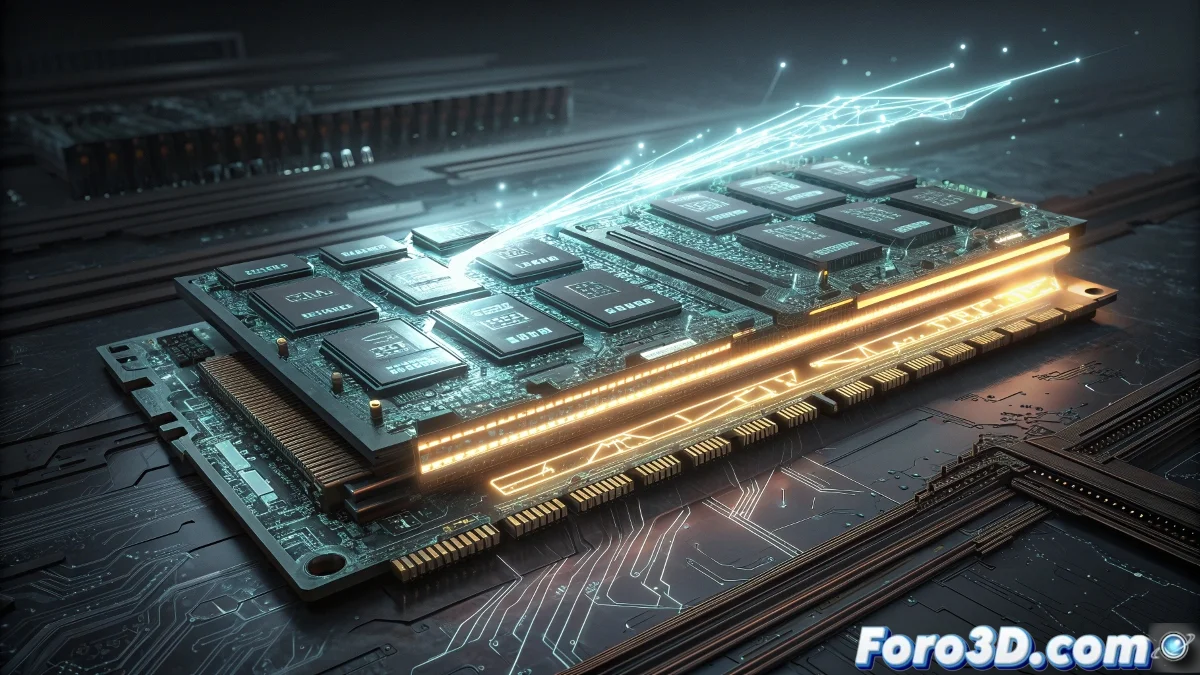
When hardware prepares for a historic generational leap
The year 2025 is shaping up to be one of those paradigm-shifting moments where multiple technologies converge to redefine what's possible. DDR6, GDDR7, CAMM2, PCIe 6.0/7.0, and WiFi 7 represent simultaneous advances that will radically transform the performance of our systems. This perfect storm of innovations promises to eliminate bottlenecks that have persisted for years, creating an ecosystem where every component can operate at its maximum capacity without artificial limitations.
The synchronization of these launches suggests unusual coordination between different manufacturers and standardization consortia. For the first time in history, system memory, graphics memory, expansion interfaces, and wireless connectivity are simultaneously evolving to new standards. The result could be the largest generational performance improvement since the transition to SSDs. The preliminary numbers are simply mind-blowing. 🚀
In 2025, we won't improve one component at a time; we will completely redefine modern computing architecture
The parallel revolutions awaiting us
Each technology solves specific problems while creating new possibilities for professional and recreational users.
- DDR6 doubling bandwidth while reducing power consumption
- GDDR7 taking graphics memory to speeds exceeding 4 Gbps
- CAMM2 replacing SO-DIMM with thinner, more efficient modules
- PCIe 6.0/7.0 multiplying data transfer speeds
- WiFi 7 offering latencies under 5ms and multi-Gbps speeds
The combination of these technologies will enable scenarios that today seem like science fiction, such as uncompressed 16K video streaming or virtual reality with imperceptible latency.
Specific impact for content creators
For the foro3d community, these improvements translate into very concrete benefits for professional workflows.
- Real-time rendering of complex 3D scenes with millions of polygons
- Physical simulations with greater precision and temporal resolution
- Collaborative cloud workflows with instant synchronization
- 8K/12K video editing without proxies or pre-rendering
The latency reduction in WiFi 7 could make working on remote files indistinguishable from working locally, revolutionizing creative remote work.
The challenge of technological transition
Mass adoption will depend on economic and compatibility factors that should not be underestimated. The industry faces the challenge of making these technologies accessible.
While early adopters will enjoy unprecedented performance, most users will have to wait for prices to normalize and the software ecosystem to fully adapt. However, the direction is clear: 2025 will mark a before and after in how we understand our computers' performance. 💻
And if all these technologies arrive simultaneously, we will probably need to update not only our hardware but also our vocabulary to describe speeds that today seem impossible to us 😉