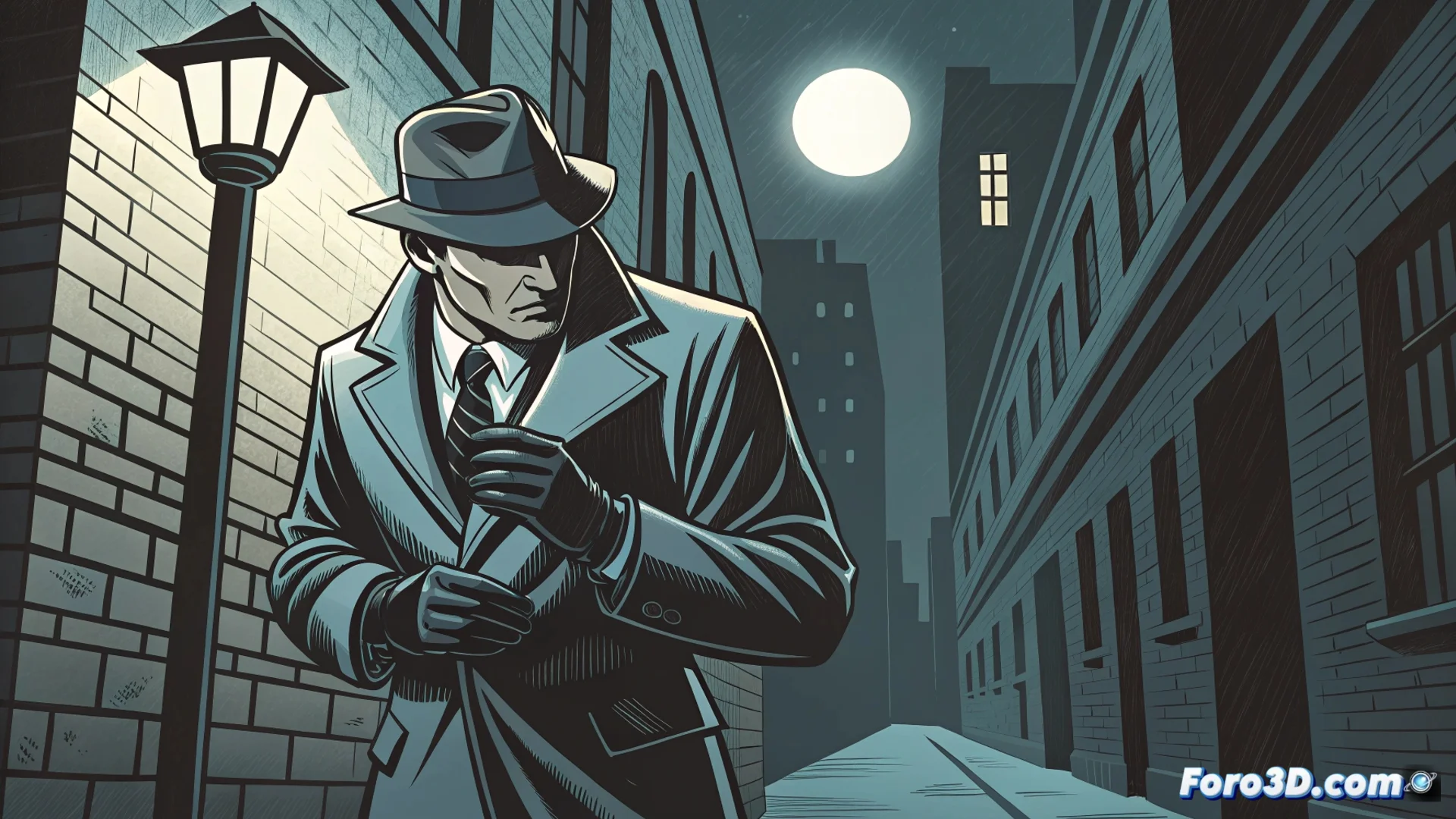
Darwyn Cooke Adapts the Graphic Novel Parker: The Hunter
The graphic novel Parker: The Hunter brings to the comic medium the first story in the series created by Richard Stark. 🎨 Darwyn Cooke handles this transition, capturing the essence of criminal noir in a visually striking format.
A Story of Betrayal and Methodical Revenge
The plot follows Parker, a professional thief who suffers a double betrayal: his partners rob him and try to kill him. He survives and embarks on a path back, a cold and calculated process to recover what he lost and administer his own justice. The narrative advances with a pace that reflects the protagonist's relentless personality. 🔪
Key Plot Elements:- Protagonist: Parker, a betrayed professional criminal.
- Conflict: Seeks revenge and to recover his stolen loot.
- Tone: Methodical, violent, and devoid of sentimentality.
Parker plans a heist with the same precision with which others choose the color of the curtain, although his plans usually end with more broken glass.
A Visual Style That Defines an Era
Darwyn Cooke employs a very distinctive artistic approach, inspired by mid-20th century graphic design and illustration. His work is characterized by an extremely limited color palette, often using flat inks of a single tone, such as blues or greens, combined with black. This method does not decorate but builds a cold and distant atmosphere. ✨
Characteristics of Cooke's Art:- Clear lines and clean, minimalist compositions.
- Strategic use of visual silences and pages with little text.
- Violence depicted abruptly and directly, without glorification.
Graphic Narrative in Service of Action
The structure of the story prioritizes movement and action. Cooke controls the pacing precisely, allowing sequences to be understood primarily through the drawing. Every visual decision, from framing to the chosen color, reinforces Parker's methodology and his impersonal world. The result is a cohesive work where form and content align perfectly. 📘