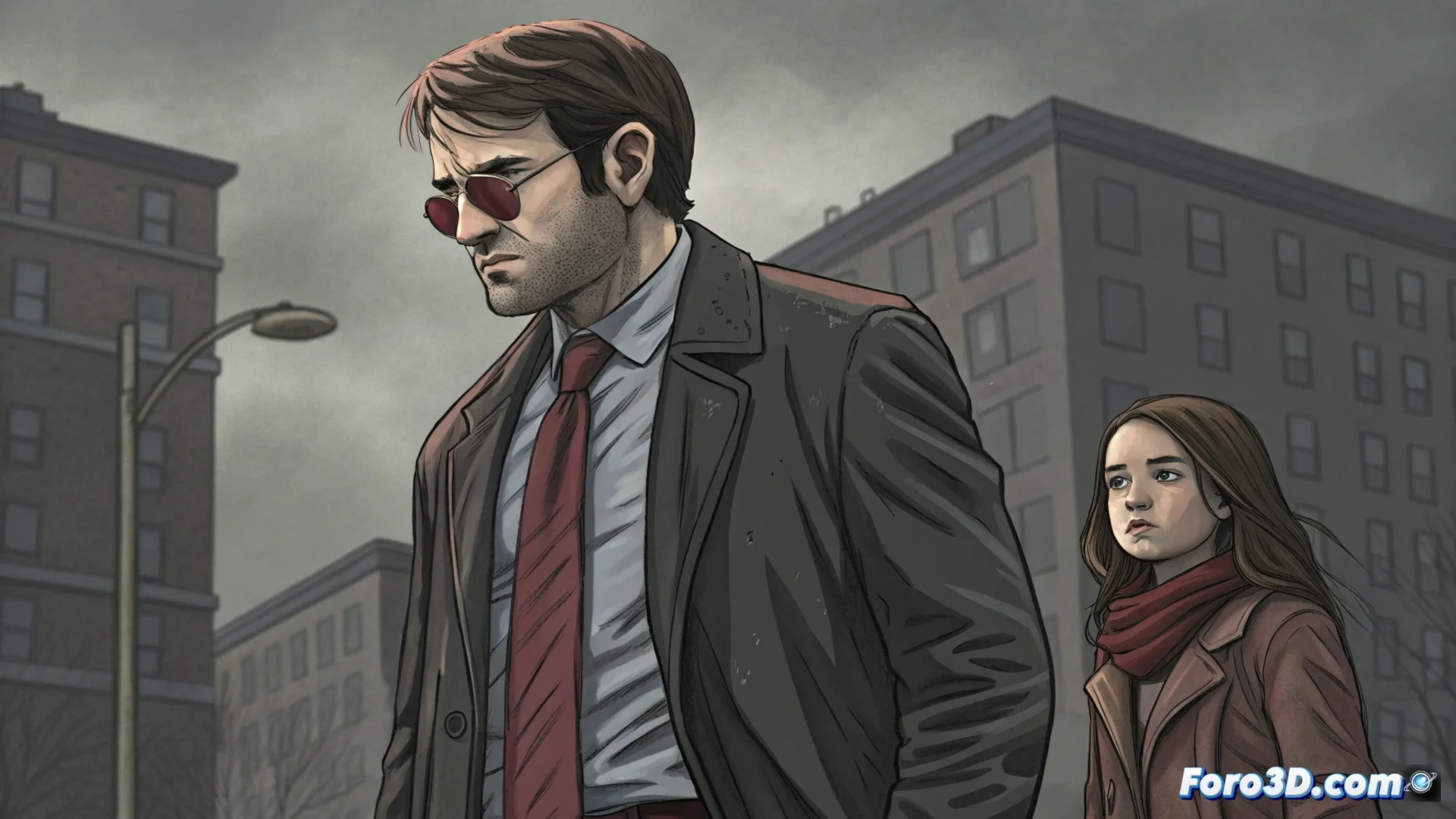
Daredevil: Cold Day in Hell Presents a Dystopian Future
The narrative places us in an alternate future where a considerably older Matt Murdock must don the mask once again. His superhuman senses are no longer as precise, and his body bears the weight of the years and battles. The appearance of a young woman who needs his help forces him into a final confrontation against the threat that has challenged him the most. 🦯
A Visual Approach that Defines the Atmosphere
Steve McNiven handles the artwork, delivering a visually striking piece. His linework evokes the raw aesthetic of Frank Miller and the classic eighties era, but with a contemporary language. He employs dynamic page compositions and a reduced color palette that emphasizes the sense of cold, wear, and decline. This treatment not only illustrates the story but makes the reader perceive the protagonist's fatigue and resilience in every panel.
Key Elements of the Art:- A powerful drawing style that pays homage to the character's legacy without copying it.
- Risky compositions that break with the traditional page structure.
- An atmospheric color range that reinforces themes of decay and struggle.
The comic works as a deep study of what it means to be a hero when the body no longer responds.
Delving into the Essence of the Man Without Fear
Beyond the action sequence, Charles Soule builds an intimate story about identity. He examines Murdock's tenacity and his unwavering commitment to doing what's right, even when it seems like a futile effort. The antagonist acts as the mirror that tests these core values in what could be his final trial. The fusion between script and art crudely conveys the protagonist's internal conflict and the oppressive environment of a Hell's Kitchen transformed into a dystopian landscape.
Pillars of the Narrative:- An aged Matt Murdock confronting his physical limitations.
- A catalyst plot centered on protection and legacy.
- The exploration of morality and justice in the face of personal decay.
The Weight of a Legacy
The result is a story that closes a cycle for the character in an emotional and reflective way. It's not just about a hero who fights, but about a man who decides what to defend when he has little left to offer except his will. Even in this state, Murdock proves that his spirit remains sharper than the senses that defined him. The comic leaves a lasting impression on the cost of heroism and the light that persists in the darkness. ⚖️