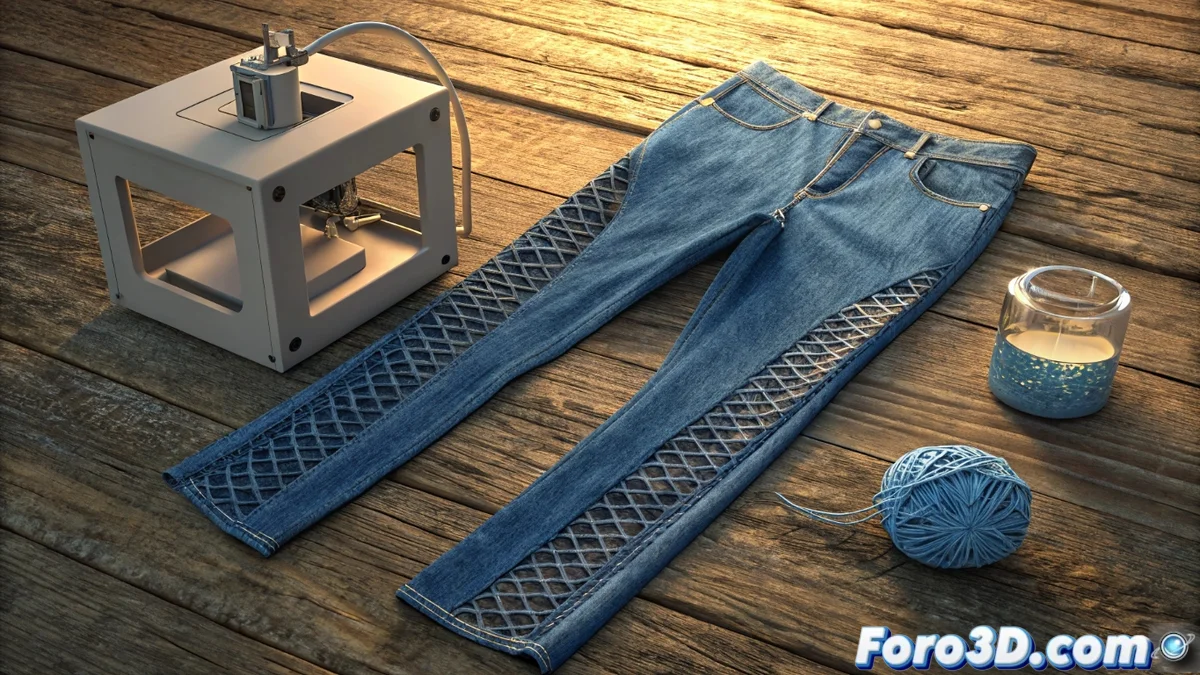
Danit Peleg presents 3D printed jeans made with recycled textile waste
Fashion designer Danit Peleg has unveiled an initial prototype of denim garments manufactured using 3D printing. This innovative project is based on a special filament produced from recycled cotton waste, mainly obtained from textile industry leftovers. The initiative seeks to transform the fashion production cycle 👖.
From waste to garment: a new material
The process begins with cotton scraps, which are processed and transformed into a filament suitable for desktop 3D printers. This material allows the creation of flexible structures that mimic the appearance and feel of traditional denim. The key lies in closing the material cycle, giving them a second life.
Key features of the process:- Raw material: Recycled cotton waste from the textile industry.
- Technology: Desktop 3D printing with specialized filament.
- Result: Flexible structures with the typical jeans aesthetic.
Sustainable fashion has reached the point where vintage is no longer a style, it is the description of the raw material.
Fusion of digital design and additive manufacturing
Peleg designs the garments entirely in 3D software, where she generates patterns and textures that simulate denim fabric. Then, she prints the pieces layer by layer. This additive manufacturing technique enables the creation of complex geometries and customization of each item without generating the fabric waste typical of conventional cutting.
Advantages of the digital method:- Minimizes material waste by building only what is necessary.
- Allows customizing designs and sizes with high precision.
- Facilitates generating textures and shapes difficult to achieve with traditional methods.
A new approach for the fashion industry
This development is part of a broader research to integrate the principles of the circular economy into design. By using textile waste as raw material, the project aims to reduce dependence on virgin resources and minimize environmental impact. Although it is a prototype and aspects such as its long-term durability need to be evaluated, it marks a path toward how garments can be manufactured in the future. This advance proposes a paradigm shift, where waste becomes the starting point 🚀.