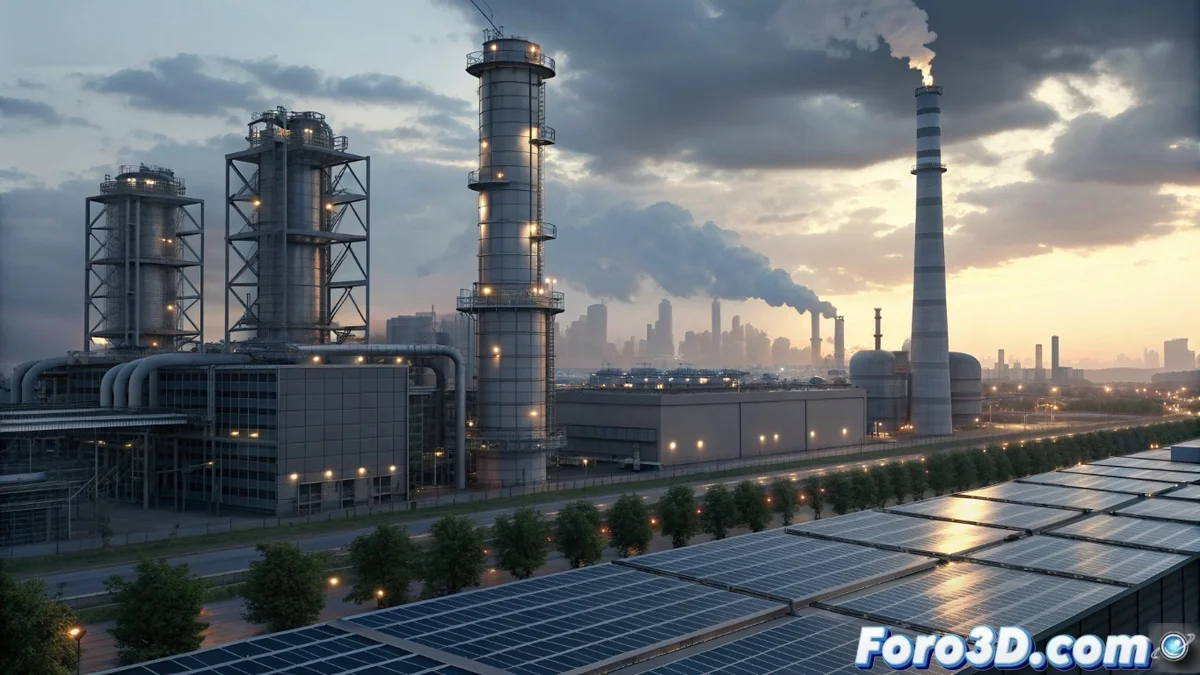
DAC Plants: The Technological Super-Trees Against Climate Change
In the context of the climate crisis, advanced technological solutions are emerging to address the excess of carbon dioxide in the atmosphere. Among them, Direct Air Capture (DAC) plants stand out, facilities that act as large-scale mechanical trees. These not only capture CO2, but also allow its subsequent use in the creation of synthetic fuels or its geological sequestration. 🌍
How do these facilities work?
The capture process is based on a continuous cycle. Large fans introduce ambient air into specialized chemical absorbents, which selectively retain CO2 molecules. Subsequently, this gas is released, purified, and compressed for transportation and final management. The efficiency and sustainability of the system crucially depend on it being powered by renewable energies, such as solar or wind.
Key components of the DAC system:- High-capacity fans: They are responsible for moving large volumes of air through the plant.
- Chemical filters or absorbents: Special materials that trap CO2 molecules from the air flow.
- Release and compression system: Process that separates the concentrated CO2 from the filters and prepares it for storage or use.
Human innovation sometimes imitates nature with an additional cost: while trees capture CO2 for free, these super-trees require a considerable energy bill.
Environmental impact and current situation
The large-scale implementation of DAC technology has the potential to significantly reduce atmospheric concentrations of greenhouse gases. Its role is complementary to other essential actions such as forest protection and the energy transition. Pioneering projects in countries like United States and Iceland are demonstrating its technical viability and laying the foundations for future expansion.
Advantages and considerations of DAC:- Net CO2 reduction: It actively removes carbon already emitted into the atmosphere.
- Flexible location: They can be installed near renewable energy sources or storage sites, without depending on the location of emissions.
- High energy consumption: Its main challenge is the large amount of electricity needed, which must be from clean sources for the balance to be positive.
A look to the future
DAC plants represent a promising tool within the set of climate solutions. Their development and scaling are crucial to achieving carbon neutrality goals. Although the technology is advancing, its massive implementation must be accompanied by a drastic reduction in emissions at the source. The path to global sustainability integrates both technical sophistication and the wisdom of natural systems. 🌱