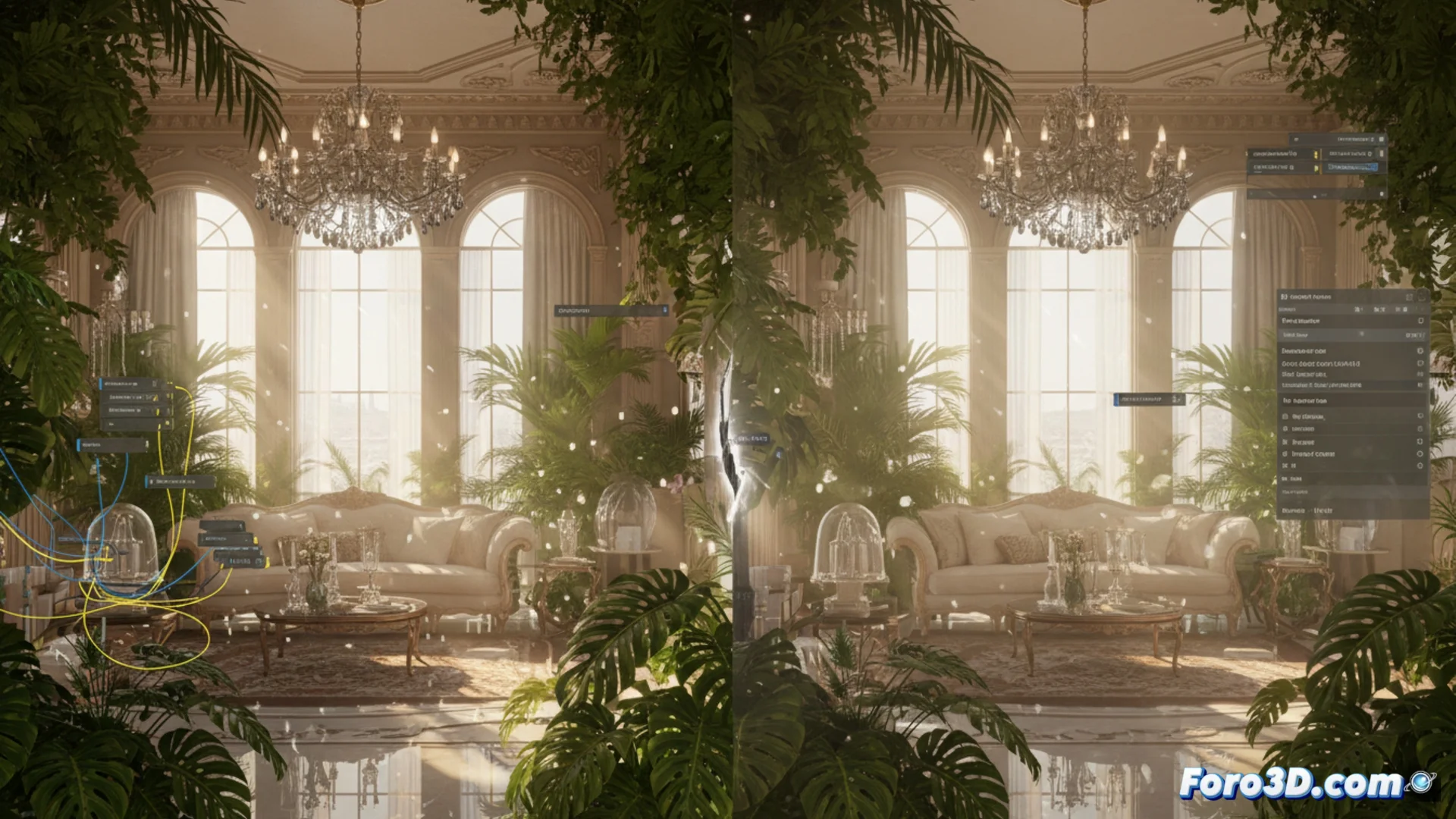
Cycles vs Unity: two philosophies for creating images
In the world of computer graphics, choosing the right tool is crucial. Two giants, Cycles from Blender and Unity, embody opposing philosophies to solve the same problem: generating images from 3D data. One seeks physical fidelity, the other, interactive immediacy. 🎯
Physical precision vs real-time speed
The core of Cycles is based on simulating how light travels physically, using ray tracing algorithms. This allows it to handle complex effects like diffuse reflections, refractions in glass, or scattering in volumes with great accuracy. In contrast, Unity as a real-time engine must produce frames at high constant speed. To achieve this, it uses precomputed methods, such as baking lightmaps, or screen-space approximations, instead of calculating every light ray from scratch in each frame. ⚡
Key differences in processing:- Cycles: Requires more computational power per image, resulting in longer render times but with inherent realism.
- Unity: Strives to maintain high and interactive frame rates, often sacrificing physical precision for speed.
- Both: Can handle detailed geometry and many materials, but the path and resources required are different.
It's not about which engine is more powerful, but what purpose it is needed for. Each dominates in its own terrain.
Contrasting workflows and user experience
Working with these engines involves opposing rhythms. In Cycles, the common cycle is to adjust parameters and wait for a preview or final render to process. This provides meticulous control over materials and lights, but slows down iterating ideas. In Unity, changes are visible instantly in the game view, an immediacy vital for developing experiences where the user interacts. However, matching the realism of Cycles requires setting up complex lighting systems and multiple rendering "tricks" that Blender's engine resolves natively. 🛠️
Characteristics of each workflow:- Cycles: Edit-wait-see cycle. Ideal for precise adjustments.
- Unity: Immediate feedback. Essential for testing gameplay and interaction.
- Convergence: Unity integrates more hybrid ray tracing, while Cycles speeds up with new hardware.
Select according to the project objective
The final decision does not revolve around raw power, but the purpose of the work. Cycles is a solid choice for producing high-quality still images or animations with cinematic ambition, where physical realism is paramount. Unity is the indicated tool for any project that must run in real time: video games, virtual reality applications, simulators, or interactive architectural visualizations. It's the difference between preparing a banquet with time or a quick and tasty dish; both feed the visual need, but serve different diners. 🍽️