Current Techniques for Modeling a Human Head in 3D
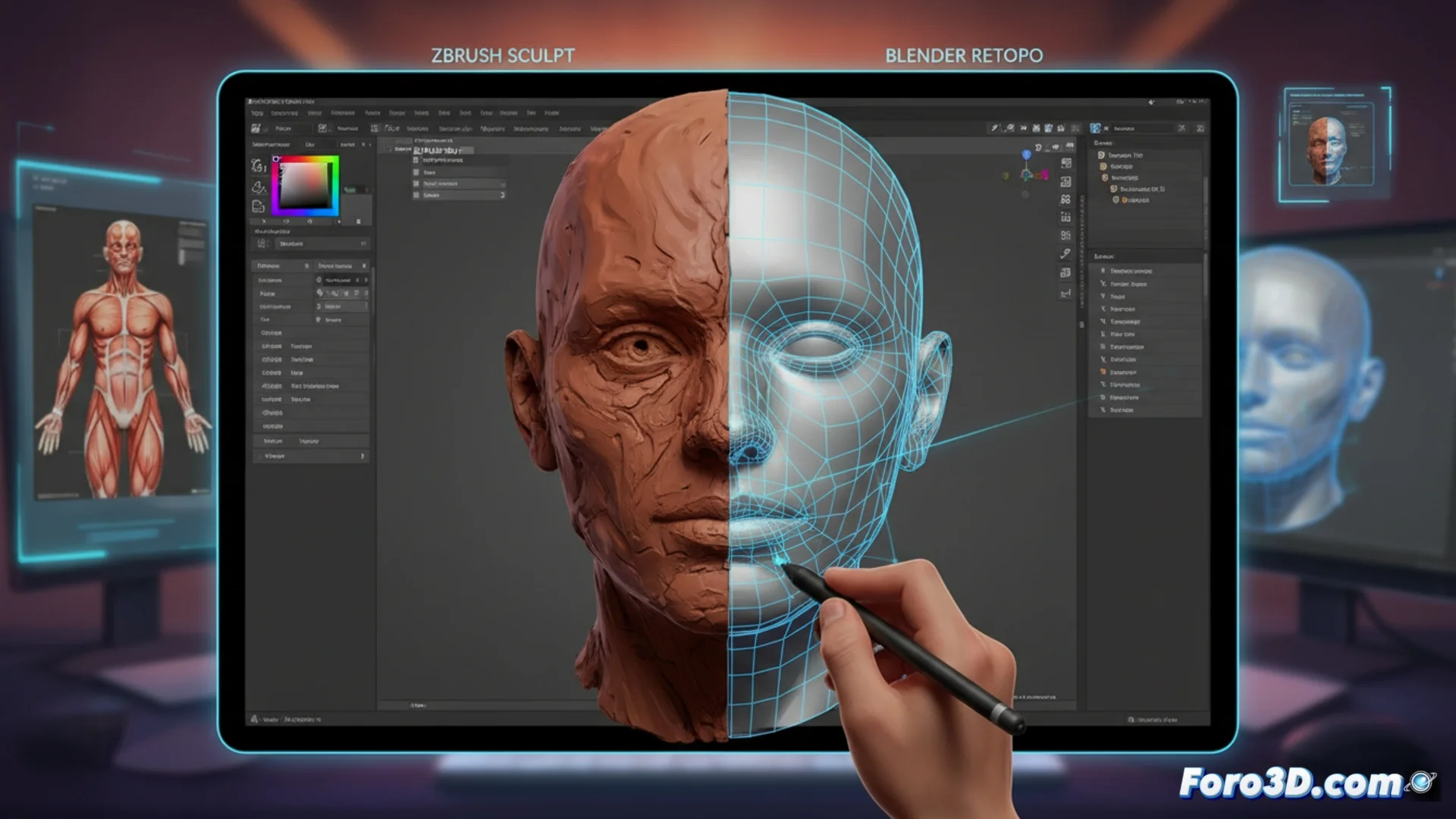
Creating a human head in three dimensions today is based on multiple techniques that work together. The central method remains digital sculpting with software like ZBrush or Blender, as it offers direct and organic control over the anatomy. Artists usually start with a basic shape, like a sphere, to then define the main volumes using brushes that mimic working with clay. This approach is very intuitive and works for both realistic and stylized characters. 🎨
Organizing the Mesh with Retopology
After sculpting the high-resolution shape, it is necessary to organize the topology. This step, called retopology, consists of drawing a clean and efficient polygon mesh over the sculpture. Programs like Maya, 3ds Max, or Blender are used to create a structure that follows the facial muscles and allows realistic deformation when animating. The complex details of the original sculpture are then transferred to this optimized mesh using normal or displacement maps, maintaining the visual appearance without the load of millions of polygons.
Key advantages of good retopology:- Allows animating facial expressions in a believable and controlled way.
- Facilitates the process of applying textures and shading uniformly.
- Optimizes the model for game engines or renderers, reducing computational cost.
Retopologizing is like dismantling a clay sculpture to rebuild it with a perfect wireframe structure, maintaining every detail of its surface.
Combining 3D Scanning and Digital Art
A common workflow in professional studios integrates 3D scanning of a real person. This greatly speeds up the initial process and ensures exceptional anatomical accuracy. The mesh obtained from the scanner, although dense and chaotic, is cleaned and used as a precise reference base. Over it, artists can sculpt additional details or directly proceed to organize the topology. This hybrid methodology, which mixes real-world data with manual creation, is fundamental for achieving hyperrealism in high-level productions.
Steps in a typical hybrid workflow:- Capture the geometry of an actor or model using 3D scanning.
- Clean and prepare the scanned mesh to use it as a reference or base.
- Apply digital sculpting to refine features or adjust the style.
- Perform the final retopology over the defined shape to produce a model ready for animation.
The Flexibility of Modern Methods
The power of current software suites lies in their flexibility. Artists are not limited to a single path; they can mix traditional sculpting, manual retopology, and scanned data according to the project's needs. This adaptability allows optimizing time and resources, choosing the best technique for each phase. Whether for film, video games, or illustration, mastering this set of complementary tools is essential for any modeler who wants to create convincing and technically solid 3D human heads. 💻