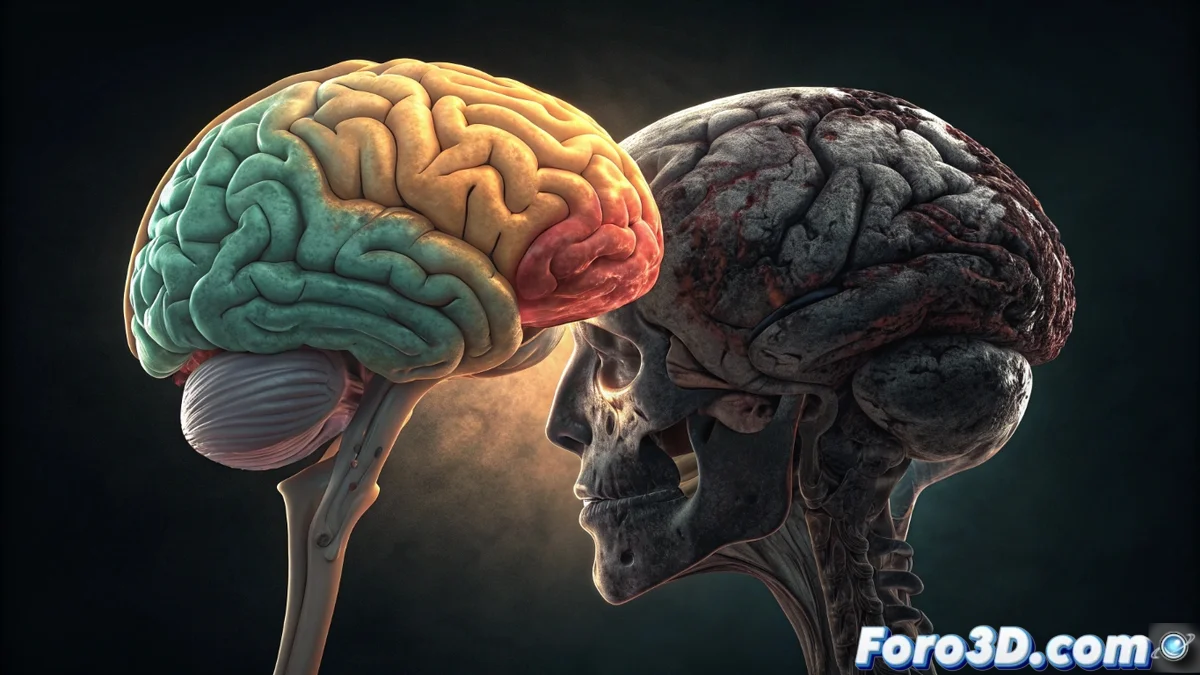
Cuarto Milenio Shows How Drugs Affect the Brain with Medical Images
The television program Cuarto Milenio dedicates a report to illustrate the impact of psychoactive substances on the most complex organ. To do so, it abandons speeches and relies on visual evidence generated by medical and computer technology. 🧠
Neuroimaging as a Demonstration Tool
The program does not limit itself to explaining, but shows the damage. It uses advanced techniques such as magnetic resonance imaging and tomography to obtain real images. These are contrasted with computer-generated graphics, creating a direct and understandable comparison between a healthy brain and one exposed to drugs.
What the images reveal:- Clear changes in the volume of gray matter, which can be reduced.
- Alterations in connectivity patterns between different brain regions.
- Variations in neuronal activity, visible in the color maps of neuroimaging.
Seeing the brain shrink like a raisin may be the best argument for not consuming.
Communicating Science with Rigor in Prime Time
Bringing this analysis to the general public represents an advance in science communication. The report opts to base itself on concrete data and visual evidence, moving away from alarmist or moralizing tones. Its goal is for the viewer to understand the risks from a biological and tangible perspective.
Keys to the report's approach:- Prioritizes showing over preaching, using the power of the image.
- Combines real medical images with 3D infographics for greater clarity.
- Explains complex processes in an accessible way without losing scientific precision.
The Power of Visualizing the Invisible
The merit of this work lies in making visible an internal and destructive process. By transforming abstract data into impactful images, the message about the effects of drugs gains strength and credibility. More than talking about damage, it allows one to perceive it directly, marking a notable difference in how television can inform about health. 💡