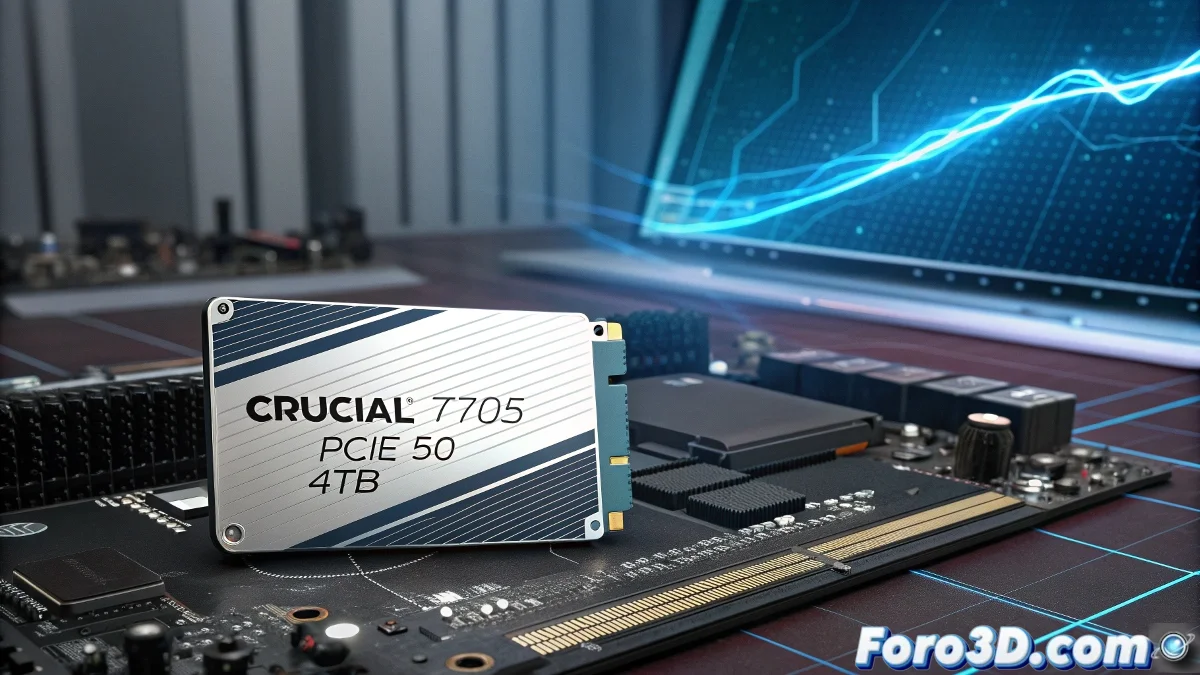
Key Specifications
Ultra-high-speed storage has just found a new benchmark in the market. 💾 The Crucial T705 PCIe 5.0 4TB represents the absolute cutting edge in SSD technology, specifically designed for users who demand the maximum possible performance. With advertised sequential speeds of up to fourteen thousand five hundred megabytes per second in read and twelve thousand seven hundred in write, this drive sets new parameters for what is possible to achieve in NVMe storage. The combination of Micron's 232-layer TLC NAND memory with the Phison E26 controller and integrated DRAM cache creates a technological package that fully justifies its positioning at the top of the consumer segment.
Real-World Performance and Considerations
Independent performance tests confirm that the T705 is not just numbers on paper. In synthetic benchmarks and real-world usage scenarios with massive file transfers, the drive demonstrates genuinely impressive capabilities that clearly surpass its predecessor, the T700. However, the experience is not without important nuances: in small-sized random access operations, the improvement compared to high-end PCIe 4.0 solutions is less dramatic. Furthermore, the heat generated during sustained operations represents a significant technical challenge that requires robust thermal dissipation solutions to avoid thermal throttling that degrades performance.
Advertised sequential speeds of up to 14,500 MB/s read and 12,700 MB/s write
Who is this drive for?
The ideal profile for the T705 is clearly found in the professional and high-level enthusiast realm. Content creators working with 8K resolution, developers compiling massive projects, and scientific workstations processing gigantic datasets will find in this drive a transformative ally. For the average user who primarily plays conventional titles or performs office tasks, the performance difference compared to a quality PCIe 4.0 SSD may not justify the additional investment, especially considering the thermal and system compatibility requirements.
The Invisible Bottleneck Paradox
There is a fundamental irony in the world of ultra-high-speed PCIe 5.0 SSDs like the T705. Although technically capable of transferring data at speeds exceeding fourteen gigabytes per second, this maximum potential is rarely reached in real-world usage scenarios. The bottleneck shifts from the storage itself to other system components: processors that cannot keep up with decompression, software with architectural limitations, or simply the lack of a second equally fast drive to serve as a transfer destination. This reality creates the paradoxical situation where you pay a premium for performance that the complete ecosystem rarely allows to be fully exploited.
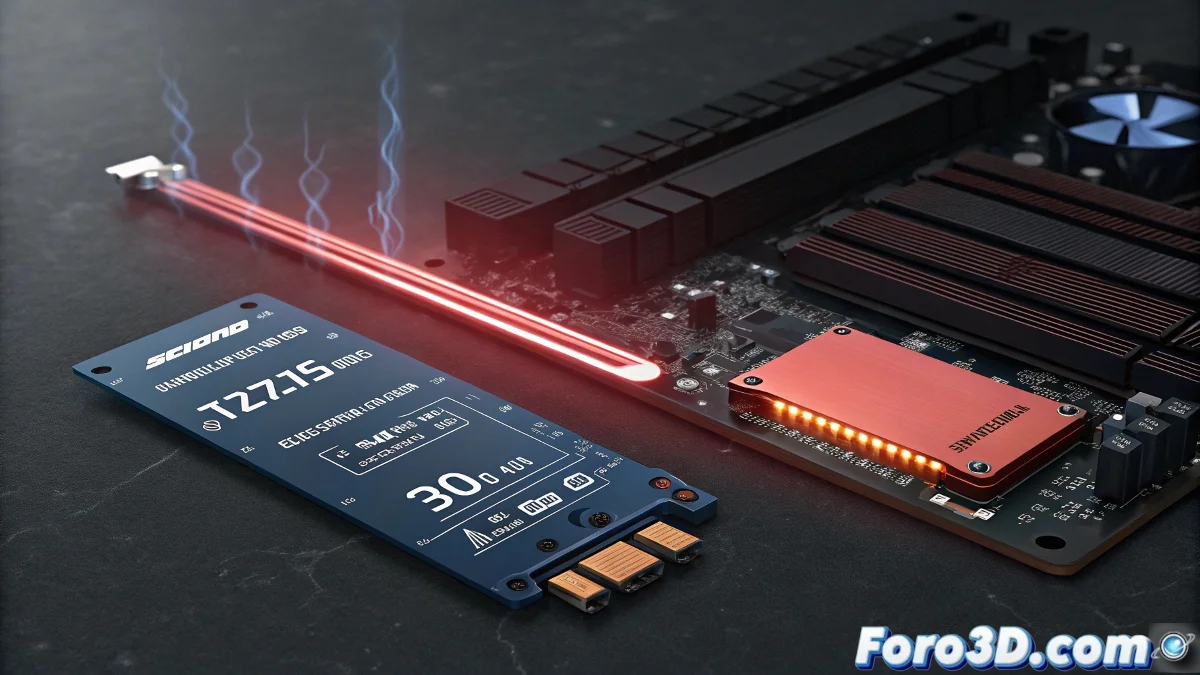
The Renaissance of Thermal Dissipation
Latest-generation SSDs like the T705 have radically transformed the relationship between storage and thermal management. Where before solid-state drives were essentially passive components requiring minimal cooling attention, they now demand dissipation solutions comparable to those of mid-range CPUs and GPUs. Thermal throttling has become the number one enemy of sustained performance, forcing manufacturers to include massive heatsinks and users to consider airflow around M.2 slots as a critical system design factor.
Highlighted Technical Features
The T705 incorporates significant advancements in multiple dimensions that justify its market position. Every component has been optimized for maximum performance.
- PCIe 5.0 Interface: Full compatibility with the latest standard while maintaining backward compatibility
- NAND Memory: 232-layer TLC technology that balances performance, durability, and cost
- Advanced Controller: Phison E26 with architecture optimized for PCIe 5.0 demands
- Thermal Management: