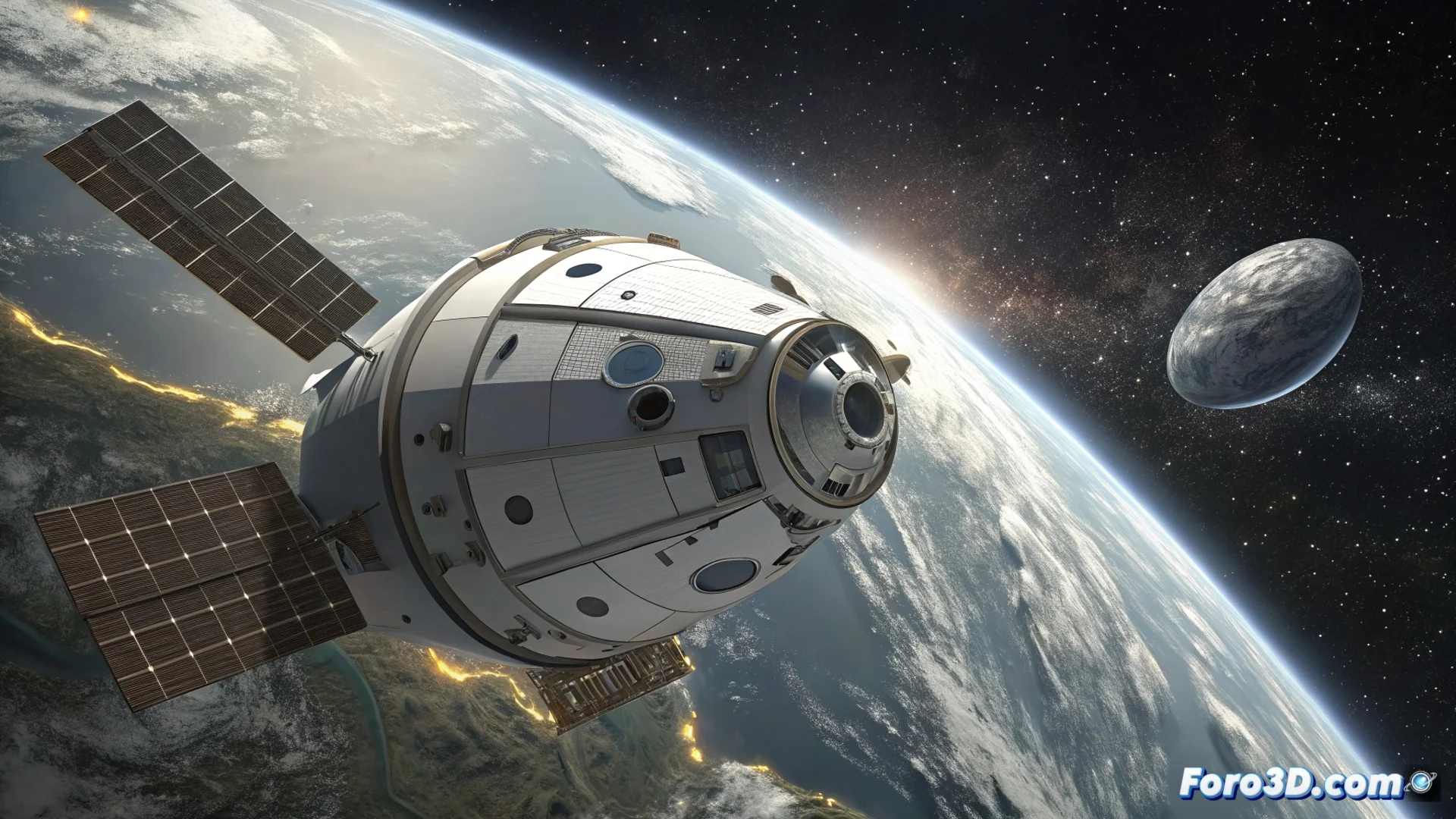
Crew-11 Mission Ends and Leaves the International Space Station
The eleventh operational mission of SpaceX for NASA concludes after six months in orbit. The international crew bids farewell to the orbital complex and boards the capsule to begin the return journey. 🚀
Undocking and Departure from the Space Station
The Crew Dragon Endurance spacecraft executes the maneuver flawlessly to separate from the Harmony module of the ISS. This step marks the formal start of the journey home after a long stay in space.
Key details of the departure:- The capsule undocks autonomously, following the programmed sequence.
- The maneuver is completed without issues, confirming the good condition of the systems.
- This event closes the eleventh crew rotation managed by SpaceX for the U.S. space agency.
After months of floating, the first thing they miss is the feeling that things stay where they leave them.
Scientific Achievements in Microgravity
During their stay, the two NASA astronauts, one from ESA, and one from JAXA worked on numerous research projects. The data obtained are vital for planning trips beyond low Earth orbit.
Main areas of research:- Analyze how various materials and fluids behave in a microgravity environment.
- Study the effects of prolonged exposure to space on human physiology.
- Gather crucial information for designing crewed missions to the Moon and eventually to Mars.
Return and Recovery on Earth
The final phase of the mission involves a controlled descent through the atmosphere and a soft splashdown. Specialized teams mobilize immediately to assist the returning crew.
Return process:- The capsule performs a parachute-retarded descent over the Atlantic Ocean, near Florida.
- SpaceX recovery teams deploy quickly to pull the spacecraft from the water and extract the astronauts.
- Immediately after rescue, the crew undergoes initial medical evaluations to begin their readaptation to Earth's gravity, a process that may include dizziness.
The successful conclusion of the C