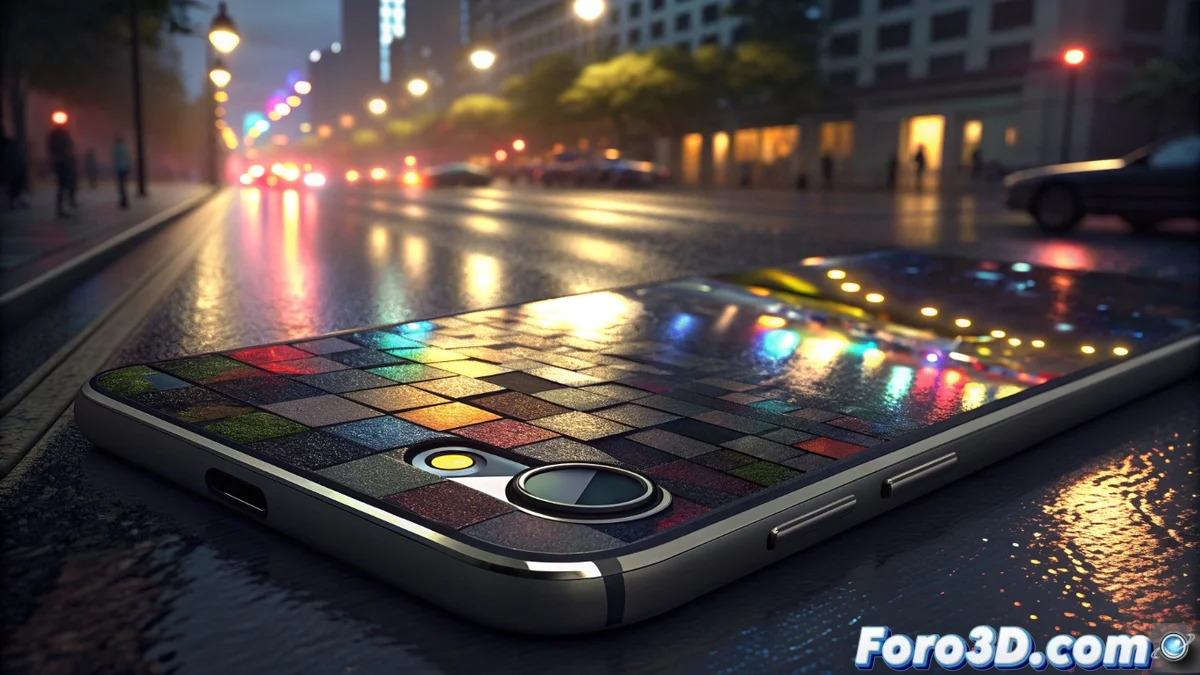
Creative Digital Zoom: From Enemy to Artistic Ally
Conventionally, digital zoom on smartphones is pointed out as the villain of mobile photography, guilty of pixelated images full of artifacts. However, a radical change of perspective can turn this technical limitation into one of the most personal and expressive tools on your device. The key lies not in fighting its nature, but in embracing and directing its peculiarities to generate a distinctive visual language. 🎨
Embracing the Aesthetic of Digital Imperfection
By activating digital zoom to the maximum and pointing the camera at scenes with repetitive patterns, high contrast, or surfaces rich in texture, the interpolation algorithm begins to paint unpredictably. This process generates an organic abstraction where edges blur, colors blend into new gradients, and digital noise integrates to form a pictorial grain with character. A brick wall can transform into a watercolor, and a forest at sunset into a smear of vibrant tones and dreamlike textures.
Ideal Scenarios for Experimentation:- Architecture and Patterns: Facades, repetitive windows, or geometric structures that, when decomposed, create abstract compositions.
- Textured Nature: Foliage, tree bark, or bodies of water, where loss of detail generates unique tactile sensations.
- Light and Shadow Play: Scenes with harsh lighting that, when processed, accentuate volumes and create dramatic or sculptural atmospheres.
Technological "imperfection" is not an error, it is a signature. Using digital zoom creatively is prioritizing sensation over pure information.
Narrative Focus and Emotional Isolation
The creative application goes beyond the purely abstract. A moderate level of digital zoom can be used as a visual narrative tool to isolate and emphasize. By zooming in on a specific detail—such as cracks in a wall, drops on a glass, or aged hands—the slight loss of sharpness and increased contrast inherent in the process act as a subjective filter. This effect decontextualizes the element, giving it emotional weight, melancholy, or a dreamlike air that a faithful and sharp representation would hardly achieve.
Techniques for Intentional Close-Up:- Detail Isolation: Look for small but significant elements within a larger scene and use them as unique protagonists.
- Contrast Control: Take advantage of how digital zoom tends to exaggerate differences between lights and shadows to create high-impact visual images.
- Atmosphere through Blur: The lack of sharp definition generates a sense of memory, dream, or impression, ideal for introspective portraits or evocative landscapes.
Redefining the Tool's Purpose
The creative journey with digital zoom consists of rewriting its user manual. You stop seeking a faithful close-up to pursue a personal interpretation of reality. The next time someone questions the lack of sharpness in your photo, you can explain that you are exploring the limits of post-photographic digital deconstruction. Or, with a wink, claim it's an intentional camera movement… but with a lot of style. In the end, transforming a supposed weakness into your strongest artistic signature is the greatest creative triumph. ✨