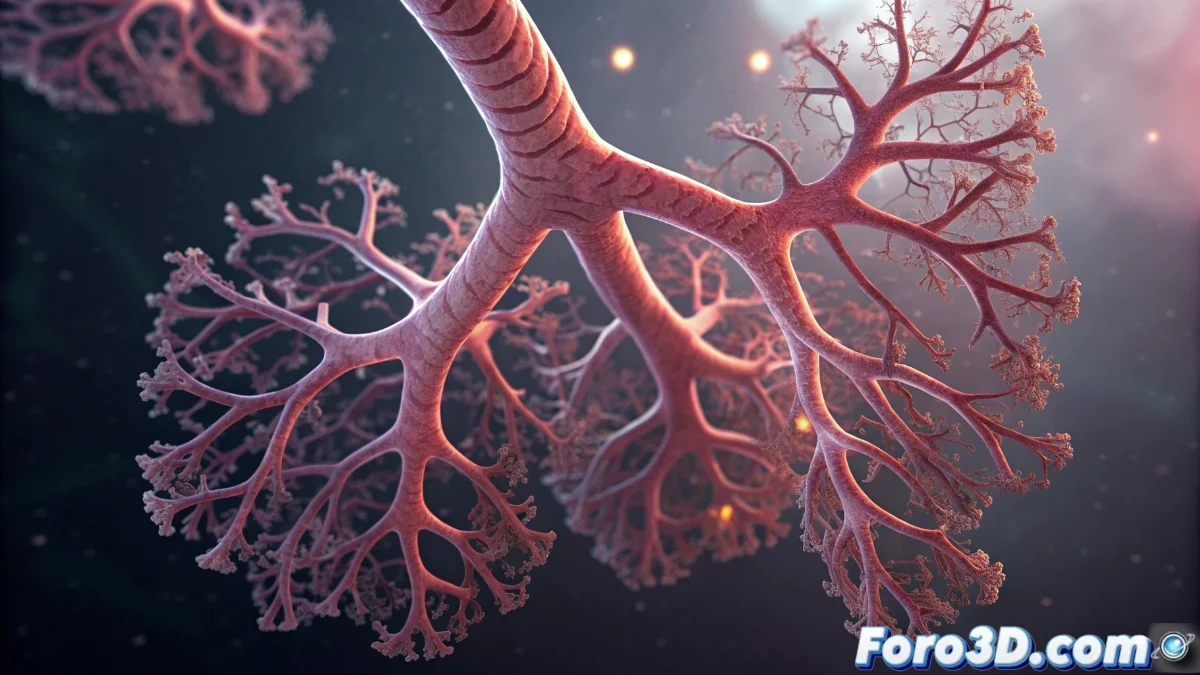
Creating Realistic Bronchioles in 3ds Max
The digital recreation of anatomical structures like bronchioles requires specialized modeling approaches that capture their complex branching morphology. In 3ds Max, we have multiple professional tools to achieve anatomically precise results 🫁.
Advanced Organic Modeling Techniques
The process begins with the construction of the base mesh using splines that define the path of the branches. The Sweep modifier is ideal for generating the tubular geometry, allowing adjustment of circular profiles that progressively adapt to the different bronchiolar calibers. The subdivision hierarchy should reflect the transition from the main ducts to the thinnest units.
Recommended Workflow:- Set up guide splines with successive branches that mimic real anatomy
- Apply Sweep and TurboSmooth modifiers to refine geometry and smooth surfaces
- Adjust curvature parameters and thicknesses to achieve realistic anatomical progression
Anatomical accuracy not only improves visual realism but also elevates the educational value of the medical project
Specialized Material Setup
Respiratory tissues present unique characteristics of translucency and texture that require advanced shaders. Both V-Ray and Arnold offer subsurface scattering parameters that perfectly simulate the passage of light through epithelial tissue. Combining them with displacement and bump maps adds essential surface micro-details.
Key Elements in Materials:- Configure SSS layers with appropriate colors for bronchiolar tissue
- Incorporate variable roughness maps to avoid artificial uniformity
- Use procedural textures that simulate natural folds and irregularities
Medical Lighting and Final Rendering
The lighting setup determines the readability of the three-dimensional structures. A Dome Light with a medical HDRI provides soft ambient lighting, while directional lights accentuate volumes and textures. Professional rendering should include depth of field effects that direct attention to specific areas of anatomical interest.
Upon completion, many artists experience the curious duality of admiring their digital creation while gaining respiratory awareness of the organ they have just recreated in such detail. The fusion of art and anatomy reaches its peak expression in these projects 🎨.