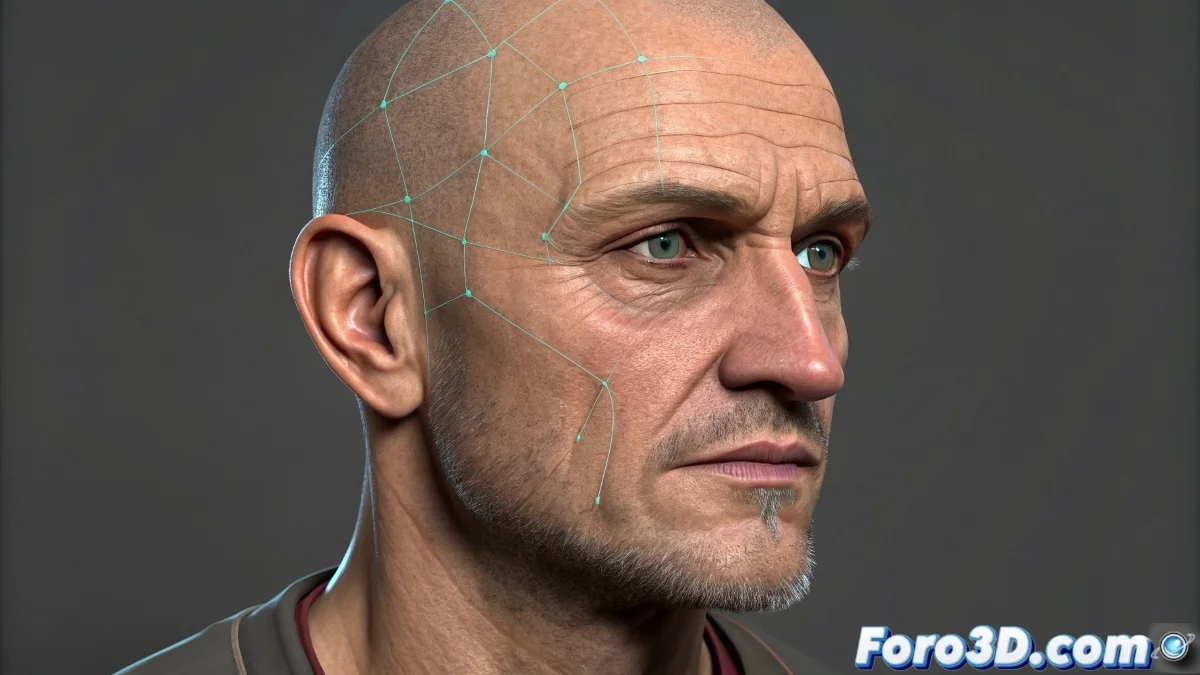
The Art of Bringing Digital Faces to Life
Creating an expressive facial system in 3ds Max is like building the instruments of an orchestra for the face 🎭. Where the body requires broad, structural movements, the face demands microscopic precision and subtle nuances. The strategic combination of bones for the general framework and morph targets for fine details allows achieving that level of expressiveness that separates generic characters from memorable ones.
Bone Architecture: The Skeleton of Expression
Facial bones provide the fundamental structure upon which expressions are built. Their strategic placement follows real anatomical principles to achieve believable movements.
- Jaw: Main control for mouth opening and chewing
- Zygomatic Arches: Bone structure for smiles and happy expressions
- Orbital Bones: Base for eyebrow and eyelid movement
- Nasal Bones: Support for nose wrinkles and expressions of disgust
- Logical Hierarchy: All connected to the skull as the main parent
Facial bones are the framework, but morph targets are the soul of expression.
Morph Targets: The Magic of Subtle Details
Morph targets (or blend shapes) allow for that level of detail that transforms mechanical movements into organic and believable expressions.
- Basic Expressions: Happiness, sadness, anger, surprise, fear
- Viseme Phonemes: Mouth shapes for lip sync
- Wrinkles and Folds: Details that add realism and age
- Expressive Asymmetries: Crooked smiles, uneven eyebrows
- Micro-expressions: Subtle, almost imperceptible movements
Control Systems for Intuitive Animation
The interface between the animator and the technical system must be invisible, allowing focus on the performance rather than the technique.
- Graphical Controllers: NURBS curves and intuitive shapes in front view
- Sliders and Dials: Sliding controls for specific morph targets
- Emotional Presets: Predefined combinations of expressions
- Mirroring Controls: Automatic mirroring with override for asymmetries
Efficient Workflow for Facial Creation
Developing a robust facial system requires following a specific methodology that maximizes results while minimizing problems.
- Base neutral modeling with topology optimized for deformation
- Creation of morph targets for key expressions and phonemes
- Placement and skinning of main facial bones
- Development of visual controllers and animation interface
- Testing with sample animations and fine-tuning
Advanced Techniques for Additional Realism
For high-budget projects, additional techniques elevate facial realism beyond the standard.
- Dynamic Wrinkles: Wrinkles that appear progressively with expression
- Teardrop System: System for tears and eye moisture
- Micro-movement: Subtle tremors and involuntary movements
- Skin Sliding: Simulation of skin sliding over the skull
Integration with Complete Body Systems
The facial system must integrate seamlessly with the complete body rig for coherent performances.
And when your character ends up with expressions that look more like fish grimaces than human emotions, you can always argue it's an underwater animation art style 🐠. After all, in the world of facial rigging, sometimes expressive accidents become unique character traits.</p