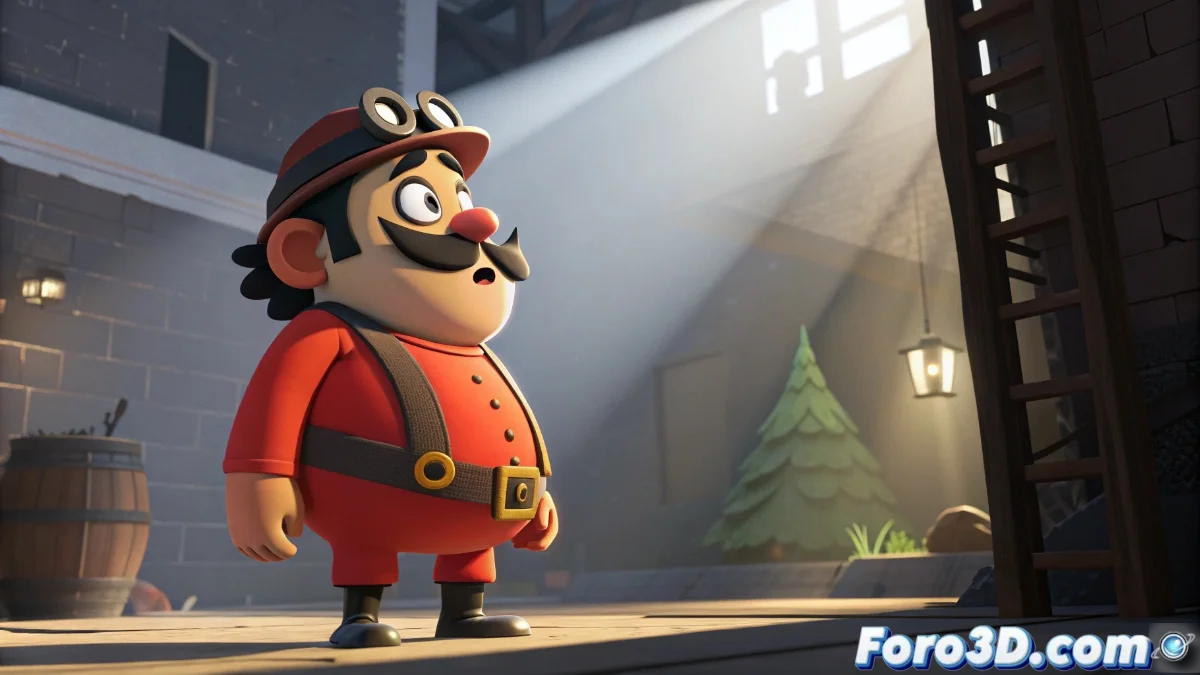
Creating Toon Shading Effects in Unreal Engine
The Unreal Engine graphics engine deploys a complete set of professional tools for developing toon or cel-shading rendering effects, enabling developers to incorporate visual aesthetics far from photorealism in their interactive productions 🎨.
Advanced Material Setup for Cel-Shading
To achieve the characteristic cartoon effect in Unreal Engine, it begins by designing a custom material that uses specialized nodes like Cel Shading or adapted Toon Shading implementations, where lighting thresholds are calibrated to generate discrete and well-defined color bands. The essence of this technique lies in altering how surfaces respond to light sources, replacing natural gradients with stepped transitions that emulate handcrafted shading.
Key elements in the setup:- Implementation of ramp textures or precalculated gradients to regulate material behavior under various lighting conditions
- Precise adjustment of shading parameters within the material editor to ensure visual coherence in all scenes
- Ability to create stylistic variations ranging from anime aesthetics to comic appearances through parametric modifications
The magic of cel-shading lies in perceptually tricking the human eye through intelligent mathematical algorithms and meticulous tuning work, demonstrating that even the simplest cartoon styles hide substantial technical complexity.
Techniques for Implementing Outlines and NPR Effects
Defining outlines are generally materialized through post-processing passes that leverage depth buffers or normal information to identify geometric edges, subsequently applying dark strokes in these critical regions. Unreal Engine integrates features like Post Process Materials where these effects are conceptualized, allowing modulation of line thickness, color, and intensity according to the project's artistic requirements.
Additional components to enrich the NPR style:- Incorporation of luminous halos and stylized projected shadows that reinforce visual identity
- Use of texture-based shading patterns to add richness and variety to the final result
- Strategic combination of multiple techniques that produce a cohesive aesthetic reminiscent of traditional animated productions
Final Considerations on Toon Rendering
The implementation of toon shaders in Unreal Engine represents a technically solid solution for video games seeking to stand out through a cartoon visual identity, while simultaneously maintaining the rendering efficiency essential for smooth interactive experiences. This approach demonstrates that non-photorealistic styles, far from being simplifications, constitute sophisticated technical disciplines that require deep understanding of lighting, materials, and image processing 🚀.