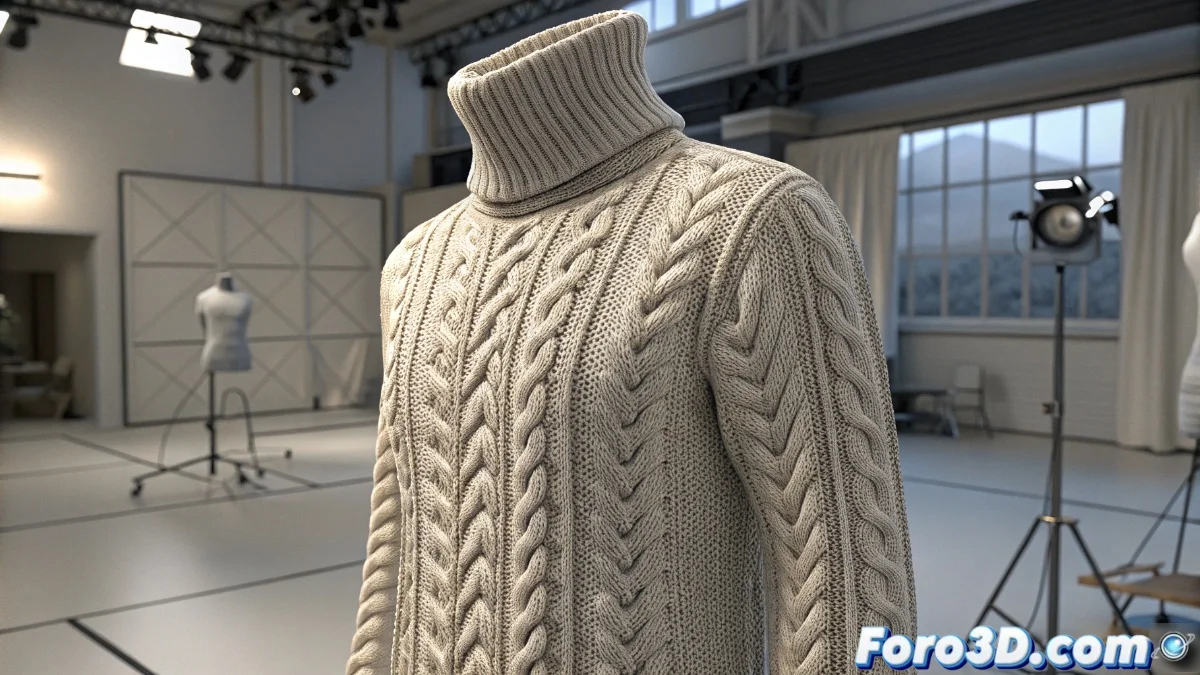
Creating Fabrics and Knits in Blender for 3D Printing
In the realm of 3D design, Blender has become an essential tool for developing complex textile structures through innovative modeling and texturing techniques. 🧶
Modeling Techniques for Fabrics
We start with a base mesh to which we apply specialized modifiers like Subdivision Surface and Displace to build the anatomy of the textile. Using geometry nodes, we generate interlocking patterns that emulate threads and fibers, controlling the density and orientation of the strands with advanced procedural textures.
Key Elements in the Process:- Adjusting fiber thickness and the virtual elasticity of the material
- Generating textile structures through controlled displacements
- Precise control over the direction and density of patterns
The combination of modifiers and geometry nodes allows for recreating realistic fabrics before physical printing.
Material Setup with Shader Nodes
In the Shader Node Editor, we integrate BSDFs with roughness and normal textures to simulate authentic textile surfaces. We implement Noise Texture and Musgrave Texture connected to Bump nodes to create detailed reliefs on different types of knits.
Fundamental Aspects of the Materials:- Adjusting light reflection and transmission parameters
- Adapting to specific properties like thick wool or fine cotton
- Natural behavior of shadows and highlights under HDRI lighting
Preparation for 3D Printing
We optimize the models using the Decimate modifier while maintaining the definition of the textile patterns. We verify the correct face orientation and remove non-manifold geometry to avoid printing errors.
Critical Structural Considerations:- Exporting in STL or OBJ formats with precise scale
- Verifying minimum wall thickness according to printer capabilities
- Preventing layer adhesion problems in high-density areas
After hours of perfecting a virtual sweater, you discover the irony of not knowing how to knit with real needles, but your 3D printer will produce an impeccable garment thanks to these advanced techniques. ✨