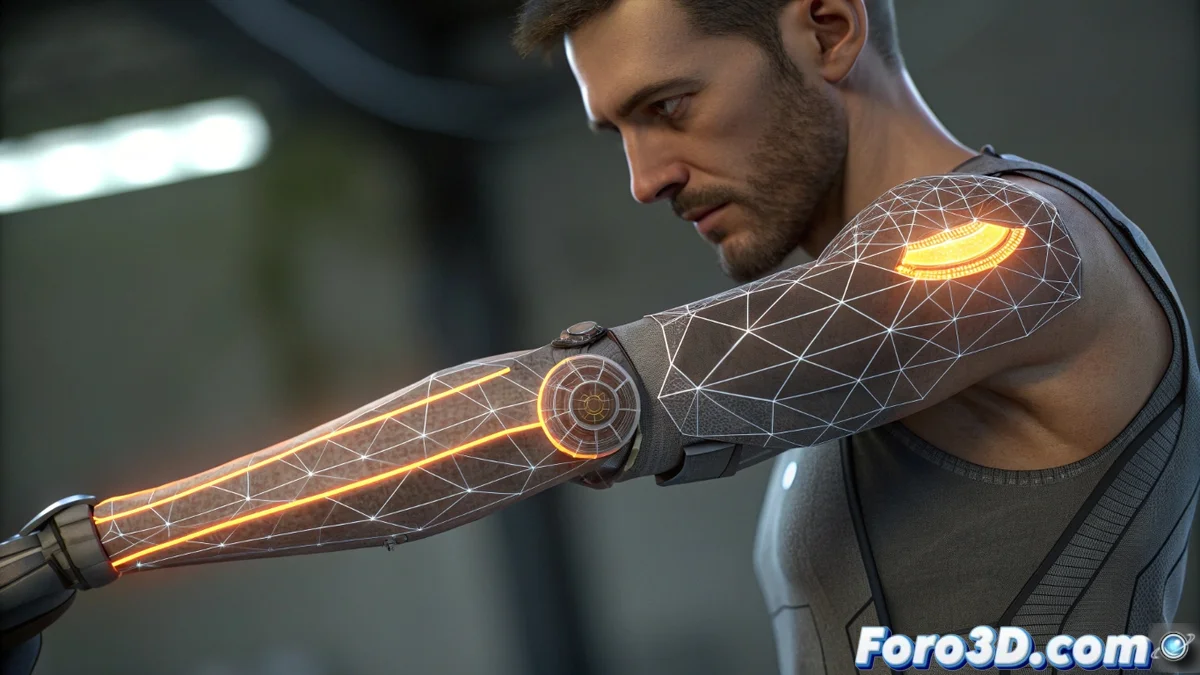
Corrective Shape Blending in 3D Character Rigging
The corrective shape blending methodology, also known as pose space deformation, constitutes a revolutionary approach within the rigging process for three-dimensional characters. 🎭 This advanced solution enables the generation of corrective blendshapes that activate intelligently based on the rotational values of the skeletal joints, providing exceptional control over geometric transformations during animated sequences.
Technical Implementation Fundamentals
The process begins by detecting those specific poses where unnatural deformations manifest on the digital model's surface. For each problematic joint identified, artists develop multiple manually sculpted variants that exemplify how the affected region should behave in different angular ranges. These alternatives are preserved as morph targets within the rigging ecosystem, with mathematical controllers established that perform smooth interpolations between them based on joint rotations. The transition between shapes occurs in a progressive and organic manner, creating the perception that the model transforms naturally without requiring constant manual adjustments during animated production. 💻
Essential Phases of the Process:- Precise identification of conflicting poses where unwanted deformations appear on the character's mesh
- Manual creation of multiple sculpted versions representing ideal behavior at different joint angles
- Setup of mathematical drivers that interpolate between blendshapes according to joint rotation values
The irony lies in the fact that after implementing this sophisticated system, characters often end up moving more naturally than we do after a full day in front of screens.
Comparative Advantages Over Conventional Methods
This approach significantly surpasses the inherent limitations of traditional linear skinning, where vertices simply replicate bone transformations without considering the underlying anatomy. Corrective shape blending facilitates capturing complex muscular behaviors and volumetric changes that occur in biological reality when joints move. Animators can work with greater autonomy, trusting that the model will preserve its anatomical correction in any pose, drastically reducing the need for subsequent manual touch-ups on each problematic frame. 🚀
Key Benefits:- Effective resolution of common issues such as the candy elbow effect or shoulder area collapses
- Preservation of the model's volumetric integrity throughout its full range of motion
- Significant reduction in manual adjustments on problematic frames during animation
Impact on Production Workflow
Incorporating corrective shape blending into rigging pipelines represents a qualitative advancement in the creation of three-dimensional characters. This technology not only optimizes production time by minimizing manual corrections but also elevates the level of realism achievable in final animations. Rigging developers implement these correctives systematically to ensure models maintain their anatomical coherence throughout complex sequences, setting new quality standards in the digital entertainment industry. ✨