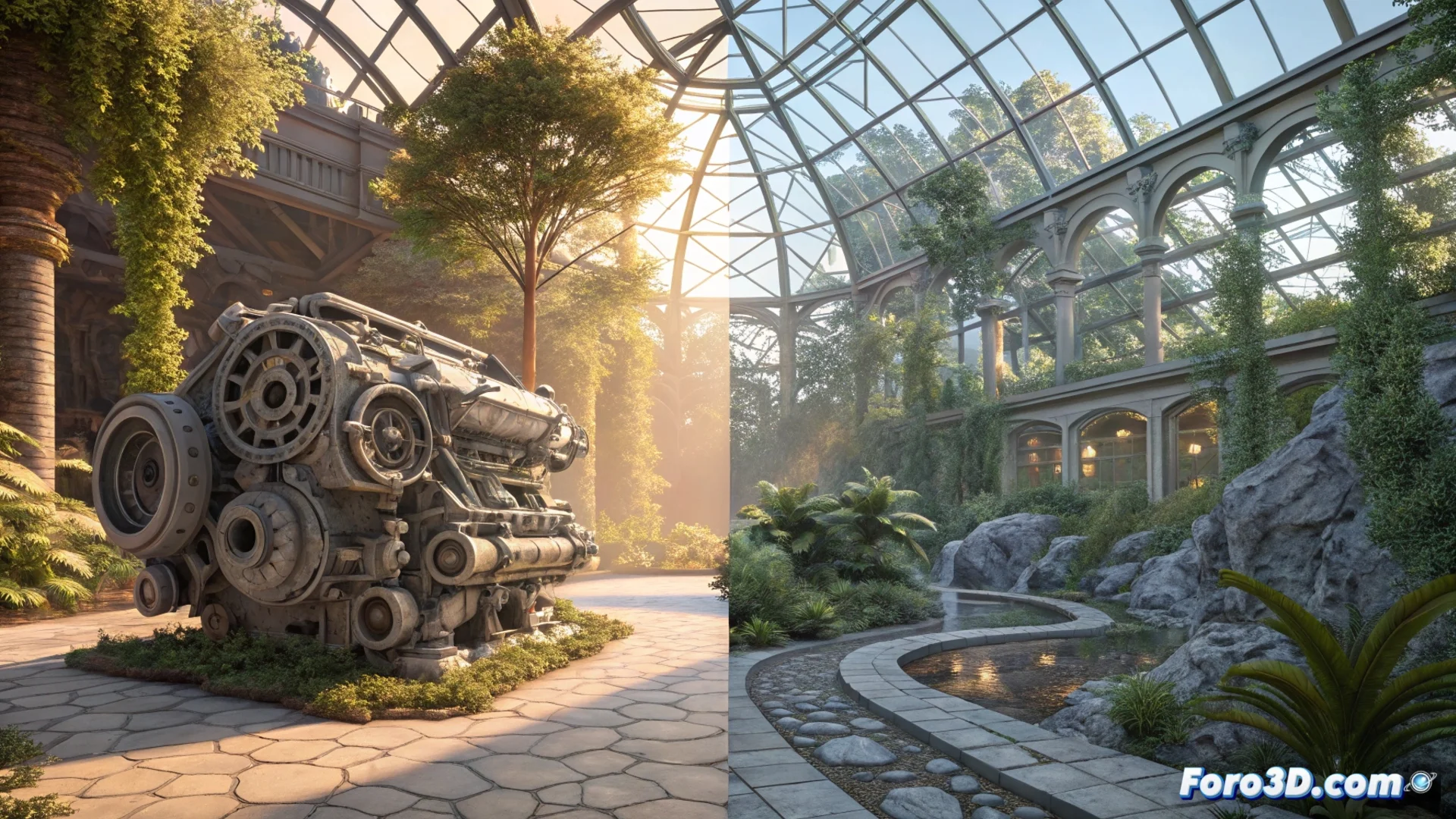
Corona Render and Redshift: two philosophies for processing graphics
In the field of 3D rendering, two engines stand out for their distinct approaches: one prioritizes physical accuracy and the other execution speed. Understanding their technical foundations is key to optimizing any visualization project. 🎨
Corona Render: CPU-based physical accuracy
Corona Render operates as an engine that employs ray tracing and relies entirely on the central processor's power. Its main goal is to simulate light behavior with a high degree of realism, resulting in images with very believable lighting and materials with meticulous details. Handling dense geometry and high-complexity textures is within its capabilities, although the time required to complete a render can increase significantly if the scene includes a lot of indirect lighting or sophisticated lighting effects. It integrates natively into applications like 3ds Max and Cinema 4D.
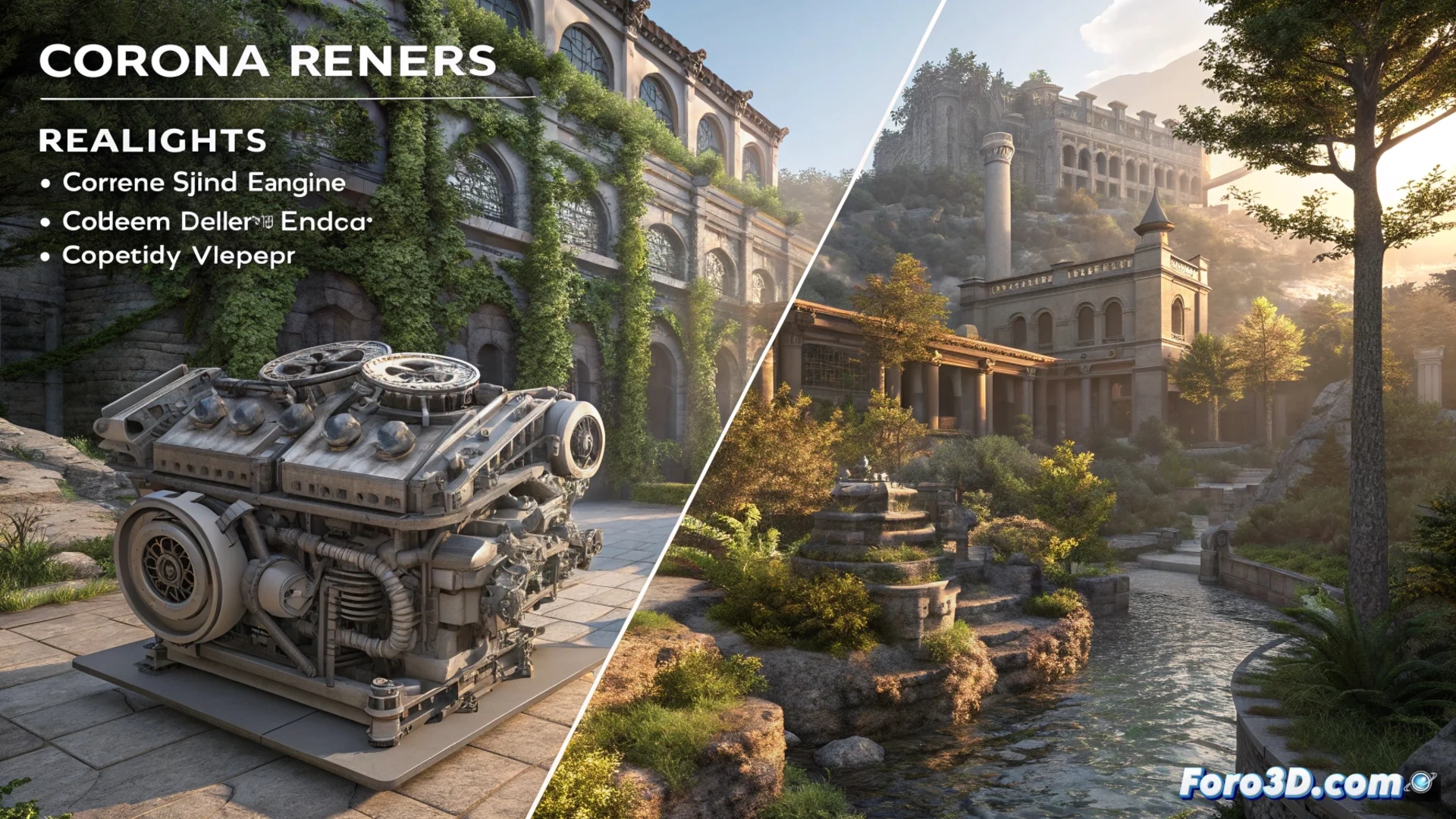 Its main features:
- Ray tracing engine that uses the CPU as the calculation base.
- Generates lighting and materials with very high physical fidelity.
- Rendering time scales with the complexity of indirect lighting.
Redshift: GPU-accelerated power
On the other hand, Redshift is a rendering engine that leverages the capabilities of graphics cards (GPU) for processing. It also uses ray tracing techniques, but its most notable advantage is speed, allowing for iterating over images and completing jobs much faster than many CPU-only based engines, provided there is powerful graphics hardware. For scenes with an enormous amount of geometry, it is essential to manage GPU memory well. Redshift also offers the possibility of using a hybrid mode, where both the CPU and GPU collaborate to distribute the workload. ⚡
What defines Redshift:- Engine that relies on the GPU to gain speed.
- Allows iterating and producing final renders with great speed.
- Includes a hybrid rendering mode (CPU+GPU) to balance resources.
An artist can spend hours optimizing a scene to render in five minutes, and then wait twenty for client feedback.
How to choose between one and the other
The decision to use Corona Render or Redshift is generally made based on the specific needs of the project and the established workflow. Corona is usually preferred in jobs where visual quality and lighting accuracy are most important, such as in architecture or product visualization, and where rendering deadlines are not the decisive factor. Redshift is a frequent alternative in productions that need to test changes quickly, such as in animation or visual effects creation, taking advantage of the fact that the GPU drastically reduces waiting times. Both engines can handle complex scenes, but each does so with a different philosophy and supporting hardware. 🤔
Key points for deciding:- Corona Render: Ideal for projects seeking extreme physical fidelity (architecture, product).
- Redshift: Optimal for workflows where fast iteration is crucial (animation, VFX).
- Scene complexity is managed differently in each engine.