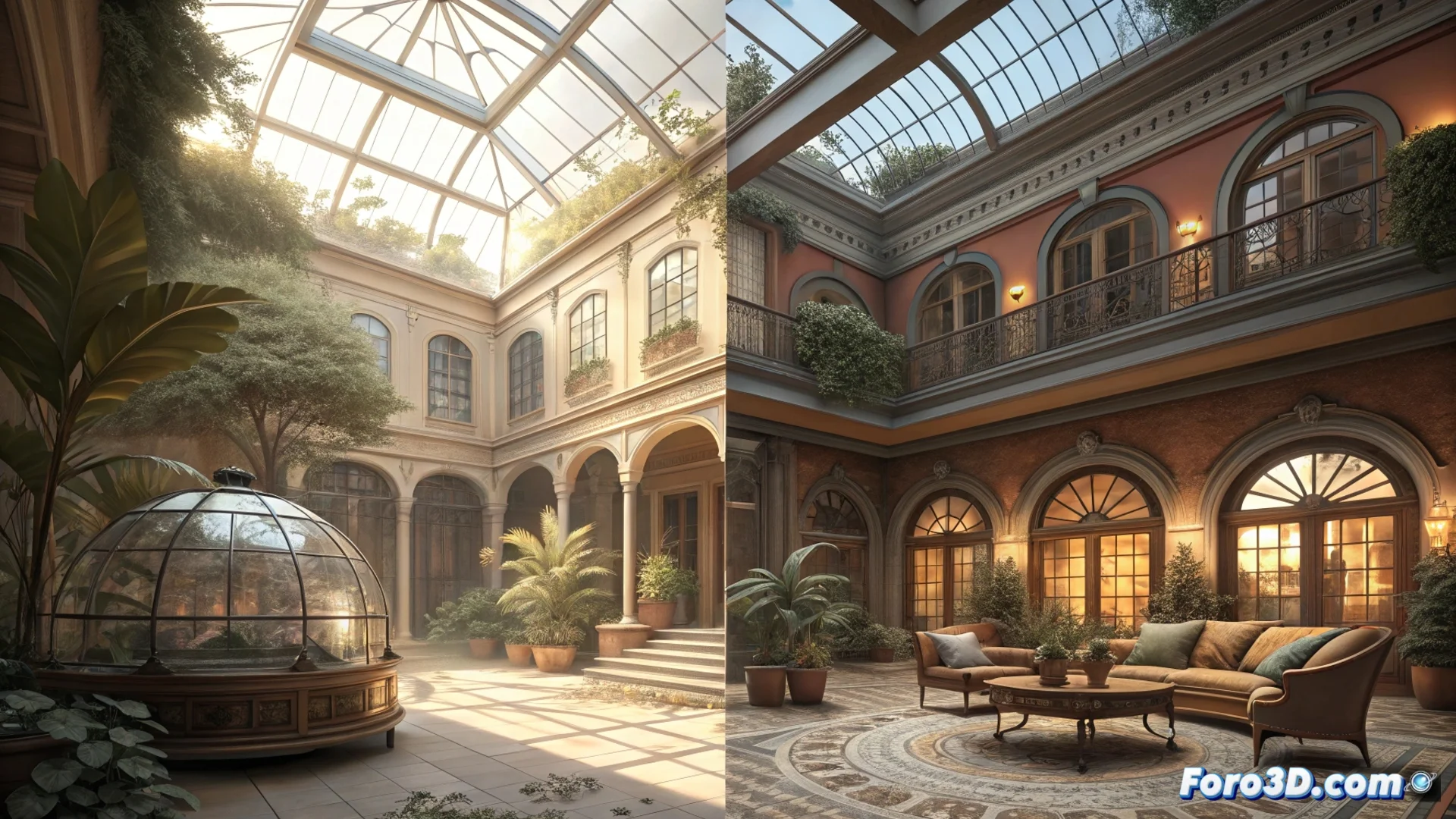
Corona Render and Iray: Two Engines with Distinct Philosophies
In the field of 3D rendering, choosing the right engine defines the project's efficiency. Two names stand out for their opposing approaches: Corona Render, which prioritizes simplicity and precise physics, and NVIDIA's Iray, which bets on the raw power of GPUs. Understanding their differences is key to optimizing your pipeline. 🚀
Corona Render: Simplicity and Physical Precision
This engine, which integrates into 3ds Max and Cinema 4D, operates with a core of ray tracing and path tracing. Its greatest virtue is how easy it is to set up materials and lights, delivering predictable and fast results. It efficiently handles very dense geometry and high-resolution textures, which is ideal for visualizing architecture and interiors with a high level of detail without crashing the system. Additionally, its interactive lighting allows instant scene adjustments.
Key Advantages of Corona:- Intuitive and accessible workflow for artists.
- Stable performance on CPU, without depending on specific graphics hardware.
- Robust capacity to manage very complex and heavy scenes.
Corona democratizes high-quality rendering, making physical precision accessible without a steep learning curve.
NVIDIA's Iray: Hybrid Power on the GPU
Iray employs a hybrid method that combines path tracing with GPU acceleration. By using the power of multiple graphics cards, it drastically reduces the time to calculate scenes with millions of polygons and complex lighting effects, such as volumetric scattering or global illumination with many bounces. However, its performance is directly tied to the available VRAM; if a scene exceeds this memory, the process can slow down significantly or fail. It is common in applications like 3ds Max, Maya, and SOLIDWORKS Visualize.
Defining Features of Iray:- Massive acceleration leveraging one or several powerful GPUs.
- Excellent for simulating materials and light with maximum physical precision.
- Its main limitation is the amount of video memory (VRAM) in the system.
How to Decide Between Them?
The choice is not about which is better, but which fits your context. Corona is a solid option if you value fast iteration, a direct artistic workflow, and don't want to invest in high-end graphics hardware. Iray shines when you can leverage GPU render farms, seek maximum physical fidelity, and computation time is a critical factor. In the end, it's about deciding whether you prefer to wait for a finalized render while having a coffee or while planning a major hardware upgrade. ⚖️