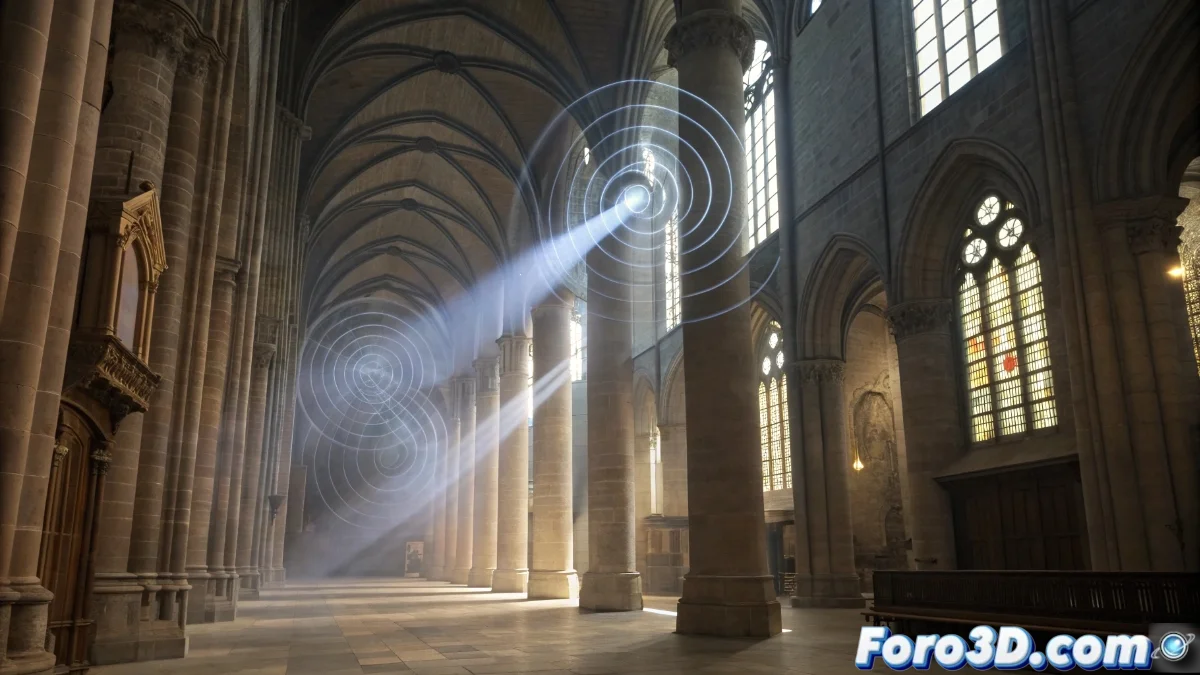
Convolution Reverb in Unreal Engine: Ultrarealistic Acoustic Spaces
Convolution reverb represents a significant evolution in audio processing within Unreal Engine, allowing the precise recreation of the acoustic characteristics of real spaces using impulse response samples. This technology completely transforms how we perceive sound environments in interactive experiences 🎧.
Technical Fundamentals of Convolution
The system operates through a mathematical convolution process that combines the original audio signal with the characteristic acoustic response of a specific space. Unlike traditional reverb algorithms, this technique captures the unique properties of places like cathedrals, professional studios, or concert halls, generating extraordinarily realistic sound results that maintain the authenticity of the simulated environment 🏛️.
Main features:- Uses impulse response files in WAV format to define acoustic properties
- Mathematical processing that preserves the original characteristics of the space
- Results significantly superior to traditional algorithmic reverb methods
Convolution does not simulate spaces - it mathematically recreates them from real samples, capturing every specific reflection and resonance.
Effect Configuration and Parameterization
To implement this technology, developers access Unreal Engine's audio mixer panel and apply the convolution effect to any sound bus. The setup involves loading custom acoustic samples or those from professional libraries, adjusting parameters such as reverb intensity, effect duration, and pre-delay times for precise control over the sound-spatial interaction 🔊.
Adjustable parameters:- Reverb level and wet/dry mix to control intensity
- Effect duration and decay to manage sound persistence
- Pre-delay to simulate distances and space dimensions
Practical Applications in Project Development
This technology finds its greatest utility in virtual reality experiences and immersive video games where acoustic-visual coherence is fundamental to the environment's credibility. Developers can create dynamic acoustic transitions as characters move between different areas, or simulate changes in space properties due to environmental variations, generating an additional layer of realism that enriches the user experience 🌐.
Final Reflection on Acoustic Immersion
Convolution reverb in Unreal Engine represents a qualitative advance in creating believable sound spaces, although its perfection can generate a perceptual irony where developers, after hours adjusting the acoustics of a Gothic cathedral, begin to notice echoes and reverberations in their own physical environment. This technology not only transforms sound in projects but potentially alters our auditory perception of the real world 🎶.