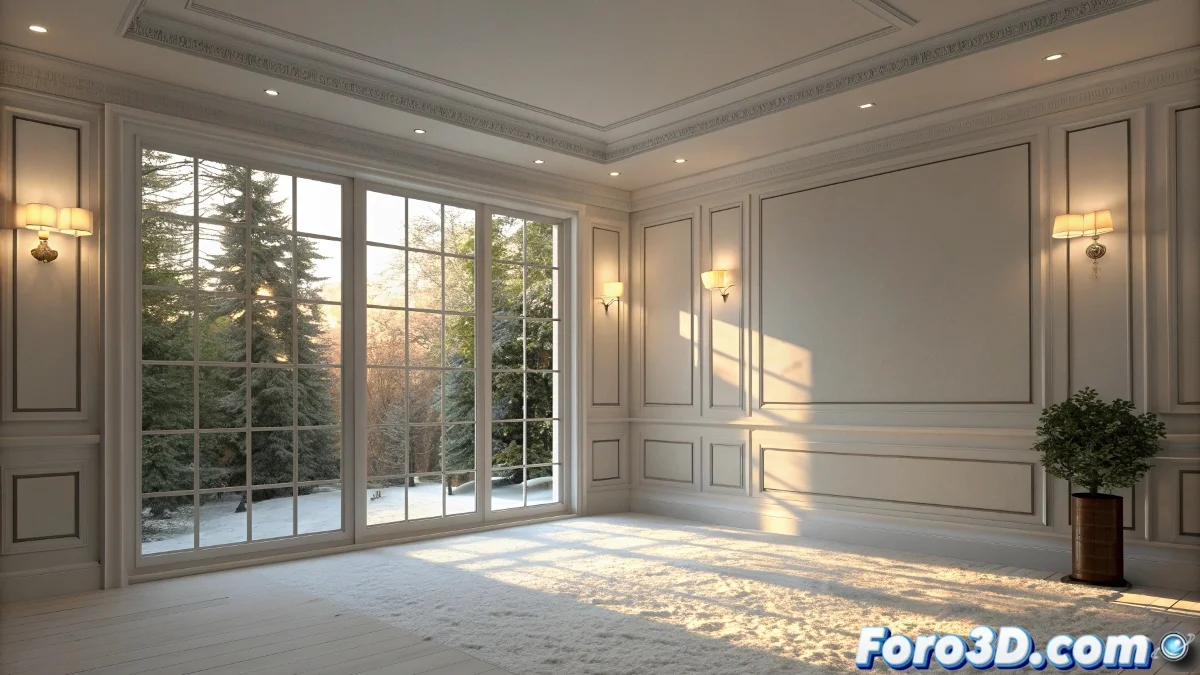
The Art of Taming Light in Interiors with V-Ray
When working on interior scenes in 3ds Max illuminated with both natural and artificial light simultaneously, overexposure becomes that recurring enemy that seems to mock your attempts to achieve realism. The paradox is fascinating: in the physical world, sunlight entering through a window and meeting interior lamps creates a harmonious blend that our eyes process naturally, but in digital rendering with V-Ray, these intensities add up relentlessly, creating those brightness peaks that burn textures and destroy color balance. The fundamental problem lies in how rendering engines calculate light energy - while in reality there is automatic compensation, in the digital environment each light source contributes its full intensity without considering the global context of the scene.
Understanding the Root of the Problem
Overexposure in V-Ray occurs because the engine treats each light source as independent, adding their contributions without applying the natural compensations that occur in the physical world.
- Lack of contextual attenuation between light sources
- Linear calculation of intensities without automatic compensation
- Materials with excessive reflectivity under high lighting conditions
- Incorrect exposure and gamma configuration
Professional Strategies for Light Balance
To achieve that natural balance between natural and artificial light, you need to implement specific techniques that trick the engine into behaving more physically.
Balancing lights in V-Ray is like being an orchestra conductor: each instrument must play at the correct volume to create harmony
- Use Inverse Square Decay on all artificial lights
- Configure Light Mix in the V-Ray Frame Buffer for non-destructive adjustments
- Apply materials with realistic reflectivity based on real-world values
- Use V-Ray Sun with moderate intensities (0.5-3.0 generally)
Step-by-Step Systematic Solution
For particularly problematic scenes, follow a specific protocol that guarantees consistent results.
Mastering exposure control in complex interior scenes is what separates occasional artists from architectural rendering professionals 🏠. Every technique you implement not only solves the immediate overexposure problem but also deepens your understanding of how light behaves in real spaces, allowing you to create renders that are not only technically correct but breathe authenticity and visual credibility.