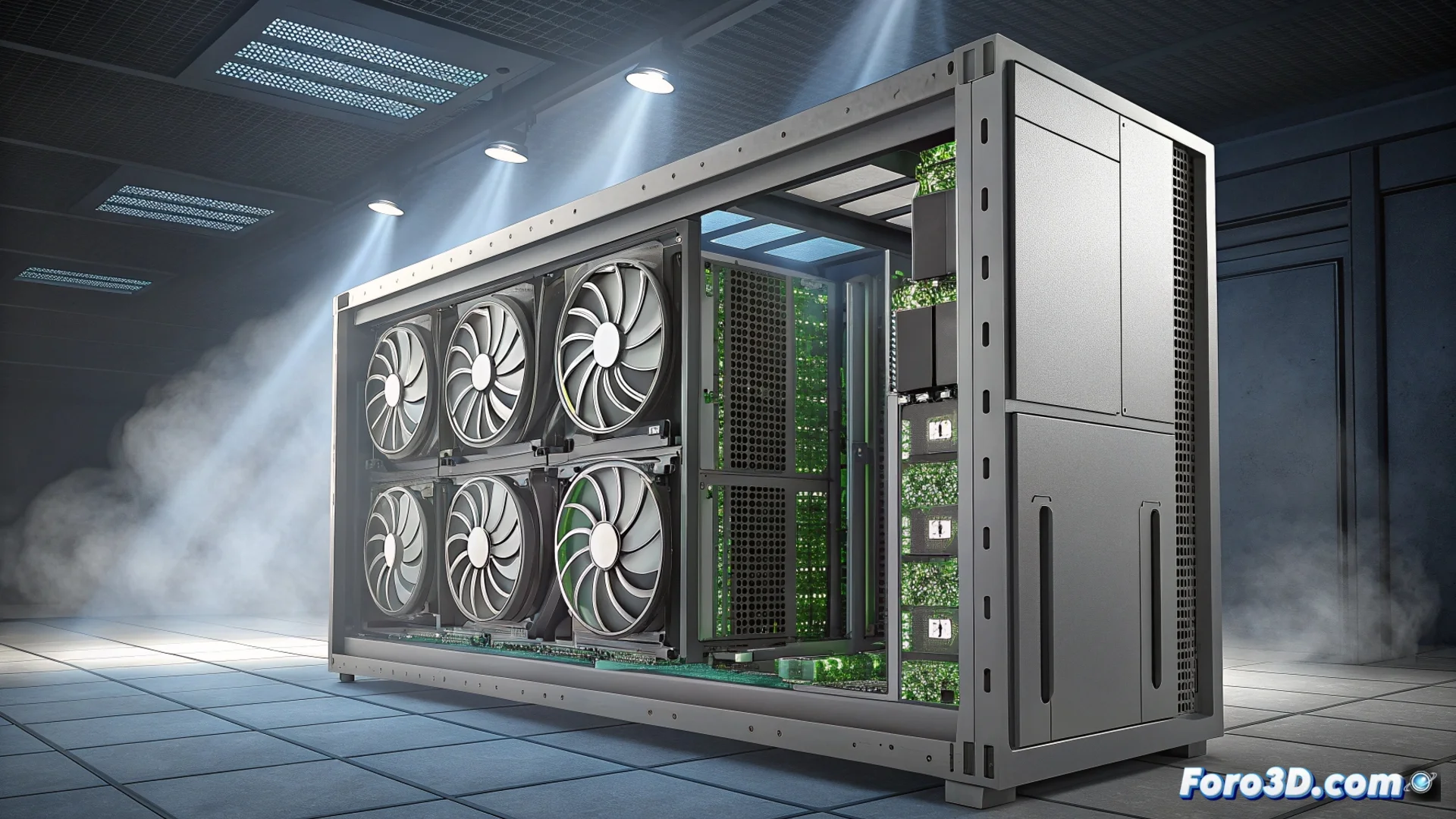
Consumer GeForce Cards Modified for AI Workloads in China
The specialized site VideoCardz reports a growing phenomenon in the Chinese market: the massive modification of Nvidia GeForce graphics cards to handle artificial intelligence workloads. This is not an isolated practice, but a trend that is gaining strength rapidly. 🚀
The Key is in the Cooling System
The main physical adaptation these GPUs receive is the replacement of their original cooling system. In its place, a turbine or blower fan is installed. This design is fundamental because it extracts hot air directly out of the chassis where the card is mounted, a standard in professional hardware for data centers.
Advantages of the blower design for AI:- Allows multiple cards to be installed in parallel within a rack or server without the heat from one affecting the other.
- Optimizes airflow in environments where GPUs run AI models continuously, for days or weeks.
- Replicates the cooling scheme used by Nvidia's professional series, such as the RTX A or the old Tesla.
By modifying the GeForce cards to use this system, assemblers adapt them to work optimally in racks where AI models are executed.
A Market with Diverse Origins
The origin of these modified cards is not unique. Assemblers obtain the units from different sources to then readapt them and sell them for this specific niche.
Origin of the modified GPUs:- New units: Some are new graphics cards that distributors modify before putting them on sale for the AI sector.
- Refurbished hardware: Others come from the second-hand market, frequently from cryptocurrency mining farms that have ceased operations. This hardware is repaired and modified to give it a second life.
- This practice allows reusing components and creating an alternative with a significantly lower cost than Nvidia's professional solutions.
A Reinvented Lifecycle for the GPU
This phenomenon illustrates how the utility of a gaming GPU is extended. Its journey does not end when it stops rendering video games, but it can transition to the intensive field of machine learning. Providing computing power for AI becomes its final destination, a natural evolution for hardware that retains processing capacity. Thus, what previously calculated pix