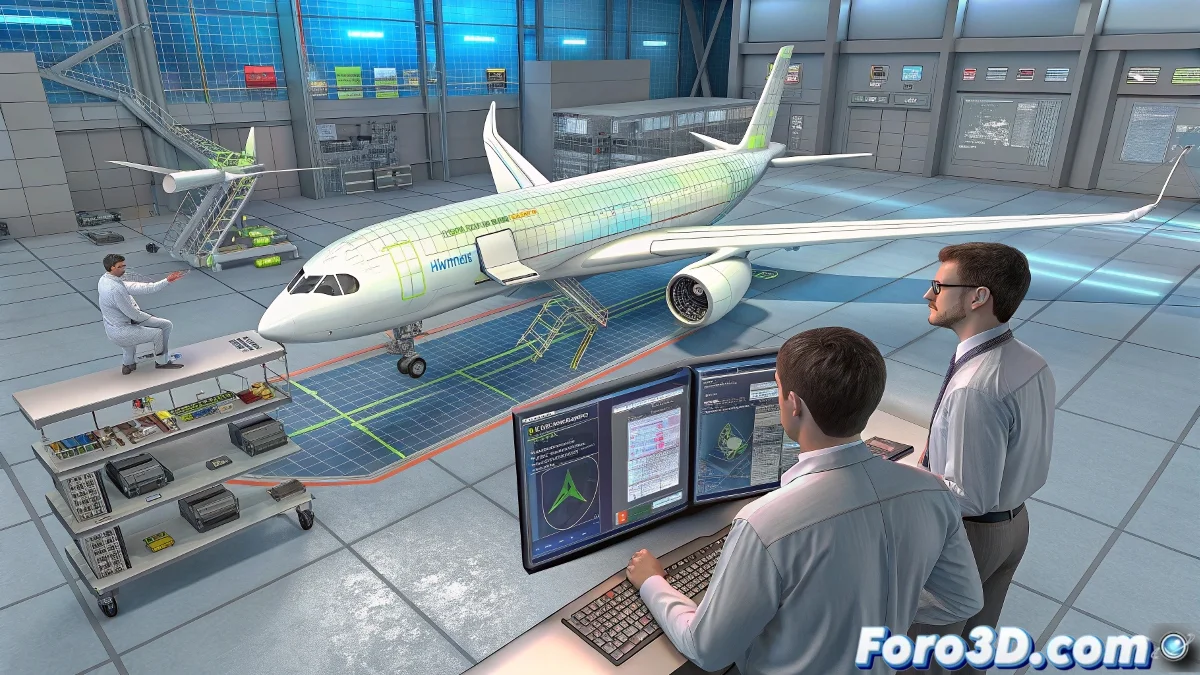
When Thermal Management Becomes the Heart of Hydrogen Aviation
The race to decarbonize aviation has just accelerated with a strategic collaboration tackling one of the most critical challenges. Conflux, a specialist in advanced thermal solutions, is partnering with Airbus to develop thermal management systems for the hydrogen fuel cells in ZEROe aircraft. This alliance represents a crucial step towards making zero-emission commercial aviation viable, solving the complex puzzle of temperature control in hydrogen-based power systems.
Thermal management is not a simple auxiliary component but the element that can make or break the entire hydrogen propulsion architecture. Fuel cells operate within extremely narrow thermal margins where a few degrees of difference can dramatically impact their efficiency, safety, and lifespan. Conflux's expertise in high-performance heat transfer thus meets the scale and demands of Airbus's commercial aviation. ✈️
In hydrogen aviation, controlling heat is not optional, it's the difference between flying and falling
The Technical Challenges of Thermal Management at Altitude
The collaboration addresses specific problems that only aviation presents for hydrogen systems.
- Management of thermal peaks during phases of highest energy demand like takeoff
- Efficiency under variable conditions of atmospheric pressure and temperature
- Weight minimization while maintaining thermal dissipation capacity
- Absolute reliability in environments where failure is not an option
The systems must operate efficiently from sea level to cruising altitude, facing environmental conditions that would radically change the thermal behavior of conventional systems.
The Synergy Between Specialization and Scale
This partnership exemplifies how aviation innovation requires collaboration between specialists. Each company brings what it does best.
- Airbus provides commercial aviation requirements and global-scale integration capabilities
- Conflux contributes deep knowledge in heat transfer and advanced materials
- The combination accelerates development by avoiding Airbus's learning curve in specialized thermal management
- The results will benefit the entire industry by establishing new technical standards
For Conflux, this collaboration represents significant validation of its technology, while Airbus gains access to proven solutions without having to develop them internally from scratch.
The Impact on the Future of Sustainable Aviation
This advancement could significantly reduce the time to commercial implementation of hydrogen aircraft. Effective thermal management is one of the last major technical hurdles.
By solving the temperature control challenge, the collaboration brings Airbus's ZEROe vision closer to operational reality. Success here could catalyze additional investments in hydrogen infrastructure and accelerate the industry's full transition to zero emissions. The future of aviation may depend as much on managing heat as on generating thrust. 🔥❄️
And if the thermal systems work as well as promised, hydrogen aircraft might soon be more efficient at managing their temperature than we are with our air conditioning... although probably with more complicated operating manuals 😉