Transforming Data into Visual Critique with Krita 🎨
A recent report from the Adecco Foundation reveals that nearly 70% of Spanish publicly traded companies do not include people with disabilities on their boards of directors, despite their stated commitments to inclusion. This news highlights the gap between corporate intent and reality, showing that there is still a long way to go toward true diversity in top positions. Krita presents itself as the ideal tool to reinterpret these cold data into a powerful and visually impactful conceptual illustration.
Composition that Communicates Absence
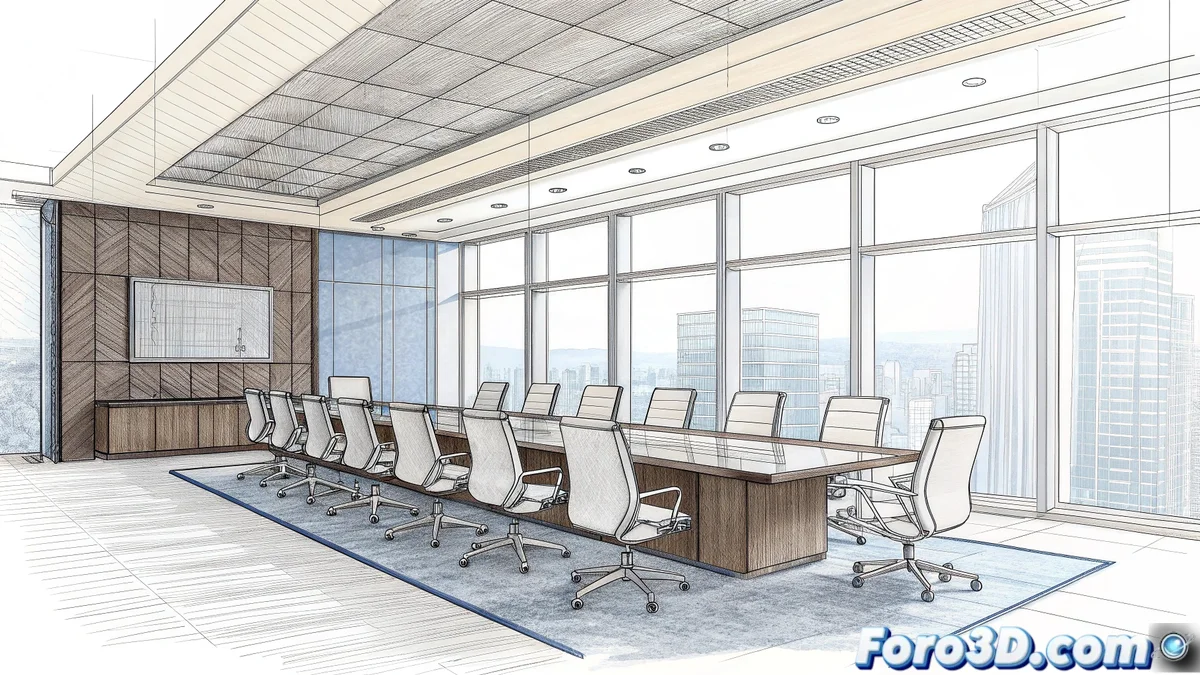
The scene is built around a stylized boardroom table, with empty chairs symbolizing the lack of inclusion. The few present members are represented with vibrant colors and defined strokes, creating a deliberate contrast with the absences. Krita allows working with separate layers for each element, facilitating experimentation with spatial arrangements that maximize the impact of the message. The perspective is adjusted so that the empty chairs visually dominate the composition, immediately conveying the idea of missed opportunity. 💺
Strategic Brush Selection
Krita offers a wide variety of digital brushes that are leveraged for different elements of the illustration:
- Soft and blended brushes for backgrounds and shadow areas
- Firm stroke and textured brushes for the present characters
- Sharp outline brushes for the empty chairs and table
- Grunge effect brushes to add environmental texture
This variety helps create visual hierarchy and guide the viewer's gaze toward the key elements of the message.
An empty chair can say more about inclusion than a hundred-page corporate report; art turns statistics into emotion.
Working with Layers and Blend Modes
Krita makes it easy to organize the illustration into logical layers: background, table, chairs, and characters. Using blend modes like Multiply for shadows and Overlay for light effects adds depth and drama to the scene. Adjusting the opacity of the empty chairs' layers creates a ghostly or absent presence sensation, reinforcing the concept of exclusion. Adjustment layers allow globally modifying the emotional tone of the piece toward cooler or warmer colors according to the narrative intent.
Visual Narrative and Symbolic Elements
Beyond the table and chairs, symbolic elements are incorporated that enrich the critique:
- Disordered corporate documents on the table, with illegible text
- Elongated shadows suggesting the passage of time without change
- A half-open door in the background, representing untapped opportunity
- Color palette muted for absences, vibrant for presences
These details turn a simple illustration into a complex and nuanced visual narrative.
From Statistics to Social Impact
The creation process involves not only technical skills with Krita, but also reflection on how art can comment on social issues. The resulting illustration serves both as a piece of awareness and visual critique, inviting the viewer to question the reality behind corporate reports. By making absence visible, it challenges the status quo in a way that data alone cannot achieve.
While companies debate inclusion policies in presumably empty rooms, we debate with blend modes so the message doesn't get lost in a sea of layers. The final irony is that our illustration about empty chairs will probably have more visual occupancy than the boards it criticizes. 😅