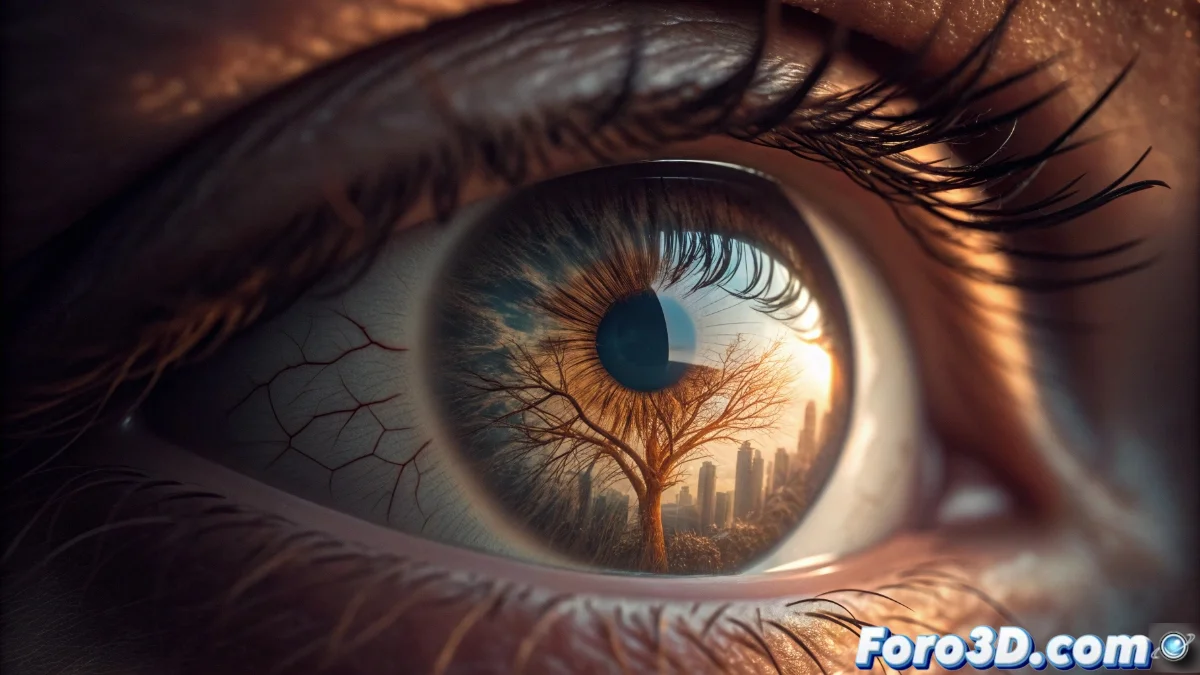
Conceptual Hyperrealism in Digital Art: When Technical Precision Conveys Abstract Ideas
Conceptual hyperrealism marks a revolutionary evolution in digital artistic creation, where creators do not limit themselves to replicating reality with photographic accuracy, but instead use this technical mastery to deliberately amplify specific aspects of the tangible world. This meticulous manipulation of visual elements serves as an expressive channel to communicate abstract concepts that normally defy conventional visual representation 🎨.
The Technique Behind Significant Distortion
Specialists in this style master applications like Substance Painter, ZBrush, and Mari to generate textures that maintain a realistic appearance but strategically incorporate intensified components. A simple skin pore can transform into a complete microscopic ecosystem, raindrops can refract entire galaxies, and folds in materials can narrate complete chronicles about the passage of time and degradation. This creative approach demands a deep understanding of both the fundamental structure of real materials and the psychological mechanisms of human visual perception, where minimal enhanced details can completely reconfigure the emotional interpretation of a piece.
Distinctive Technical Characteristics:- Strategic manipulation of hyper-detailed textures that maintain visual coherence but contain amplified elements
- Use of calculated lighting that exceeds natural parameters to create specific emotional atmospheres
- Modification of anatomical proportions and spatial scales to generate conceptual impact
True mastery in conceptual hyperrealism lies in maintaining the delicate balance where the viewer perceives reality but experiences the underlying conceptual load
Applications in Creative Industries and Visual Storytelling
In the realm of interactive entertainment and video games, this methodology has become a fundamental tool for art directors aspiring to build immersive universes that convey abstract themes. Development studios like Naughty Dog, Rocksteady Studios, and CD Projekt Red have implemented variations of this approach to communicate complex emotional states through visually credible but subtly altered environments. The success lies in preserving the perceptual balance where the audience recognizes familiar elements but experiences the conceptual dimension, generating an experience that operates on multiple interpretive levels simultaneously.
Notable Implementations in Digital Media:- Creation of narrative environments that function as extended visual metaphors
- Development of symbolic characters whose physical attributes communicate universal archetypes
- Design of conceptual scenographies that transcend their decorative function to become narrative elements
The Perspective of the Hyperrealist Artist
The question often arises whether creators specialized in conceptual hyperrealism end up perceiving everyday reality as a set of modifiable parameters, where they could optimize the ambient lighting of a sunset or reprocess the atmospheric textures of cloud formations. This technical vision of the world represents one of the most fascinating aspects of this discipline, where the boundary between objective observation and creative interpretation constantly blurs, giving rise to new forms of understanding and representing the reality that surrounds us 🌟.