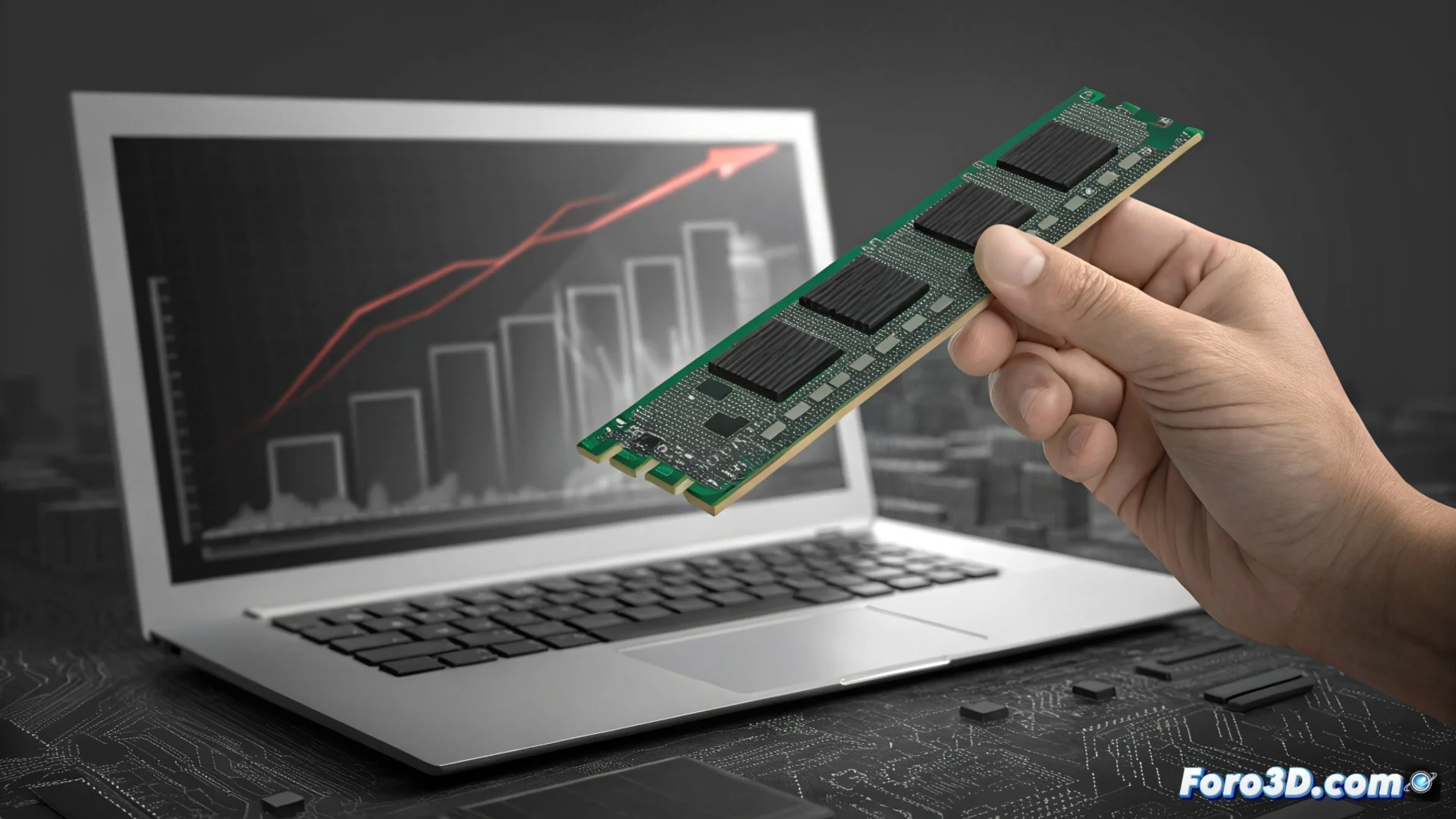
Computer Manufacturers Raise Prices Due to Rising Memory Costs
The computing market is preparing for a new phase of price increases. The main trigger is the sharp rise in DRAM and NAND flash memory modules, essential components in computers and laptops. This higher manufacturing cost forces companies to adjust final prices to protect their margins. 💻⬆️
Dell and Asus Lead the Upward Adjustments
Dell was the first to act, announcing in mid-December that it would increase prices across its entire commercial range. According to its statements, this adjustment ranges from 10% to 30%. Now, Asus is following the same path and has reported that its products will also become more expensive starting January 5. Although Asus has not specified fixed percentages, it is anticipated that the increases will impact a wide range of its equipment.
Details of the Increases:- Dell: Adjustment applied to commercial products, ranging from 10% to 30%.
- Asus: Increase effective from January 5, affecting laptops and components for assembly.
- General Impact: Users planning to upgrade their equipment in January will see their plans affected.
The only ones who seem to be smiling are those who bought their RAM modules just a few months ago, now considered a high-performance investment.
Supply Chain Tension Does Not Ease
This situation reflects the persistent pressure in the global semiconductor supply chain. Memory chip manufacturers, who reduced production last year, now cannot meet the rebounding demand. This generates shortages and steadily pushes prices upward.
Key Factors of the Pressure:- Chip manufacturers reduced production last year due to lower demand.
- Demand for components is recovering faster than expected, creating an imbalance.
- Analysts predict that this upward trend could extend through the first quarter of the year.
Outlook for the Market
Sector analysts anticipate that this upward trend could affect more brands in the coming weeks and even extend to other components. Meanwhile, end buyers must recalculate their budgets to upgrade their equipment, as memory modules have become a determining cost factor. The current situation turns those who recently acquired RAM into fortunate investors. 📈