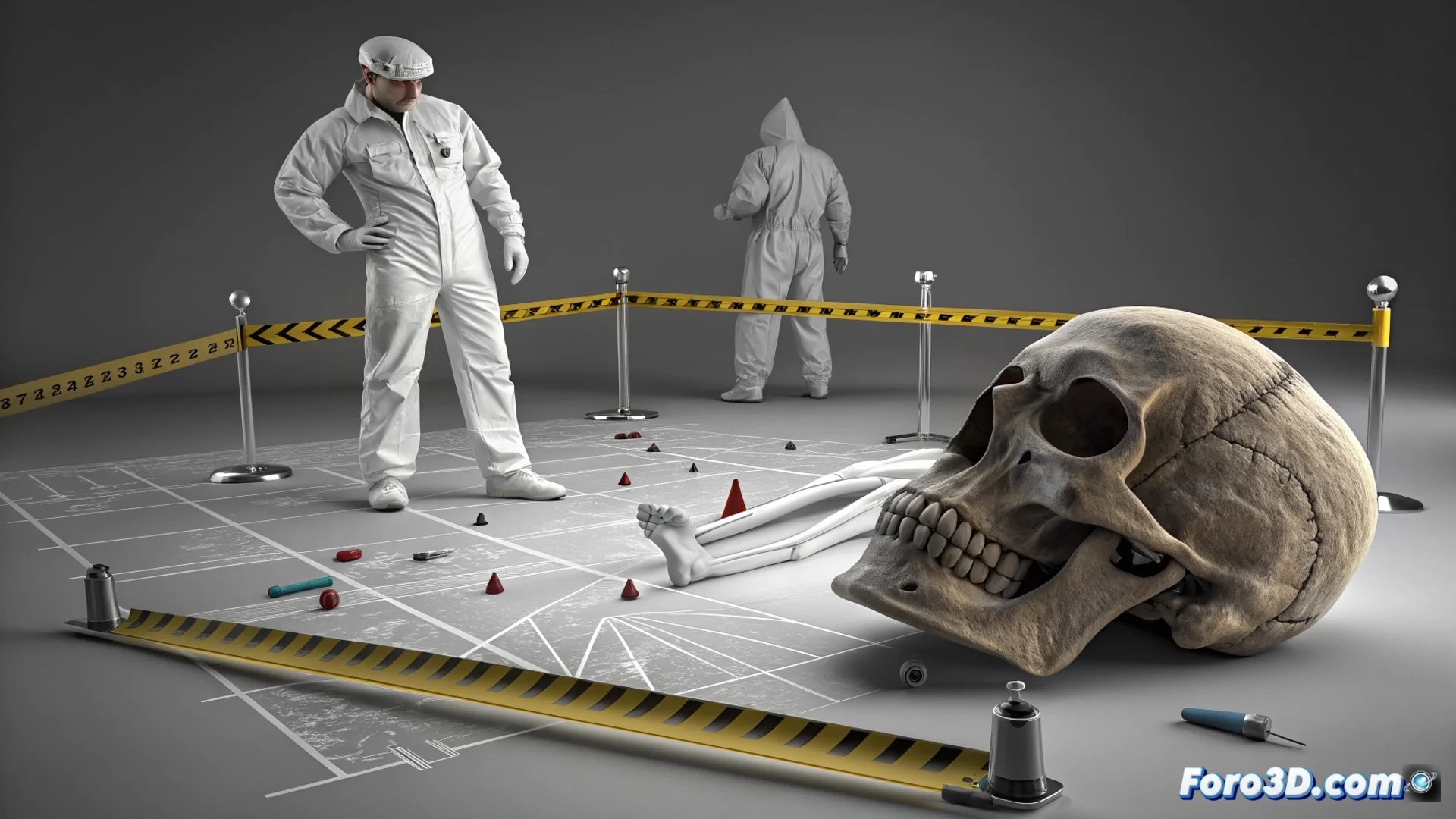
Computed Tomography Reconstructs Faces from Burned Skulls
High-resolution computed tomography allows scanning of bone remains that have undergone carbonization, preserving their integrity. This technology generates an accurate three-dimensional model of the skull, which becomes the essential base to initiate facial reconstruction in the forensic field. 🦴
Fundamentals of Digital Reconstruction
Specialists process the scanner data in specialized software. Here, they apply layers of soft tissue using standardized anatomical parameters worldwide. This step defines the key points where muscles and skin are inserted over the digitized bone structure, establishing the primary facial shape.
Process of Adding Soft Tissues:- Over the 3D skull model, forensic experts overlay layers of muscle, fat, and dermis.
- The systems calculate the tissue thickness at dozens of specific craniometric points.
- Details such as eyes, nose, and lips are incorporated based on muscle insertions and the morphology of the underlying bone.
The result is a neutral facial approximation, ready to integrate estimated features from population reference databases.
From Approximation to Possible Identification
The digitally reconstructed face is not a definitive portrait, but a comparison tool. Forensic anthropologists compare it with photographs of missing persons, analyzing matches in bone structure and prominent facial features. 🧑⚕️
Limitations and Final Confirmation:- This technique alone cannot conclusively identify an individual.
- Its main value is to significantly reduce the list of possible matches.
- To confirm identity, other methods are needed, such as DNA analysis or dental studies, if these remains are available.
A Touch of Reality in the Process
The 3D modeling process is intensive and requires many hours of detailed work. Occasionally, anecdotally, the final expression of the reconstructed face may show an unexpected resemblance to the person who spent the entire night modeling its details, such as the eyelids. This phenomenon underscores the human and artistic component that still persists in the most advanced forensic technology. 👁️