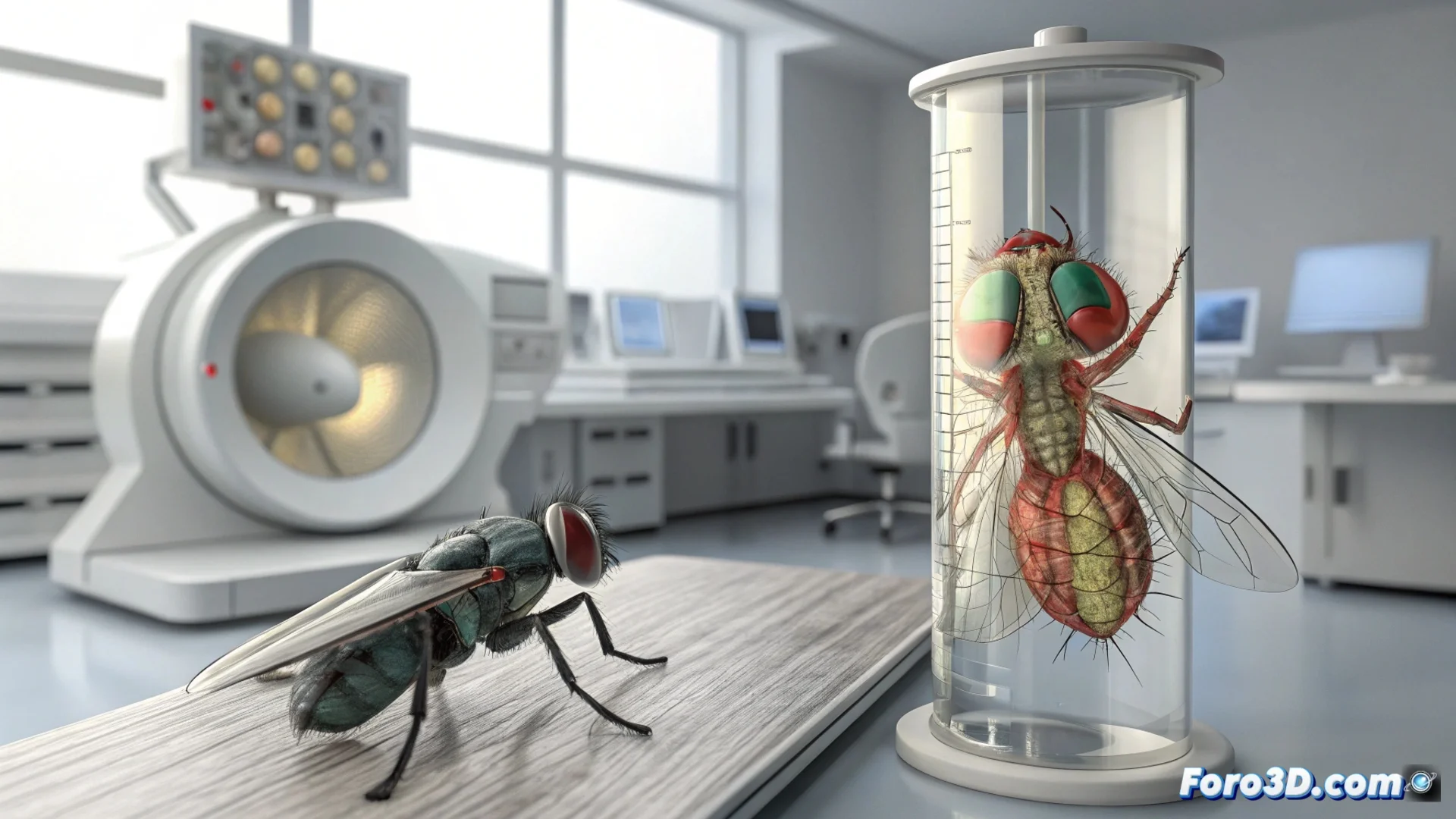
Computed Microtomography Revolutionizes Forensic Entomology
Forensic science seeks precise methods to determine the time of death. Forensic entomology analyzes the insects that colonize a body, but traditional methods of visually measuring larvae are imprecise. Now, computed microtomography (micro-CT) offers a window into internal development without destroying samples, transforming how the post-mortem interval is calculated. 🔬
From Visual Examination to Three-Dimensional Volumetric Scanning
Previously, a technician measured the length of larvae to estimate their age, a process prone to error. Micro-CT technology, with equipment like Bruker SkyScan, changes this paradigm. It scans a preserved larva and generates hundreds of X-ray cross-sectional images. These are combined to create a high-resolution 3D volumetric model that reveals critical internal anatomy.
Key structures visible in the 3D model:- Digestive tract: Allows viewing the state of development and feeding.
- Tracheal system: Shows the complexity of the respiratory network.
- Outlines of adult structures: Precise indicators of the metamorphosis stage.
Measuring these internal features with micrometric precision is key to assigning an age to the larva, as its internal development is a more reliable indicator than just its external size.
Processing and Quantifying 3D Data for Objective Dating
The power of microtomography is unleashed with specialized software. Programs like Dragonfly, Avizo, or ImageJ import data from the scanner. A technician can then reconstruct, segment, and analyze the 3D volume with digital tools.
Advantages of software analysis:- Segment structures: Isolate specific organs to study them separately.
- Calculate volumes: Obtain exact measurements of tissue development.
- Measure distances: Perform objective and repeatable micrometric assessments.
This quantitative analysis allows comparing the larva's stage with growth tables for its species. Subjectivity is reduced, and reliability is improved when estimating the time since death.
The Human Factor Remains Critical
Although this technology is powerful, its ultimate success depends on proper sample collection at the crime scene. If larvae are damaged or destroyed during collection, even the most advanced scanner cannot analyze them. Technological precision and field care must work together to unlock full forensic potential. 🐛