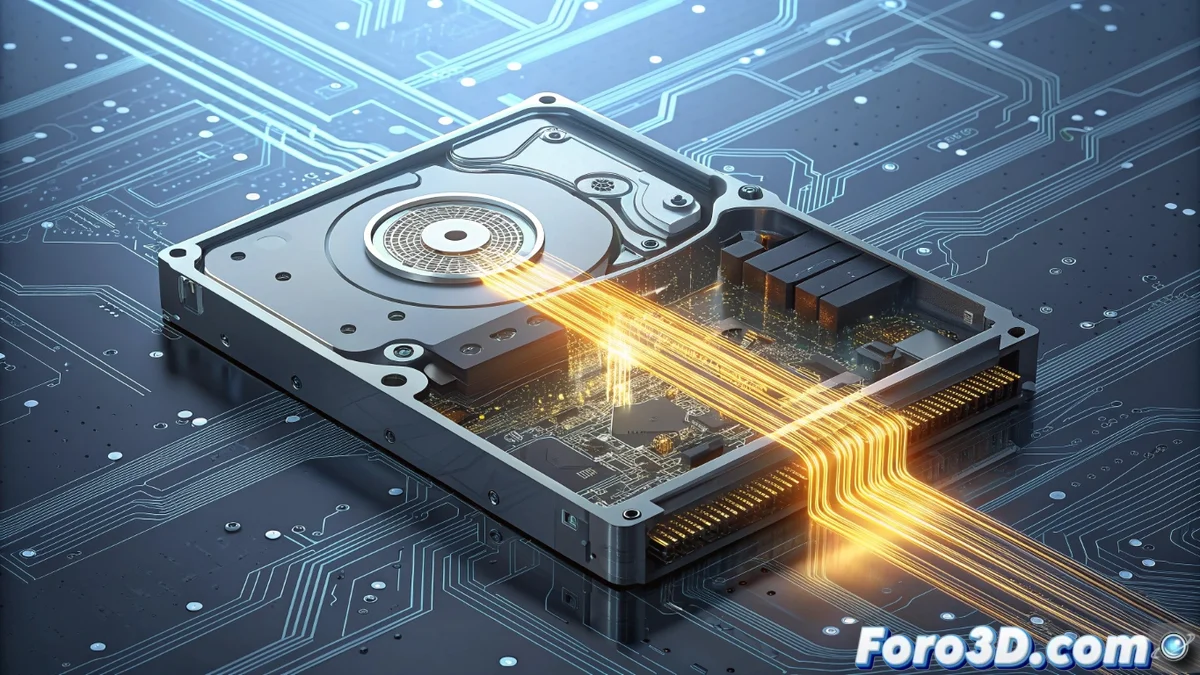
Computational Storage Units Feature an Integrated Processor
The evolution of storage takes a leap with Computational Storage Units (CSD). Unlike a regular SSD, these include a CPU or an FPGA inside that gives them processing capability. This changes how systems handle large amounts of information, executing tasks right where the data resides. 🚀
The Core That Redefines Storage
The main difference from a conventional drive is the embedded processor. This component not only manages memory but can also execute application code. The unit thus becomes an active node that computes, alleviating bottlenecks like latency or limited bus bandwidth. By filtering or preparing data on the device itself, only results are sent to the main system, freeing up valuable CPU and RAM resources.
Key advantages of this approach:- Reduce data movement: Minimizes transferring large volumes of raw information to main memory.
- Accelerate subsequent tasks: The central system receives already filtered and ready-to-use information.
- Optimize system resources: The CPU and bus are not saturated with basic preprocessing operations.
A CSD transforms a passive storage device into an active computing resource, processing data at the source.
The Ideal Terrain: AI and Edge Computing
These units find their greatest utility in data-intensive domains. In Artificial Intelligence pipelines, they can preprocess massive datasets for model training, filtering invalid examples or normalizing formats before the data reaches the GPUs. In edge computing, they enable local analysis of information.
Concrete application cases:- Train AI models: Prepare and clean data directly on the storage drive.
- Smart cameras: Analyze video on the device and only transmit metadata or alerts, saving bandwidth.
- Enhanced privacy: Sensitive data is processed locally without needing to send it to the cloud.
A Future with Smarter Storage
Integrating processing capability into storage units marks a trend toward more efficient architectures. By decentralizing workloads and executing code near the data, CSDs not only store but also help compute, optimizing entire workflows. It's a step toward hardware that thinks where it stores. 💡