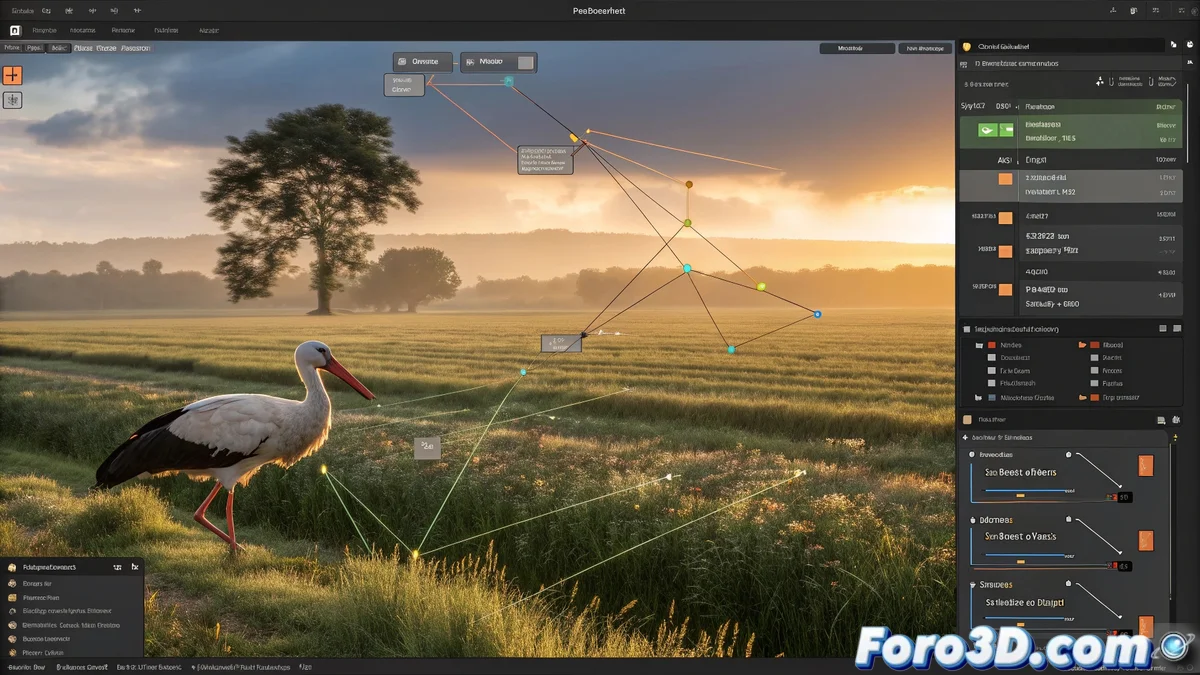
Bringing an Ecological Story to Life Through Compositing 🎬
A new documentary presented at the Venice Film Festival narrates the touching relationship between a farmer and a stork, exploring how human actions impact nature and the migratory routes of these birds. This piece aims to raise awareness about climate change by conveying an environmental message in a close and emotional way. Nuke becomes the essential tool for visually assembling this narrative, allowing precise control over every element that makes up the story.
Node-Based Compositing for a Coherent Narrative
Nuke allows working with a node system that facilitates the integration of multiple video layers: images of the stork in flight, shots of the farmer in his field, and footage of the natural environment. Organizing these elements using merge, transform, and rotoscope nodes guarantees absolute control over the composition. This non-destructive methodology is ideal for adjusting the position, scale, and timing of each shot, ensuring the story flows naturally and cohesively. 🐦
Visual Effects that Reinforce the Climate Message
To highlight the impact of climate change, subtle but significant visual effects are applied. Using degrade or noise nodes, the progressive degradation of the landscape is simulated throughout the documentary. Overlaid animations showing migratory routes altered by extreme weather conditions add an educational layer without compromising the authenticity of the real footage. The use of trackers ensures these elements integrate seamlessly into the original shots.
Visual effects in documentaries should not draw attention; they should serve the story, making the invisible visible.
Color Grading to Convey Emotions and Realities
Color grading in Nuke is crucial for reinforcing the emotional and environmental message of the documentary. Shots are adjusted using ColorCorrect and Grade nodes to create specific palettes:
- Warm and golden tones for scenes of harmonious coexistence
- Cool and grayish colors to show negative impacts
- Reduced saturation in sequences of environmental degradation
- Increased contrast in key dramatic moments
This chromatic consistency guides the viewer through the different emotions and realities presented.
Workflow and Nodal Organization
Structuring the project logically is essential for maintaining efficiency. Nodes are grouped by function: media import, color correction, visual effects, and final render. Using backdrops with different colors for each section speeds up navigation in complex graphs. Real-time preview allows adjusting parameters on the fly, ensuring every technical decision serves the narrative.
Maintaining Documentary Authenticity
Despite Nuke's power to alter images, the main goal is to preserve the authenticity of the documentary material. Adjustments are made with moderation, prioritizing visual truth over spectacular impact. Small retouches to remove distractions or enhance existing natural elements maintain the spirit of the genre while optimizing the communication of the ecological message.
While the documentary shows how the farmer and the stork adapt to a changing world, we adapt so that Nuke's node graph doesn't become an impossible knot to untangle. In the end, the true migration is that of pixels from one shot to another without the cut being noticeable. 😉