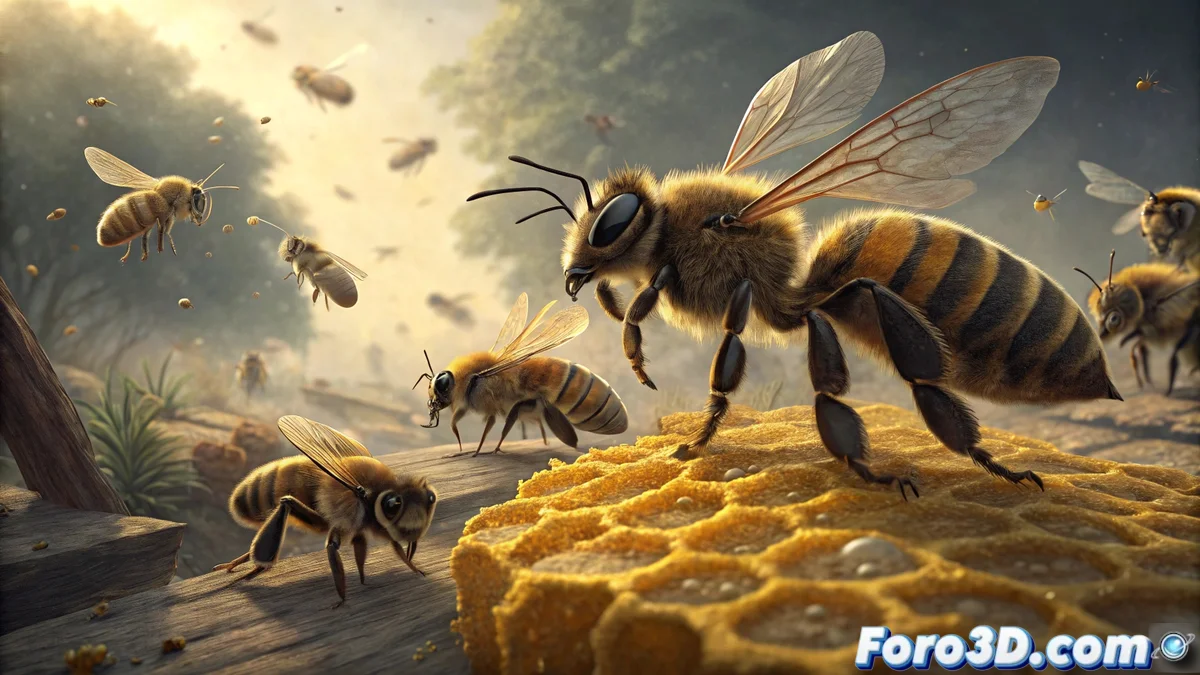
Competition between Honey Bees and Bumblebees for Resources
In various environments, honey bees employ superior tactics to secure key resources before bumblebees. Their early arrival at flowers and nests drastically limits options for other species. 🐝
Dominance Mechanisms in Foraging
The main advantage arises from forming larger colonies and processing nectar more quickly. This pattern depletes food availability and nesting sites, creating a challenging environment for bumblebees.
Key Competition Factors:- Honey bees fly greater distances and systematically store provisions in their hives.
- They dominate foraging areas, forcing bumblebees to face difficulties in sustaining their populations.
- Flower scarcity in certain regions intensifies this conflict over available resources.
Competition for a good spot can make some insects fly in circles, as if trying to reserve the best spot at a flower party.
Impact on the Ecological Network
This rivalry directly alters how plants are pollinated. Honey bees prioritize their own needs, modifying the existing natural balance.
Observed Consequences:- Competitive dynamics influence insect diversity in the area.
- Bumblebees adjust their flight patterns to avoid direct encounters with dominant colonies.
- A change is perceived in the overall efficiency of the pollination process in the ecosystem.
Adaptation and Future Balance
The ongoing interaction between these species highlights how the operational efficiency of one group can reconfigure a habitat. Bumblebees must develop alternative strategies to coexist, which in turn redefines the stability of the pollinator network. The result is a natural environment in constant adjustment due to competition for limited resources.