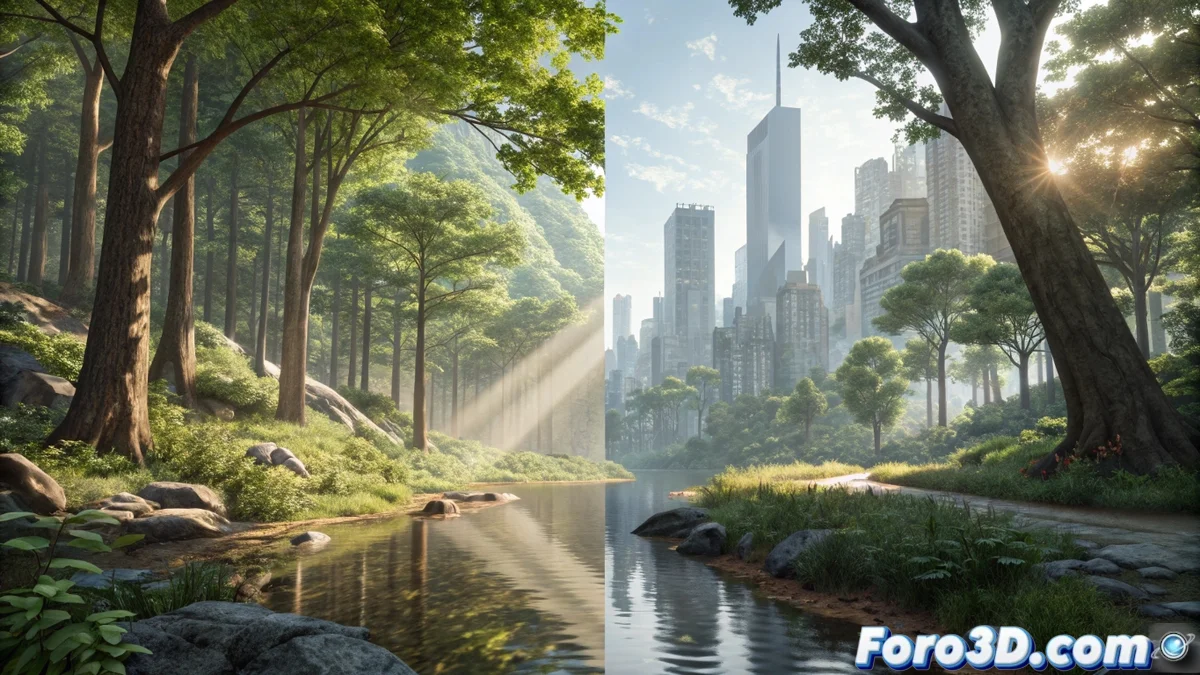
Iray and Omniverse Comparison: Two NVIDIA Approaches to Rendering
In the universe of digital visual creation, NVIDIA positions itself with two fundamental technological pillars: Iray and Omniverse. While the first is synonymous with extreme fidelity and precise physical simulations, the second redefines collaboration and immediate interaction in 3D environments. This comparison breaks down how each solution addresses graphics processing, marking their territory in industries such as animation, industrial design, or architecture. 🚀
Opposing and Complementary Rendering Philosophies
The essence of Iray lies in its commitment to physical realism. It uses advanced ray tracing algorithms to meticulously simulate the behavior of light and materials, generating images of indisputable photographic quality. For its part, Omniverse is not just a rendering engine, but a collaborative ecosystem built for real-time work, allowing multiple users to interact with and modify the same 3D scene simultaneously and fluidly.
Fundamental Differences in the Technological Core:- Iray: Prioritizes final quality over speed. Its renders, which may require hours of processing, are ideal for final products in cinema, luxury marketing, or product visualization where detail is crucial.
- Omniverse: Prioritizes immediacy and collaboration. It leverages technologies like RTX Real-Time to offer instant visual feedback, sacrificing some extreme detail for interactivity, perfect for previsualizations, prototyping, and iterative development.
- Usage Context: Iray acts as the precision laboratory, while Omniverse functions as the dynamic creation workshop where ideas are tested and changed on the fly.
Iray delivers a perfect postcard of a virtual world; Omniverse gives you the keys to enter that world and remodel it live with others.
Practical Applications: Where Does Each Technology Excel?
The choice between Iray and Omniverse is not about which is better, but which is the right tool for the specific job. Their strengths unfold in different scenarios, defined by the project's objectives.
Key Application Fields:- For Iray: Industries where hyperrealism is the primary value. It is the choice for final renders in cinematographic production, high-end architectural, digital jewelry, and scientific visualization that requires absolute precision in the representation of materials and lighting phenomena.
- For Omniverse: Projects that demand rapid iteration and teamwork. It shines in the development of video games, complex virtual simulations, industrial conceptual design, and any workflow that benefits from remote collaboration in a shared 3D space, drastically reducing review times.
- Convergence: In advanced professional pipelines, both can complement each other. You can prototype and review in Omniverse and then perform the final production-quality render with Iray.
Conclusion: Precision versus Interaction
In the end, the debate between Iray and Omniverse encapsulates two fundamental needs in modern digital creation. Iray is the bet on inert visual excellence, the polished result that amazes with its verisimilitude. Omniverse, on the other hand, is the bet on the living process, the ability to create, share, and modify in a dynamic environment that prioritizes agility and collective work. Understanding their performance differences and philosophy is key to integrating them effectively and maximizing any 3D graphics project. 🎨