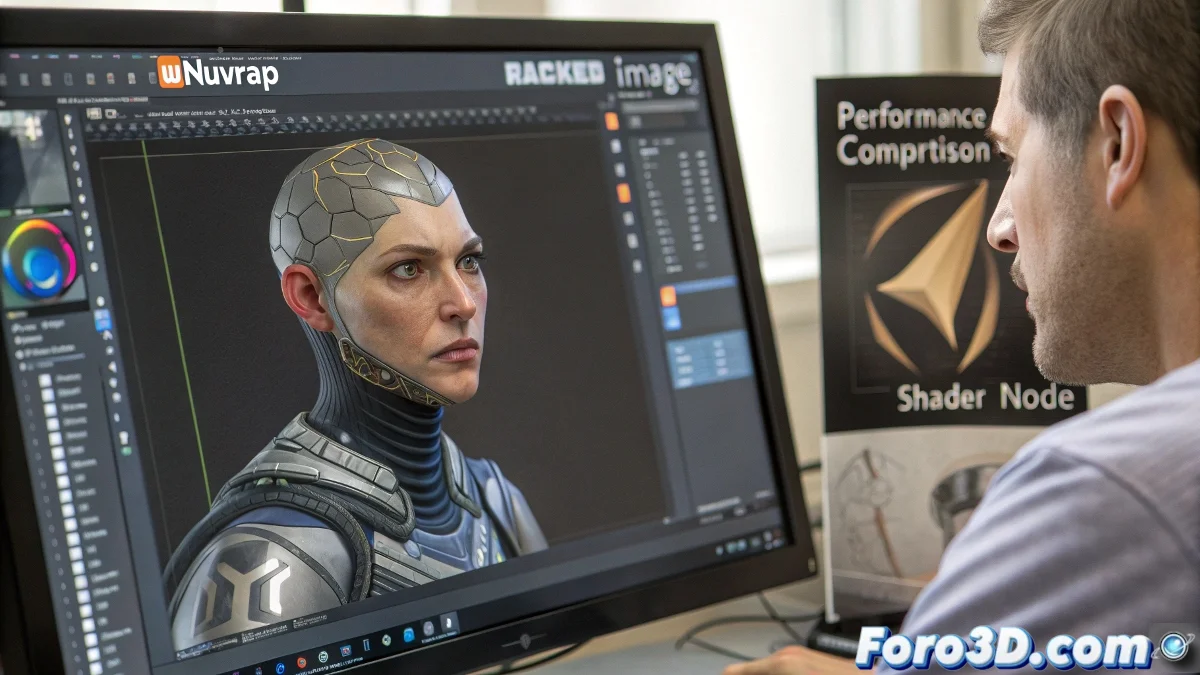
Texture Paint vs Multimaterial: The Battle of Texturing Methods
What a juicy dilemma! 🎨 It's like choosing between brushes or stickers to decorate your character. Both methods have their pros and cons, but let's dissect them like a good anatomical modeler.
Texture Paint - The Classic with Surprises
- Advantage: Uses only one material (better for rendering)
- Disadvantage: Limited textures and fixed resolution
- Performance: Lighter in viewport
- Flexibility: Difficult to modify afterwards
"Texture Paint is like a digital tattoo: it looks nice but is complicated to change afterwards"
Multimaterial - The All-Terrain Option
- Advantage: Greater control and complete parameters
- Disadvantage: Heavier to render
- Performance: Consumes more RAM
- Flexibility: Easy to adjust on the fly
Professional Recommendation
For animation, Texture Paint wins hands down in performance. But if you need:
- Advanced procedural effects
- Frequent look changes
- Greater realism in close-ups
...then multimaterial is your best option. A professional trick is to use Texture Paint as a base and add details with specific materials only where needed. This way you get the best of both worlds. 🌍✨
Now choose wisely, young 3D padawan. And remember: the "correct" method is the one that lets you finish the project without pulling your hair out. 😅