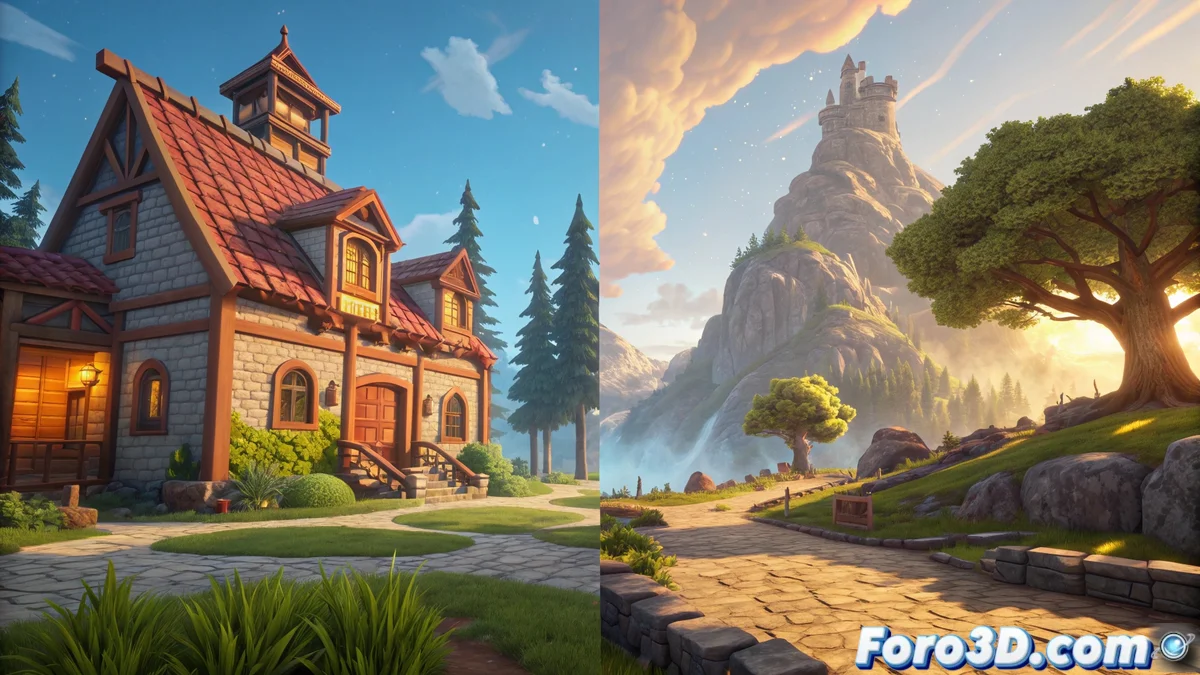
Comparison Between Falcom's Napishtim Engine and Unreal Engine
In the universe of video game development, the choice of a graphics engine determines the fate of any project. We face two opposing philosophies: Falcom's proprietary solution, known as the Napishtim Engine, versus the industrial giant Unreal Engine from Epic Games. 🎮
Technical Architecture and Performance Efficiency
The Napishtim Engine was conceived as a lightweight and specialized tool, optimized for modest hardware and agile development cycles. It employs hybrid rendering techniques that combine 2D sprites with basic three-dimensional environments, creating a characteristic though technically limited visual style. At the opposite extreme, Unreal Engine deploys a complex and scalable architecture with support for cutting-edge technologies like real-time global illumination, advanced physics simulations, and cinematic particle systems. 💻
Key Performance Differences:- Napishtim prioritizes minimal load times and compatibility with older hardware
- Unreal Engine demands powerful graphics cards but offers exceptional visual fidelity
- Falcom's engine achieves stable 60 fps on legacy consoles where Unreal would struggle
The choice between a custom engine and a commercial one resembles choosing between a specialized scalpel and a Swiss Army knife: each tool has its ideal context of use.
Development Ecosystem and Creative Flexibility
While the Napishtim Engine operates as a closed system adapted exclusively to Falcom's games, Unreal Engine functions as an open ecosystem with tools accessible to independent developers and AAA studios. This fundamental difference directly impacts workflows and creative possibilities. 🛠️
Available Tools:- Napishtim offers custom level editors for action-RPGs but lacks integration with external middleware
- Unreal includes Blueprints for visual scripting, an asset marketplace, and native multiplatform support
- Falcom's engine lacks public documentation while Unreal has a global active community
Strategic Considerations for Developers
The decision between these engines represents a fundamental crossroads in the planning of any project. The Napishtim Engine provides operational efficiency for studios that prioritize the constant production of niche games, while Unreal Engine offers technological scalability for visually ambitious experiences. The learning curve, hardware requirements, and artistic goals determine which solution is more convenient in each scenario. ⚖️