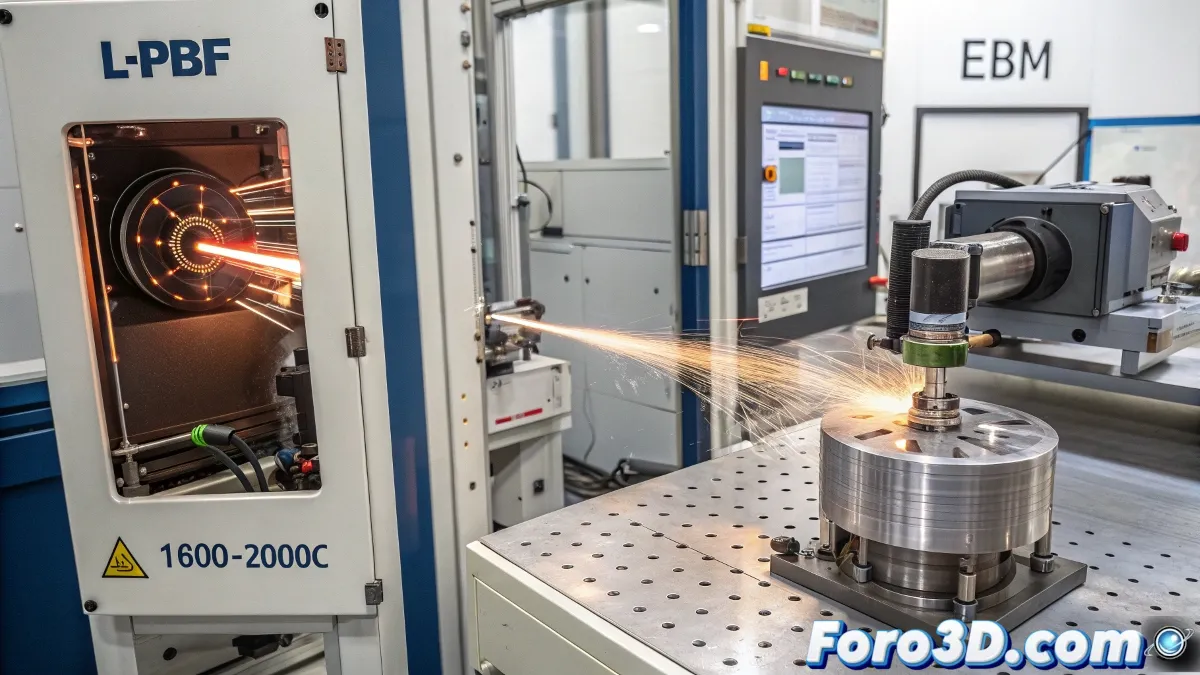
Advanced Metallic 3D Printing Techniques
Metal additive manufacturing has evolved significantly, highlighting two main methodologies that transform metal powders into solid parts using concentrated energy. These systems share the layer-by-layer construction approach but differ in their technical implementation.
Differentiated Fusion Mechanisms
Metal additive manufacturing systems are classified according to their energy source:
- Laser Fusion: Uses focused light beams in a controlled atmosphere
- Electron Fusion: Employs beams of charged particles in vacuum
The selection of the appropriate process depends on multiple technical and economic factors, according to experts in advanced manufacturing.
Compared Operational Characteristics
Both technologies present specific advantages:
- More precise dimensional resolution in laser systems
- Superior production speed in electron systems
- Greater variety of processable materials with laser technology
- More demanding technical requirements for electron systems
Material Selection
Compatibility with different metals varies considerably:
| Technology | Typical Materials |
|---|---|
| L-PBF | Aluminum alloys, stainless steels, titanium |
| EBM | Titanium, cobalt-chrome, conductive alloys |
Development Perspectives
The industry observes three main trends:
- Integration of multi-energy systems
- Automation of post-production processes
- Development of optimized materials
These advances seek to overcome current limitations and expand the industrial applications of both technologies.