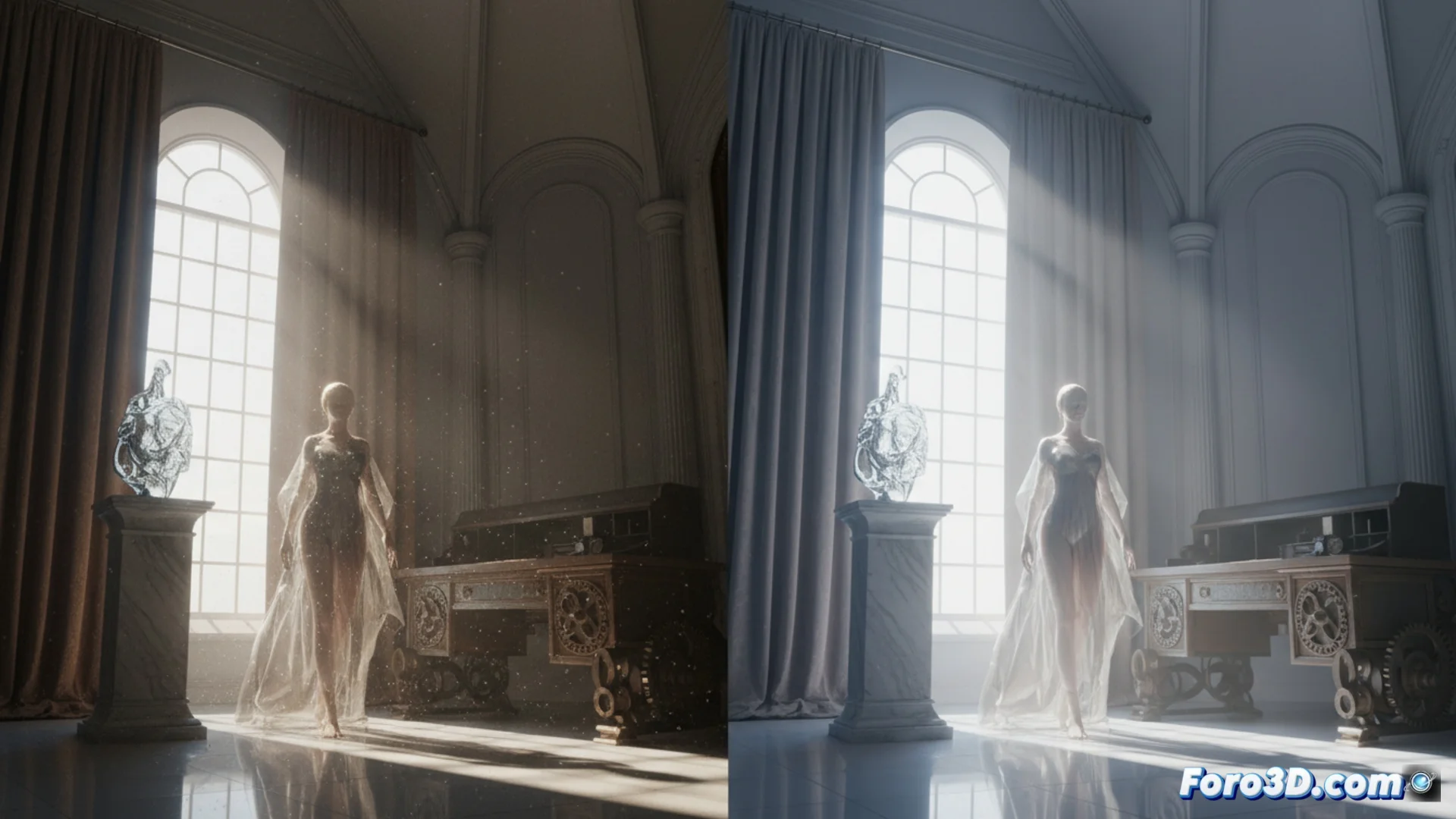
Compare Arnold Render and Cycles for Rendering
When choosing an engine to produce photorealistic images, Arnold Render and Cycles present opposing paths. One focuses on simulating light with accuracy, and the other offers more control to balance speed and detail. Understanding their foundations is key to deciding which to use in your next project 🎨.
Opposing Lighting Philosophies
The way light is calculated defines these engines. Arnold uses an unbiased method, simulating light transport physically. This produces a clean result but requires many samples to eliminate noise, especially in interiors. Cycles, being a biased engine, allows shortcuts like light portals or limiting sample values to speed up rendering, though it sacrifices some physical realism. For setting up complex materials, both offer advanced nodes, but the way to link textures and bump maps is not identical.
Key Differences in Processing Light:- Arnold: Seeks absolute physical precision, which leads to longer render times to achieve clean images.
- Cycles: Offers adjustments to control the balance between speed and lighting fidelity.
- Materials: Although both handle specialized shaders, the workflow for texturing and adding details like relief can vary.
The choice between absolute precision and manageable render time often defines which engine is chosen for a job.
Hardware and Resource Management
Practical performance depends heavily on the equipment. Cycles natively leverages the power of GPUs, greatly speeding up previews on machines with powerful graphics cards. Arnold has traditionally been tied to the CPU, although its GPU version is becoming increasingly robust. Memory is another critical factor: scenes with very dense geometry and large textures may require a lot of RAM in Arnold, while in Cycles the limit is usually the graphics card's VRAM. For both, it is vital to optimize the scene, use instances, and compress textures.
Crucial Performance Aspects:- GPU Acceleration: Cycles has it integrated; Arnold is implementing it progressively.
- Memory: Arnold consumes more system RAM; Cycles depends on the graphics card's VRAM.
- Complex Scenes: Both can handle millions of polygons and particles, but the way data is managed differs.
Decide Based on Real Needs
In the end, the technical decision often gives way to practical factors. Tight deadlines and patience to wait for a render to complete can outweigh an imperceptible quality difference. Evaluating the balance between the realism your project needs and the time you can invest in producing it is the final step to choosing between these two powerful engines ⚖️.