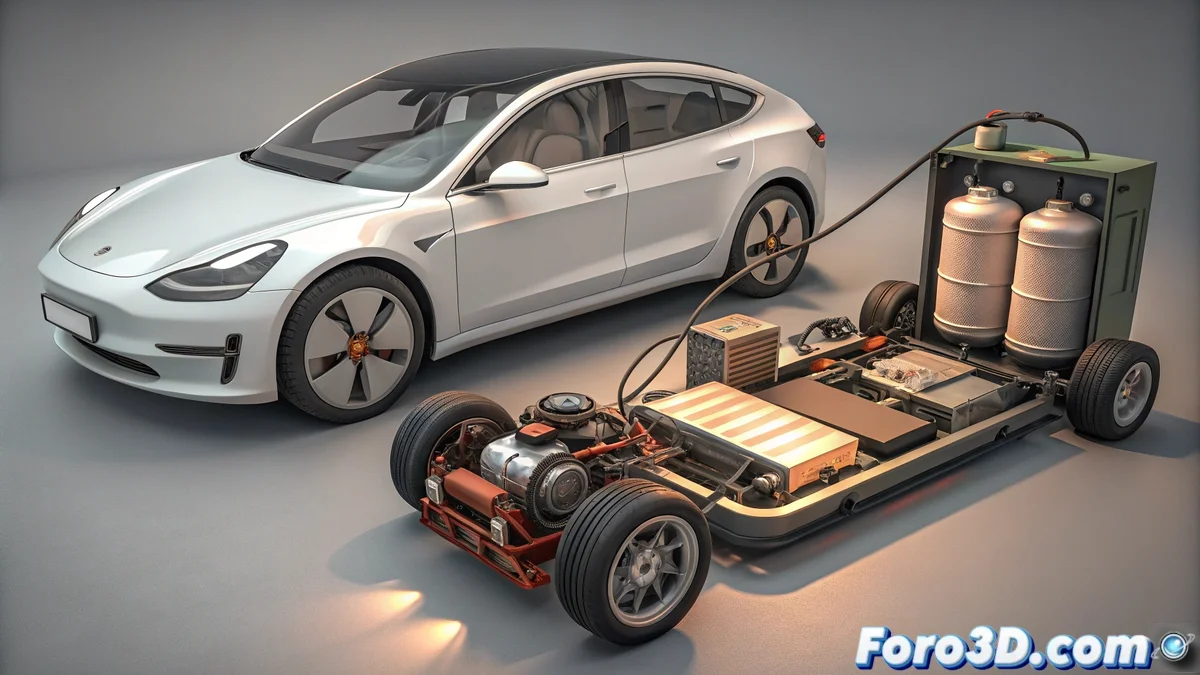
When Materials Tell the Story of Mobility
The debate between electric and gasoline vehicles remains ongoing, with technical and environmental arguments on both sides. ⚡⛽ In Substance Painter, we can visualize these differences through advanced texturing, creating representations that show not only the aesthetics but also the engineering behind each technology. From the clean components of electric vehicles to the traditional mechanics of combustion ones, each material and wear effect tells part of this technological story.
Initial Project Setup
Upon opening Substance Painter, a new project is created with PBR Metallic-Roughness configuration, ideal for realistic representation of automotive materials. Layer organization is crucial: Body_EV, Body_Gasoline, Internal_Components, and Wear_Effects keep the workflow orderly. Importing 3D models prepared with optimized UVs ensures that textures are applied correctly… because in texturing, as in automotive engineering, preparation is everything.
Electric Vehicle Texturing
The EV is textured with materials that convey modernity and efficiency: clean metallic paints, technical plastics, and glazed surfaces. 🔋 The battery and electric motor are highlighted with blue or green colors—associated with clean technology—and subtle emissives to suggest energy. Charging ports are represented with chrome details and indicator lighting. The overall feel conveys futurism and sustainability.
PBR texturing does not just replicate appearances; it communicates physical and conceptual properties—cleanliness vs wear, innovation vs tradition—through the interaction of light with virtual materials.
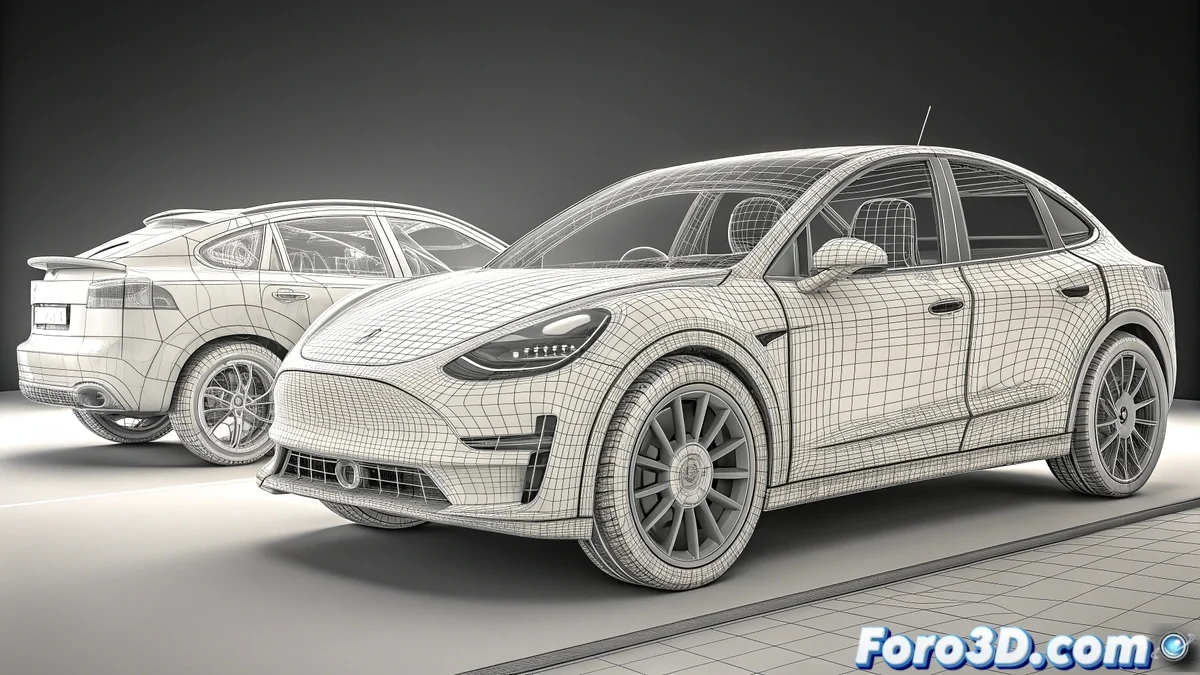
Gasoline Vehicle Texturing
The combustion car receives different treatments: paints with deeper metallic flake, surfaces with micro-scratches, and mechanical components with usage textures. 🔥 The combustion engine is textured with heated metals, oil, and carbon deposits, using layers of dirt and grime. The exhaust system shows controlled oxidation and heat discoloration. These details visually narrate the story of a mature but intensive technology.
Advanced Realism Techniques
- Wear Effects: Edge wear and scratches generators are applied to high-contact areas—handles, corners—for both vehicles, but with differentiated intensity.
- Interactive Materials: Roughness and metallic values are adjusted to create believable surfaces—from matte plastics to polished metals.
- Technical Details: Labels, serial numbers, and manufacturer marks are added to critical components for authenticity.
Lighting and Comparative Rendering
HDRI studio lighting is configured to highlight the material differences between both vehicles. 💡 Renders are performed with angles that show key components—battery vs engine, charging port vs gas cap—creating immediate visual comparisons. Optionally, wireframes are exported over the renders to emphasize the underlying modeling.
Beyond Aesthetics
This texturing exercise serves as an educational tool, allowing designers and engineers to visualize how materials communicate brand values and technological proposals. 🎓 Substance Painter's ability to iterate quickly over color schemes and wear accelerates the design decision-making process.
Thus, while manufacturers debate range and emissions, we can explore infinite material variants… without consuming a single watt or liter of fuel. Because in Substance Painter, the only emission is creativity. 😉