Color Temperature in Creating Visual Atmospheres
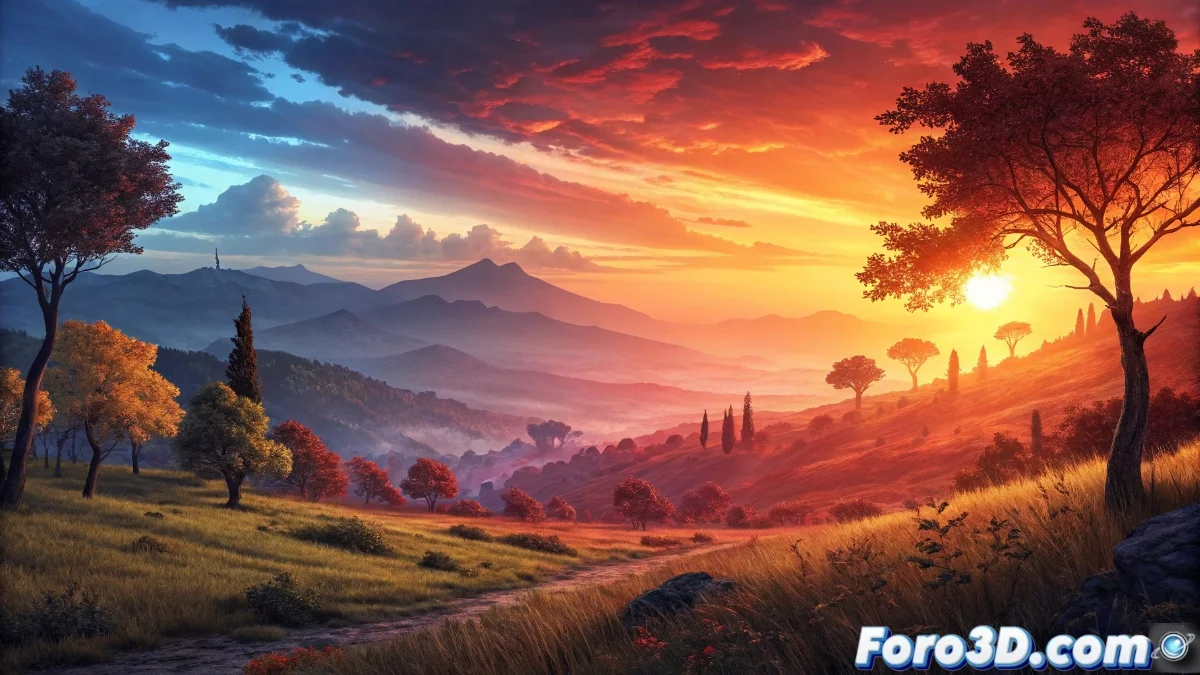
The color temperature technique radically alters how we perceive an image by balancing warm and cool tones. Artists classify warm colors as reds, oranges, and yellows, while cool colors include blues, greens, and violets. This differentiation not only establishes the emotional atmosphere of a piece but also produces a convincing three-dimensional illusion when applied systematically. The essence lies in understanding how these temperatures interact to direct the observer's attention and create natural visual hierarchies. 🎨
Practical Application for Generating Depth
By employing color temperatures, nearby elements typically exhibit warmer and more saturated colors, while distant ones adopt cooler and desaturated tones. This principle, known as aerial perspective, allows simulating depth even in two-dimensional compositions. A classic example is a mountainous landscape, where distant mountains appear bluish and blurry, contrasting with the intense warm greens of the foreground. The progressive transition between these temperatures acts as a visual bridge that unites all planes of the composition.
Key Elements of Aerial Perspective:- Nearby objects with warm and saturated colors to highlight proximity
- Distant elements with cool and desaturated tones to suggest distance
- Gradual transition between temperatures for visual cohesion
Color temperature is the most effective tool for defining the direction, intensity, and nature of light sources in a scene.
Defining the Light Source Through Temperature
Color temperature becomes the ideal instrument for specifying the direction, intensity, and type of light sources. A warm light, such as sunset, projects shadows with cool nuances, while a cool light, such as moonlight, generates warm shadows. This complementary contrast visually enriches the work and provides instant realism. Reflections and shadows are not mere darkened or lightened variations of the base color but adopt temperatures opposite to the main light, creating chromatic vibration and cohesion.
Characteristics of Light Sources by Temperature:- Warm light (e.g., sunset) produces cool shadows
- Cool light (e.g., moonlight) generates warm shadows
- Reflections and shadows with opposite temperatures for visual enhancement
Final Reflection on the Technique
It's fascinating how, after mastering this technique, we begin to perceive the real world as if it were poorly rendered, wondering why nature doesn't always follow the artistic rules we worked so hard to learn. Color temperature not only enhances the visual quality of illustrations but also transforms our way of interpreting reality. 🌟