Colombia Deploys New Civil 3D Radar on the Amazonian Border
Colombia's civil transportation and aviation authorities have completed the installation of a state-of-the-art radar system at the main airport in Leticia, the capital of the Amazonas department. This action represents a key step to monitor more effectively the southern country's air corridor, a strategically valuable border area with Brazil and Peru. 🛩️
A Key Piece in a National Plan of Seven Systems
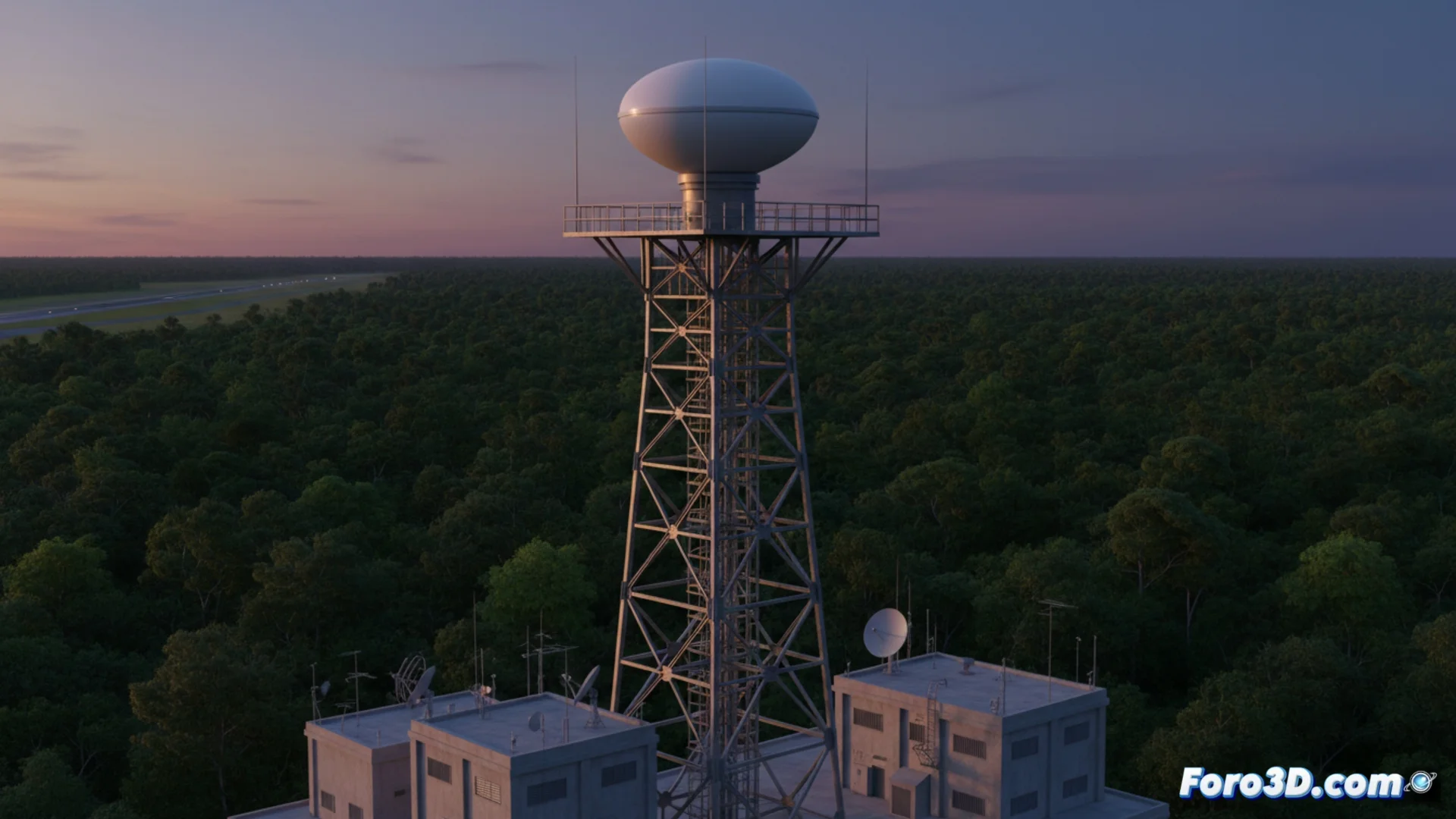
This device is the third of a total of seven planned to be implemented throughout Colombian territory. It incorporates sophisticated technology, such as a 3D primary radar, a Mode S secondary identification system, and an ADS-B receiver. It can also process meteorological information. Its operational range covers a radius of 250 nautical miles. The structure consists of an antenna mounted on a 25-meter tower, protected by a radome, and features backup power sources to ensure uninterrupted operation.
Main Technical Features of the System:- 3D Primary Radar for detecting and tracking targets.
- Mode S Secondary System that precisely identifies aircraft.
- ADS-B Receiver to obtain position data from equipped aircraft.
- Effective coverage of 250 nautical miles.
- Antenna protected by a radome on a 25-meter tower.
- Configuration with redundant power for continuous operation.
This project not only modernizes air traffic control infrastructure. During its execution, local employment was generated, and it is expected to boost technological innovation in the region.
Impact Beyond Air Traffic Control
The commissioning of this equipment generates benefits that go beyond the scope of safety. By executing the project, jobs were created for the local community. Additionally, it is anticipated to foster technological development in the Amazonas. A further relevant aspect is its environmental contribution: by optimizing flight routes and managing traffic more accurately, it helps aircraft consume less fuel, reducing the aviation sector's carbon emissions.
Additional Benefits of the Installation:- Generate employment for the Amazonian region's population.
- Boost innovation and local technological capabilities.
- Reduce aircraft fuel consumption by optimizing routes.
- Decrease the carbon footprint associated with air operations.
A Firm Step in Sovereignty and Technology
The installation of this civil 3D radar in Leticia concretely strengthens the State's capacity to exercise control over its airspace in a sensitive border area. The investment of 45,287 million pesos translates into infrastructure that combines operational safety, regional development, and environmental considerations, marking a significant advance in the modernization of the country's aeronautical systems. 🗺️