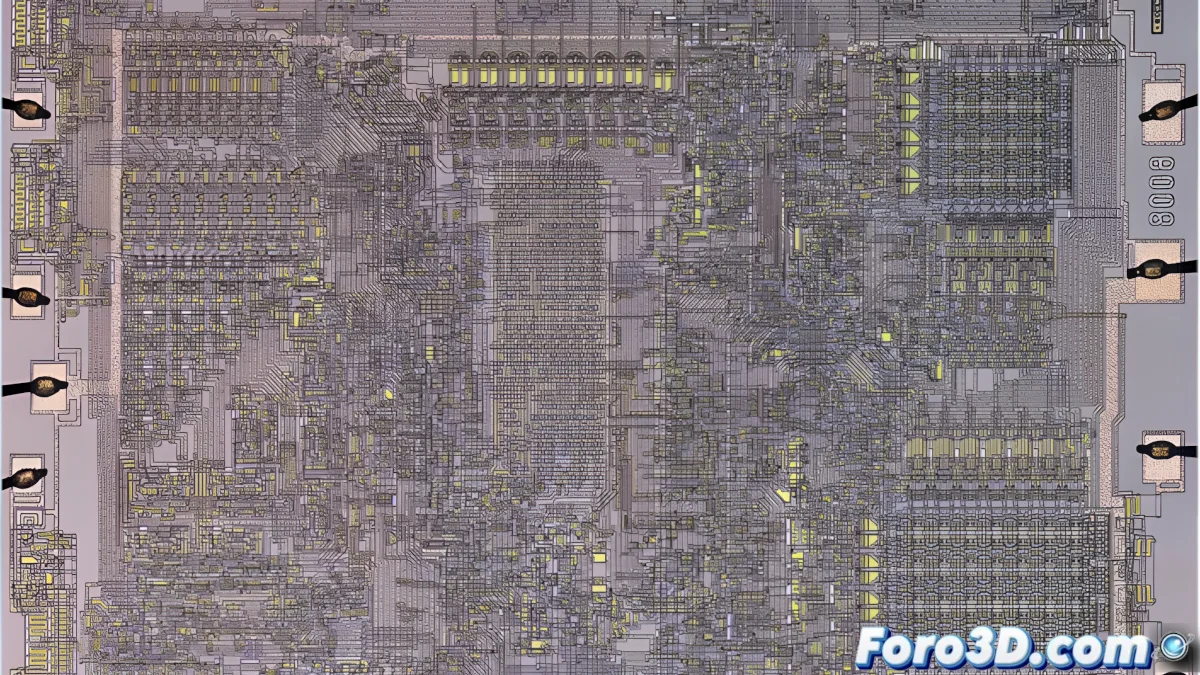
Collector Creates High-Resolution Image of Historic Intel i8008 with 216 Microphotographs
A collector and enthusiast of historical hardware has achieved a milestone in digital preservation by assembling 216 individual microphotographs to create an ultra-high-resolution image of the legendary Intel i8008 die. This 8-bit processor, now 54 years since its launch, can be studied with unprecedented detail, revealing the architecture that laid the foundation for modern computing. 🔬
A Microscopic Journey to the Origins of Computing
The process of creating this composite image required meticulous planning and execution. Each of the 216 microphotographs was captured individually using specialized magnification equipment, then digitally assembled using advanced stitching techniques. The final result allows appreciation of the i8008's internal structure with a clarity that surpasses any previously available public documentation. 💻
Technical details of the process:- 216 individual microphotographs assembled
- Advanced digital stitching techniques
- Specialized microscopy equipment
The i8008 represents a 54-year milestone in microprocessor history
The Legacy of the Intel i8008
Launched in 1972, the Intel i8008 was the company's first 8-bit CPU and a direct precursor to the 8080 and later the x86. With an architecture that executed 48 instructions and the capability to address 16 KB of memory, this processor powered the first personal computers and embedded systems. Its design of 3,500 transistors manufactured on a 10-micron process represents the cutting-edge technology of its era. 🚀
Historical characteristics of the i8008:- Intel's first 8-bit microprocessor
- Base architecture for the x86 family
- 3,500 transistors on a 10-micron process
Digital Hardware Preservation Techniques
This project exemplifies the new digital preservation techniques emerging in the collector community. By combining microscopic photography and digital processing, enthusiasts can now document and preserve technological heritage with a level of detail that allows for academic studies and technical analysis years after the hardware has ceased production. 📸
Contributions to technological preservation:- Documentation of historical architectures
- Digital preservation of obsolete components
- Educational resource for studies of technological evolution
Importance for Computational Archaeology
Projects like this have incalculable value for computational archaeology. By documenting historical components in extreme detail, a permanent digital archive is created, allowing future generations to study the evolution of chip design and understand the technological foundations upon which today's industry was built. The ability to examine a 54-year-old die with this resolution opens new possibilities for historical technological research. 🕰️
The Future of Technological Preservation
This achievement demonstrates how communities of enthusiasts and collectors are contributing significantly to the preservation of technological heritage. As digital imaging techniques continue to advance, we can anticipate even more ambitious projects documenting historical hardware, creating a detailed visual legacy for future generations of engineers, historians, and technology enthusiasts. ✨