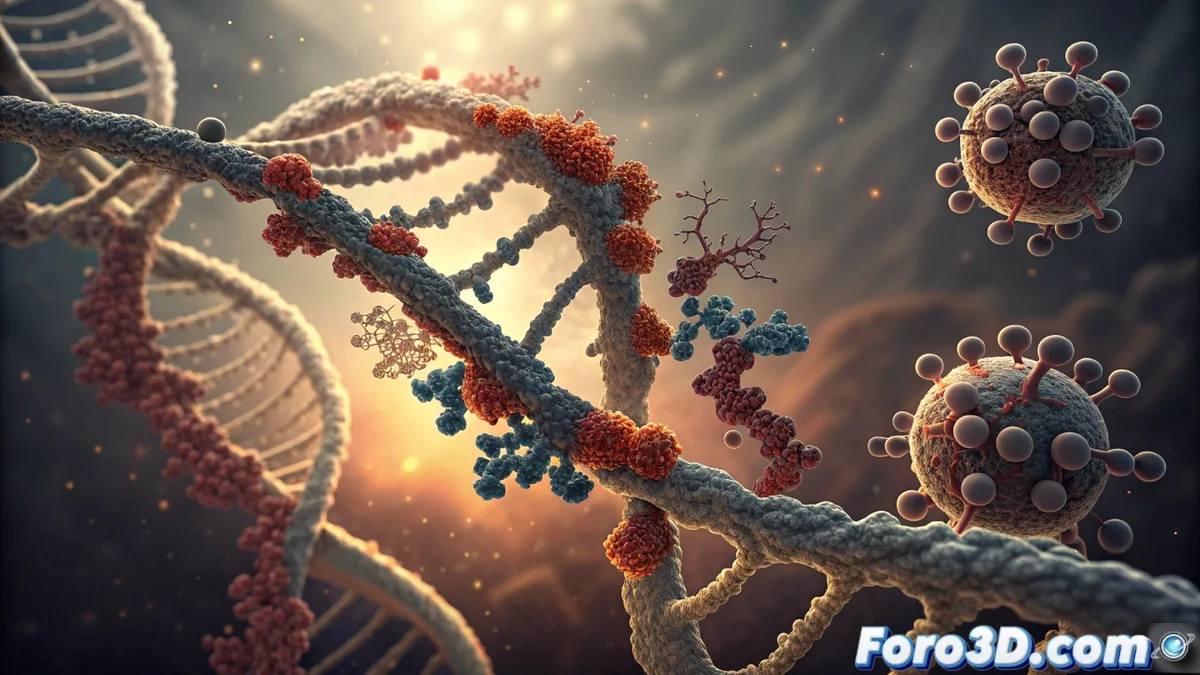
Colibactin: the chemical motifs that guide its impact on DNA
Colibactin, a molecule produced by certain bacterial strains, represents a fascinating and dangerous example of biochemical engineering. Its structure houses specific chemical motifs that function as navigation coordinates, directing its destructive warheads toward precise targets in the genome. This process can trigger genetic alterations with profound implications for cellular health. 🔬
The role of structural motifs
These chemical motifs are not mere aesthetic elements of the molecule; they are fundamental to its function. They act as a high-precision molecular guidance system, determining how colibactin couples and interacts with the DNA double helix. This selective interaction ensures that the induced mutations are not random, but concentrated in particularly vulnerable genetic regions, maximizing its potential impact.
Key functions of the guiding motifs:- Sequence recognition: Identify and bind to specific nucleotide patterns in DNA.
- Warhead positioning: Orient the toxin's active component toward the exact attack site.
- Damage facilitation: Stabilize the interaction to promote chemical changes in DNA bases.
Nature is sometimes a master of chaos disguised as precision.
Consequences of genome interaction
The targeted binding of colibactin to genetic material can have a spectrum of outcomes. Alterations range from subtle point variations to more severe structural damage, such as double-strand breaks. This mechanism underscores the complexity and sophistication of the tools bacteria develop to manipulate their hosts at the molecular level.
Types of induced alterations:- Point mutations: Changes in a single base of the genetic code.
- Strand damage: Breaks or chemical modifications in the DNA structure.
- Genomic instability: Promotion of an environment conducive to more errors during cell replication.
A metaphor for genetic manipulation
In an ironic twist, colibactin can be visualized as an unpredictable molecular artist. Its warheads act as brushes that paint on the canvas of DNA, but the final design is chaotic. It is like a game of genetic chess where each move, guided by those chemical motifs, has the potential to irrevocably alter a cell's fate. This phenomenon reminds us of nature's duality, capable of creating systems of astonishing precision for purposes that can prove profoundly disruptive. 🧬